I still remember the first time I tore through a Gore Nest in the 2016 Doom reboot. That game whispered a simple, savage truth into my ear: run and gun. Every corridor was a race, every arena a ballet of bullets and blood. Then Doom Eternal cranked the volume to eleven and screamed jump and shoot, turning me into a rocket-powered gymnast who could swing between skyscrapers and turn demons into confetti mid-air. Both games had my heart pounding like a drum solo. But now, here I am in 2026, staring at footage of Doom: The Dark Ages with wide eyes and a slack jaw, because id Software just growled a new phrase that feels like a tectonic shift: stand and fight.
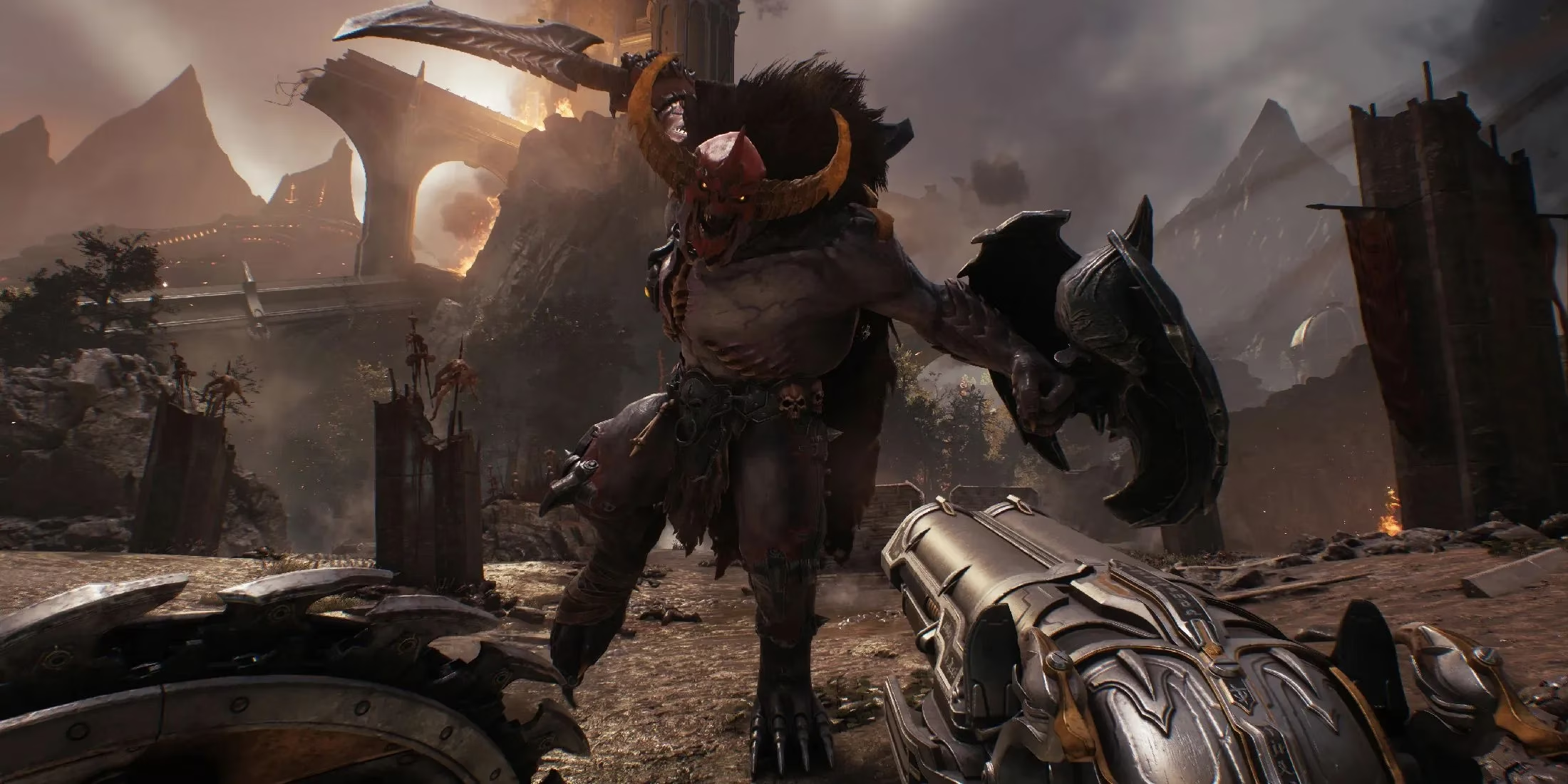
That phrase has been rattling around my skull ever since the June 2024 reveal, but the recent Xbox Developer Direct finally gave it teeth. What I saw was a Doom Slayer who no longer needs to bounce off walls like a pinball to survive. Instead, he plants his feet, locks eyes with a towering Baron of Hell, and says not one step further. Honestly? It’s the kind of power fantasy that makes me want to kiss my shotgun—figuratively, of course.
The reboot series taught me that speed is oxygen. Doom 2016 was a masterclass in controlled aggression: dash in, blast a Mancubus, glory kill for health, dash out. Then Eternal turned that formula into a beautiful nightmare, demanding constant aerial awareness and split-second cooldown management. I’d finish a fight panting, fingers trembling… and I loved it. But The Dark Ages is asking me to trade that breakneck velocity for deliberate brutality, and I’ll admit, part of me was terrified. If I’m not zipping around like a caffeinated hummingbird, won’t the magic fizzle out? That’s where the weapons come in—and oh, by the wayward souls of Argent D’Nur, these weapons are making me forget all about my missing double jump.
From what we’ve been shown, the arsenal isn’t just a toolbox; it’s a personality. The skull-crunching shrapnel launcher—affectionately called the “Pain Splitter” by my feverish brain—fires jagged hell-metal that sticks into enemies before detonating. It’s slow, heavy, and demands perfect timing, but when that fuse blows… chefs kiss. Then there’s the shield saw, which you can charge and hurl like Captain America’s angrier, spikier cousin, cleaving through pinkies like butter. It encourages a stubborn, almost taunting playstyle: block, wait, retaliate. The rail gun returns too, searing crimson beams that make me feel like I’m personally carving my initials into a Cyberdemon’s chest.
And let’s not forget the colossal stuff. I’m talking about piloting a mech the size of a cathedral and punching a Titan in the face so hard that the ground sobs. Or strapping myself onto a cybernetic dragon and turning aerial combat into a medieval painting come to life—spewing hellfire, dodging fireballs, and coming in for a landing that shatters bones. These aren’t just set pieces; they’re statements. id Software is telling me, “You don’t need to sprint when you can make the world crumble with a single stomp.”
The biggest challenge, of course, is whether this slower, more methodical combat can replace the intricate movement dance of Eternal. That game had me juggling the Meat Hook, the dash, and the flamethrower in a constant loop, and losing that rhythmic flow could have left a gaping hole. But the more I study The Dark Ages, the more I realize the design philosophy has shifted from evading threats to becoming the threat. Enemies seem designed to pressure you into parries and timed blocks, rewarding you with devastating counter-attacks instead of quick escapes. It’s a deliberate risk, and honestly, my gut says it’s going to feel like wielding a mountain.
I keep circling back to that shield. It’s not just a protective slab—it’s a weapon, a tool, a companion you grit your teeth behind before lunging into a glory kill that snaps a Hell Knight’s spine. The rhythm of combat won’t be “shoot and scoot”; it’ll be “block, bash, blast, BREATHE.” There’s a glorious, heavy pause between explosions that modern shooters often miss, and I’m craving it like a lost art.
Of course, nothing’s etched in hellstone yet. The game needs varied enemy behaviors to keep that stand-and-brawl formula from going stale. But early glimpses of shield-bearing Marauder variants and projectile-spewing Arachnotrons adapted for close-quarters pressure have me hopeful. If the bestiary forces me to swap between the shrapnel launcher’s timed detonations, the saw shield’s ricochet tricks, and the rail gun’s surgical precision without ever asking me to start bouncing off walls… then The Dark Ages might just redefine what a power fantasy can feel like.
I’m not going to pretend I won’t miss the tireless speed of Eternal. There was something sacred about mastering that chaos. But Doom: The Dark Ages has me gripping an imaginary shield right now, knuckles white, grinning like an idiot. This isn’t a retreat from innovation—it’s a bold bet that weight can be just as exhilarating as velocity. And with an arsenal this vicious, I’m ready to stand my ground and watch the demons break against me.
As the anticipation builds for the release of Doom: The Dark Ages, many fans are already strategizing their approach to mastering its new combat mechanics. This shift towards a more tactical playstyle promises to deliver a fresh twist on the beloved series, making it an exciting time for both veteran players and newcomers alike. The community's excitement is palpable, with discussions buzzing around loadout optimizations and potential gameplay strategies.
For those eager to dive into this new chapter of the Doom saga, keeping an eye on game pricing trends can be essential for snagging the best deals upon release. Resources like DealNest offer a convenient way to check game prices and ensure you're ready to jump into the action without breaking the bank. Whether you're looking to preorder or wait for a launch day offer, staying informed about pricing can enhance your gaming experience as you prepare to face the hordes of Hell once more.
Comms Channel