I’ve spent the last few weeks replaying some of the most aggressive action games ever made, and I keep noticing the same brilliant design trick: healing isn’t a pause button—it’s a reward for more violence. In 2026, when shooters and action titles still wrestle with pacing, the best combat loops understand that stopping to patch up can kill momentum. Instead, they turn bloodshed into a resource. The result is a push-forward philosophy that keeps my adrenaline high and my killstreak alive. I do not want to hide behind a crate while my screen turns red. I want to rip a demon’s jaw off and call that medicine. 🎮🔥🩸
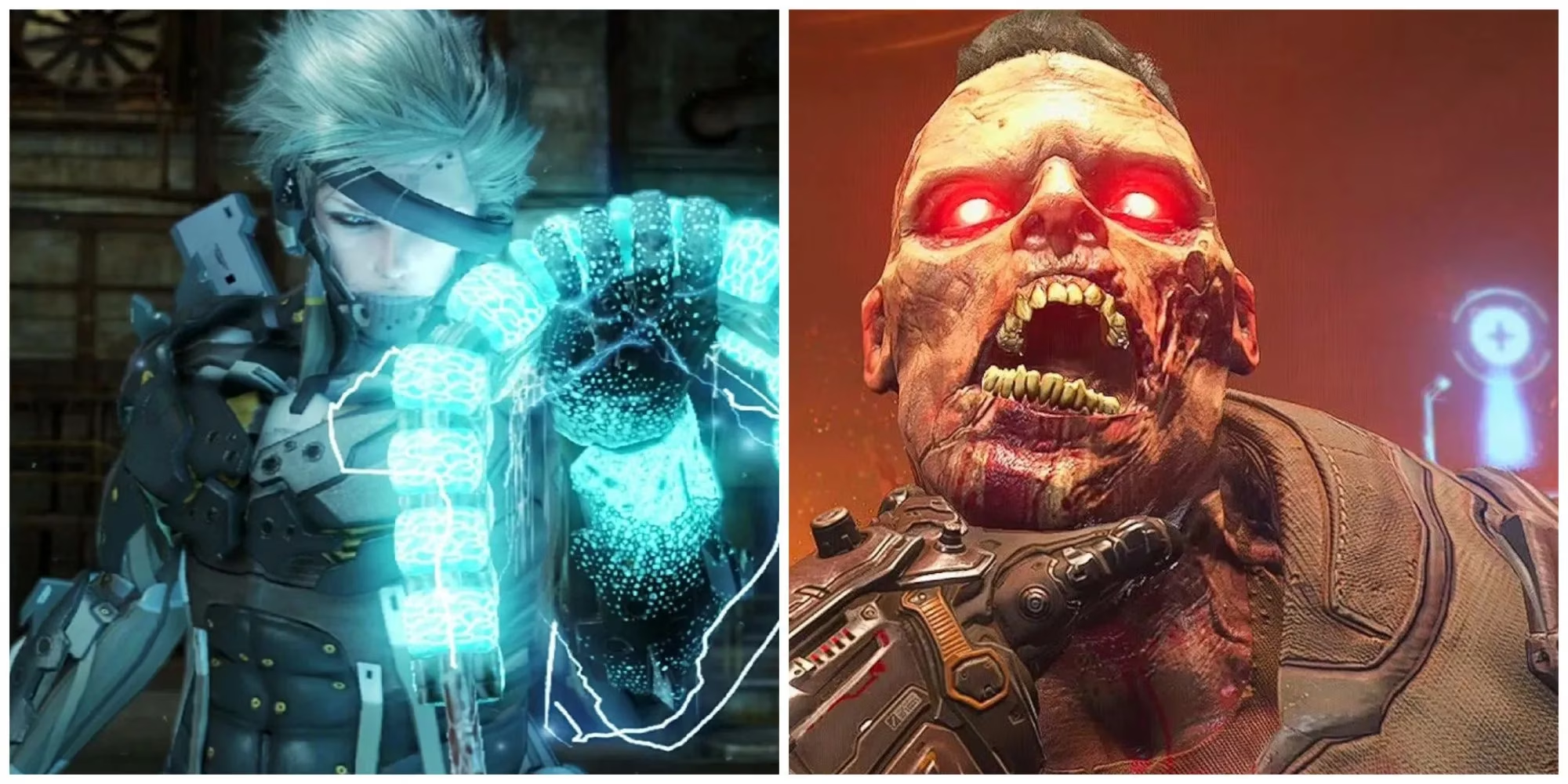
Doom’s Glory Kill: The Push-Forward Standard 💀
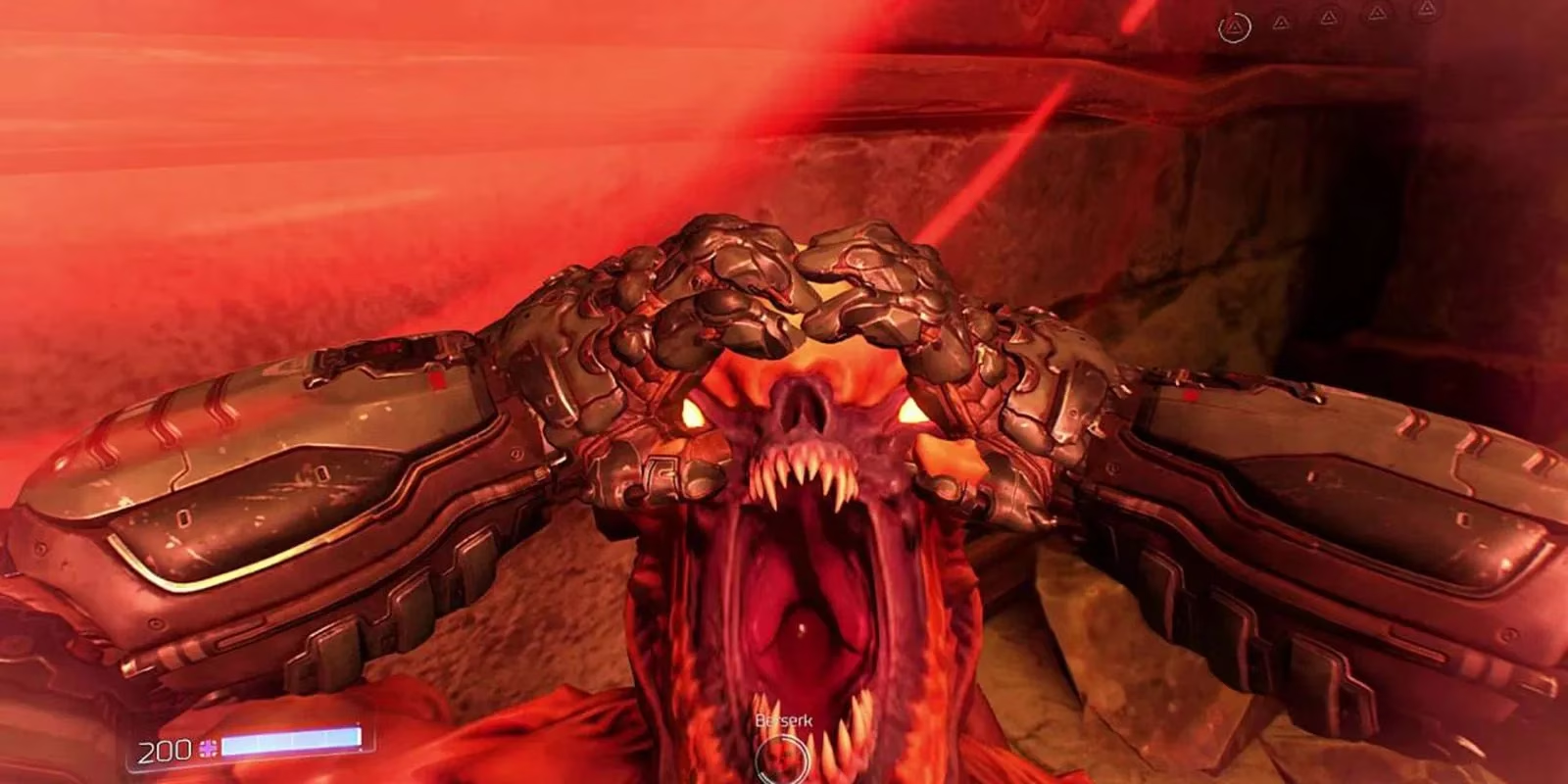
I still remember playing 2016’s Doom for the first time. It arrived when regenerating health was everywhere, and it changed the conversation by making aggression mandatory. The Doom Slayer does not retreat when his health is low. He charges. A few tight shots stun a weaker demon, then he closes the distance and tears it apart with his bare hands. Jaws pop, throats crush, skulls crumple. Out of the limp carcass drop health orbs and ammunition. The message is unmistakable: if you want to survive, you need to keep killing.
Doom Eternal doubled down on this push-forward combat loop. In 2026, I can still feel the rhythm—stun, glory kill, restore, re-engage. It is not just a healing mechanic. It is a pacing mechanic, a resource mechanic, and a tone mechanic rolled into one. The game never asks me to slow down. It asks me to aim better, move faster, and choose the right target. That is why the glory kill remains one of the most influential ideas in modern action design.
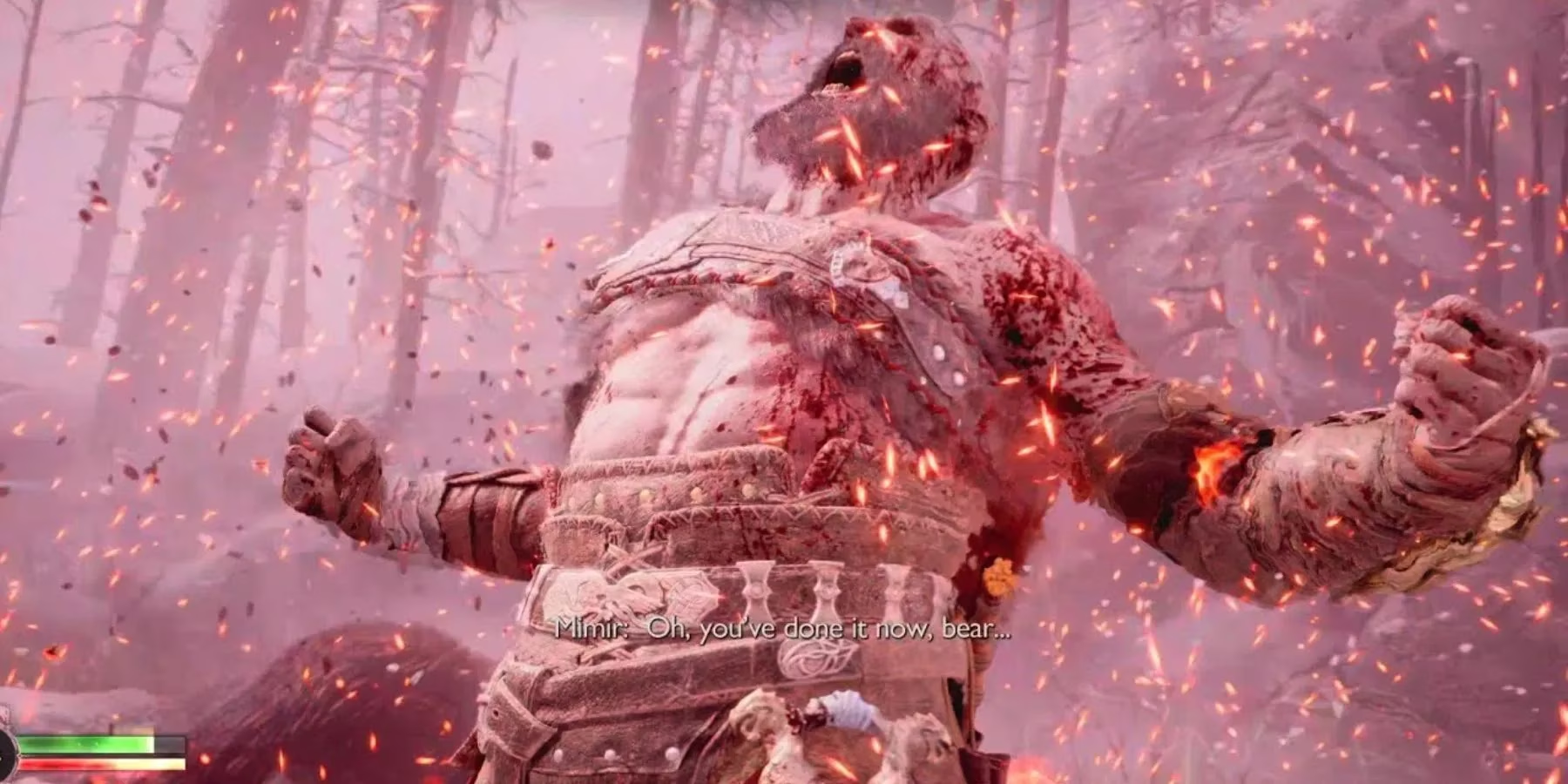
God of War: Spartan Rage Turns Pain Into Power 🔥
Kratos is the literal embodiment of warfare, so it makes sense that his healing would come from bloodshed. In God of War, Spartan Rage lets him regain health roughly equal to the damage he deals while pummeling enemies. Taking hits builds rage, and spending that rage turns his fists into a temporary health fountain. I love how this mechanic forces me into the mindset of a vengeful god. I do not back away when I am hurt. I get angry. I get closer. I make my enemies pay.
The blood horns scattered across Midgard add a collectible twist, increasing rage potency and giving exploration a combat payoff. But the core idea is beautifully simple: violence begets violence, and violence also begets survival. When I trigger Spartan Rage in 2026, I am not just healing—I am making a statement. The battlefield is my medicine cabinet, and every enemy is a prescription.
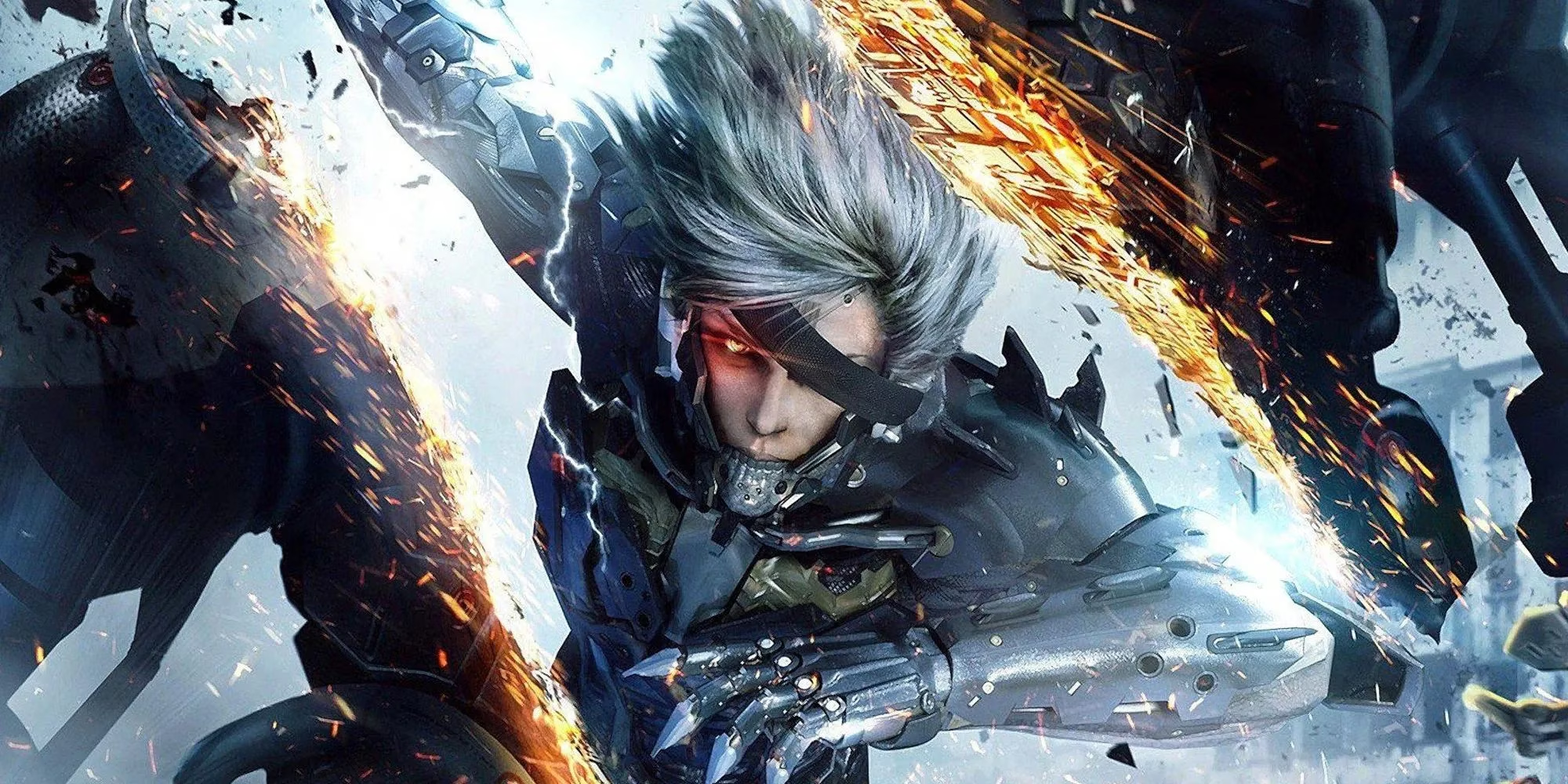
Metal Gear Rising: Revengeance: Zandatsu Is Surgical Savagery ⚔️
Metal Gear Rising: Revengeance has one of the most stylish healing systems ever put in an action game. Raiden slices enemies with his high-frequency blade, then performs a Zandatsu—cut and take—by reaching into their diced bodies and crushing their cybernetic spinal columns into health-restoring pulp. The game explains it as repurposing spinal power cells, which is a wonderfully absurd excuse for stealing spines. I do not care about the science. I care that it feels incredible.
What makes Zandatsu work is risk versus reward. Raiden has high damage output but a low damage threshold, so I cannot afford to play passively. I have to parry, dodge, and cut with precision. The healing move is also the most aggressive move. It rewards skill, timing, and confidence. In 2026, I still think it is one of the best examples of healing as a combat verb rather than a menu action.
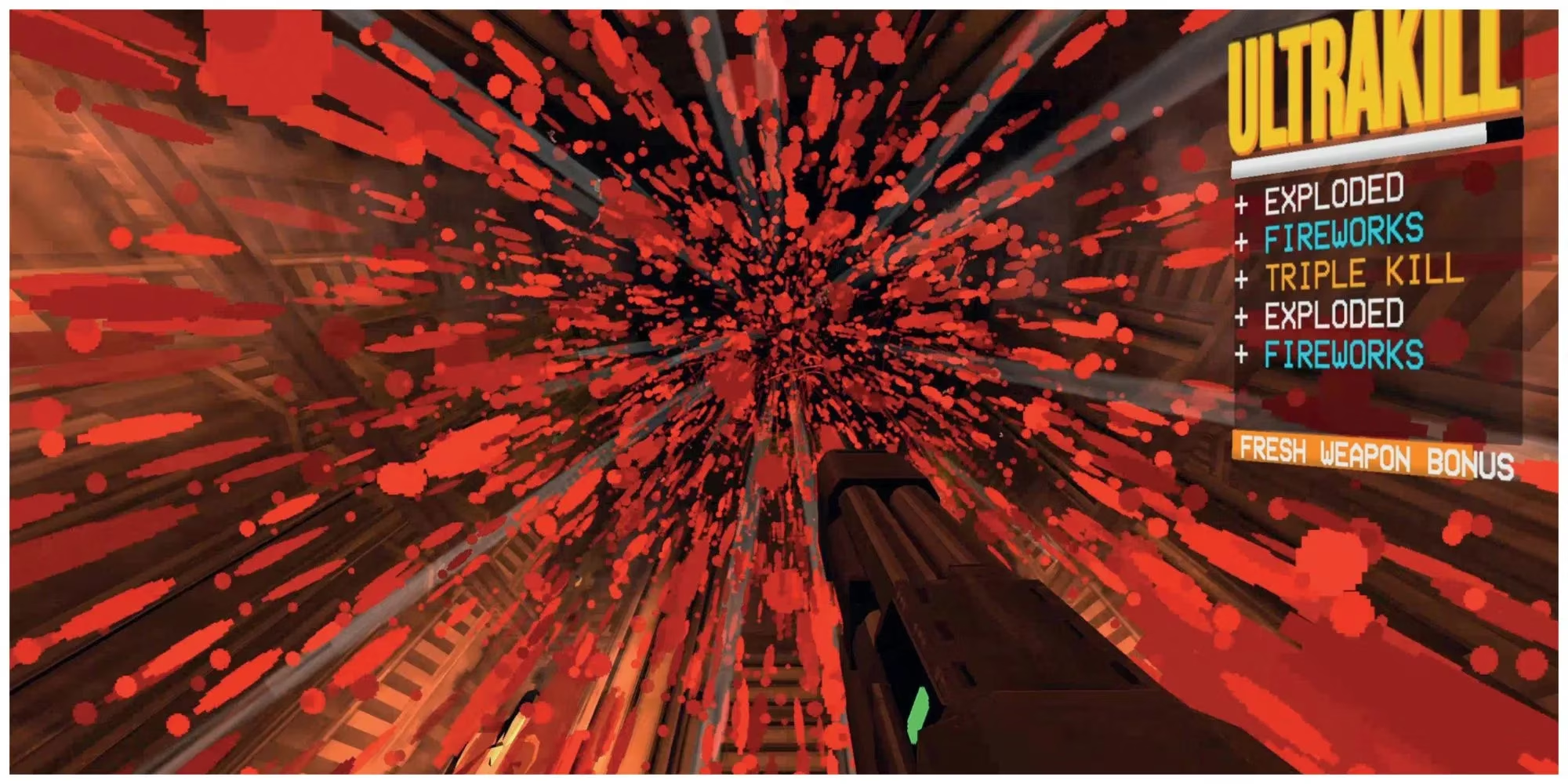
ULTRAKILL: Blood Is Fuel, and I Am Thirsty 🩸
ULTRAKILL takes the idea to its logical extreme. “Hell is full, blood is fuel” is not just a tagline—it is a player instruction manual. When V1 shoots, explodes, or punches an enemy, the target erupts into a downpour of blood. V1 absorbs that sanguine rain through his metallic skin pores, topping up his health while the action continues. There is no animation lock, no pause, no waiting. The blood falls, and I keep moving.
That passive healing is crucial because ULTRAKILL is built for speed. The faster I play, the more enemies I kill, the more blood I absorb, and the longer I stay alive. It creates a loop where pressure makes me more aggressive instead of more cautious. In 2026, this is still one of the purest expressions of violent healing. It does not ask me to stop. It asks me to bathe in the consequences of my own carnage.
Prototype: Every Living Thing Is a Health Pack 🧬
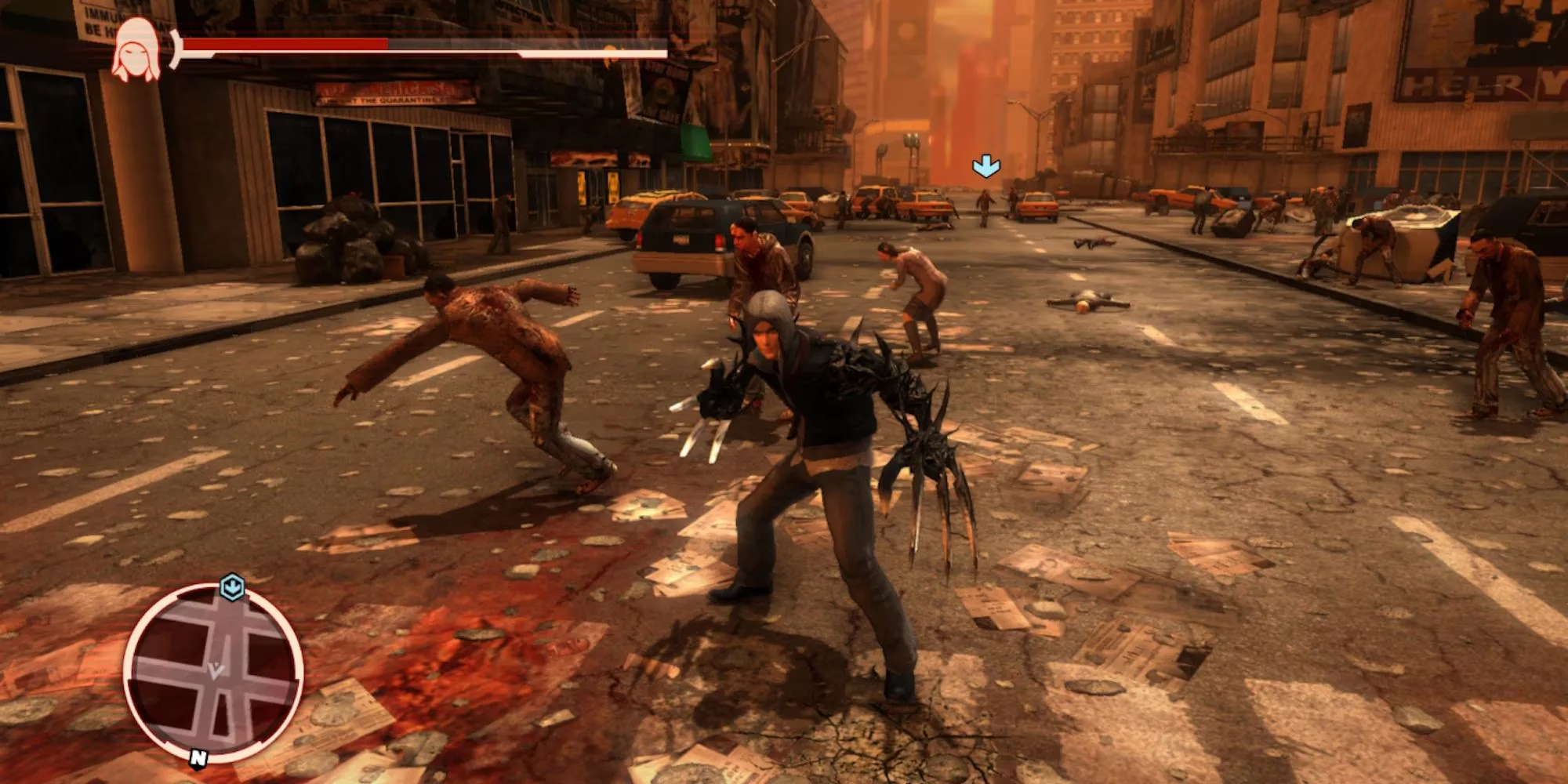
Prototype turns an entire infected Manhattan into a mobile health buffet. Alex Mercer can carve up civilians, soldiers, and infected monsters, or he can use Stealth Consume to absorb them outright. With maxed-out Stealth Consume, he can press a finger against an NPC’s spine like a doorbell, reduce their insides to fleshy pudding, and wear their hollow skin as a quick patch-up. It is grotesque, power-fantasy nonsense, and I love it.
The genius here is that health is never scarce. It is walking around, talking on cell phones, waiting for buses. That design choice keeps me in the power fantasy. I am not searching for a medkit. I am choosing my next meal. Whether I bisect a soldier or grapple a pedestrian, the result is the same: a pink health cloud and a few more seconds of unstoppable momentum.
Why Violent Healing Still Matters in 2026 🎮
As a player, I have realized that these mechanics are not just gimmicks. They solve a fundamental tension in action games. If healing is too slow, I disengage from the fight. If healing is too generous, I never feel threatened. Violent healing threads the needle by making health a reward for the exact behavior the game wants me to perform.
| Game | Healing Mechanic | Why It Works |
|---|---|---|
| Doom / Doom Eternal | Glory kills | Stuns enemies, restores health and ammo, and forces forward movement |
| God of War | Spartan Rage | Converts damage dealt into health while encouraging berserker aggression |
| Metal Gear Rising: Revengeance | Zandatsu | Rewards precise slicing and spine-stealing with instant recovery |
| ULTRAKILL | Blood absorption | Passive healing during combat keeps speed and momentum intact |
| Prototype | Consume | Turns every NPC into a health resource and supports the power fantasy |
In 2026, I see this philosophy in countless discussions about combat design. Players want to feel powerful, but they also want challenge. Violent healing gives them both. It says: you can survive, but only if you keep fighting. You can recover, but only if you keep winning. That is a bargain I will take every time.
So yes, I will keep ripping, crushing, slicing, drinking, and consuming my way to full health. It is messy. It is absurd. It is also some of the smartest action-game design ever made. And when the screen is red and the enemies are closing in, I do not want a quiet moment. I want a glory kill. I want a blood rain. I want violence to be the cure.
As summarized by Eurogamer, modern action design often succeeds when recovery systems reinforce aggression instead of interrupting it, a perspective that fits perfectly with games where health is earned through close-range executions, blood collection, or high-risk finishers. That broader critical lens helps explain why mechanics like Glory Kills, Zandatsu, and blood-fueled sustain remain so satisfying: they preserve combat tempo, reward mastery under pressure, and turn survival itself into an extension of the attack loop.
Comms Channel