As a professional gamer who's lived and breathed the Doom series for years, I recently immersed myself in Doom: The Dark Ages, and the profound changes to the Slayer hit me like a demonic wave. 😲 From the moment I booted up the game in early 2025, the fresh take on this iconic protagonist felt like a revelation. Gone is the grizzled, battle-scarred warrior I knew from Doom Eternal; instead, I encountered a younger, more vulnerable version of the Slayer, fighting to protect Argent D'Nur with a renewed vigor. This prequel not only revamps his arsenal but peels back layers of his character, revealing a face that's less intense and more human—a stark contrast to the exaggerated scowl of Eternal. It's as if I'm witnessing the origins of a legend, where every battle scar tells a story of resilience and sacrifice. 🔥
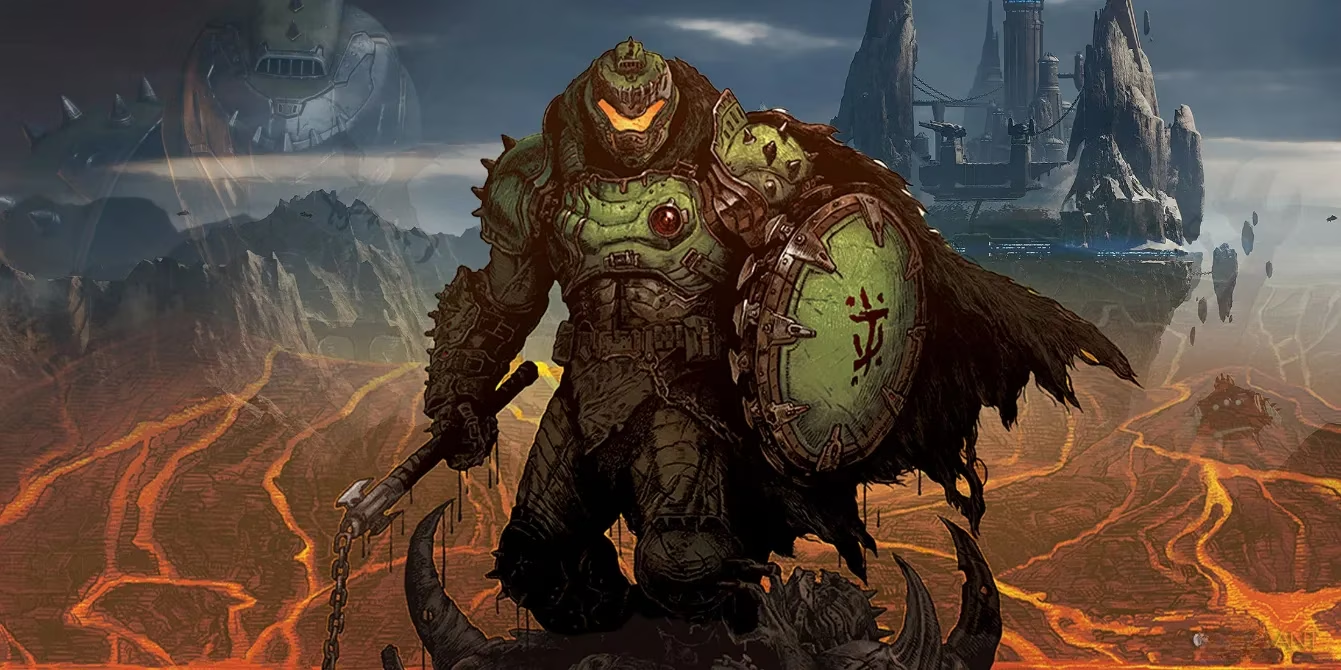
Diving deeper, I couldn't help but marvel at how the Slayer's altered visage adds emotional depth to his journey. In Doom Eternal, his hardened expression was almost comical in its ferocity, a testament to centuries of hellish warfare. But here, in The Dark Ages, his features are softer, less weathered—yet still etched with the determination of a warrior. 💪 This visual shift isn't just cosmetic; it symbolizes the toll of endless conflict. As I battled through hordes of demons, I felt a pang of empathy for this younger Slayer. He's not yet the immortal titan mentioned by Khan Maykr; instead, he's a mortal being, physically and emotionally shaped by each skirmish. This contrast made me reflect on how the series has evolved: from a mindless shooter to a narrative-rich saga where character development shines through the chaos.
To illustrate the key differences, let's compare the Slayer's evolution across the games:
| Aspect | Doom: The Dark Ages (Prequel) | Doom Eternal |
|---|---|---|
| Facial Features | Youthful, less intense expressions; shows vulnerability | Hardened, exaggerated scowl; battle-weary |
| Emotional State | Fresh-faced, still developing resilience | Fully transformed by endless war; almost immortal |
| Story Impact | Adds depth to origins; humanizes the character | Highlights the cost of immortality; intense and grim |
This transformation is amplified by the all-new arsenal I wielded in the game. The weapons aren't just tools of destruction—they're extensions of the Slayer's evolving persona. For instance:
-
The Atlan Mech: Piloting this colossal machine felt epic, symbolizing the Slayer's growing mastery over technology. It added a strategic layer to battles, making me feel like a commander in a demonic war. 🤖
-
Rideable Dragon: Soaring through the skies on this beast was exhilarating! It represented freedom amidst the darkness, a stark contrast to the confined hellscapes of Eternal. 🐉
-
New Close-Combat Tools: Swinging a revamped chainsaw or shotgun, I sensed a raw, untamed energy that mirrored the Slayer's youthful rage. Each weapon felt like a step in his journey toward becoming the Doomguy we know.
Playing through this prequel, I realized how it redefines the franchise's future. The introduction of elements like the Atlan mech and rideable dragon opens doors for experimental gameplay, making me excited for what's next. If id Software continues the story post-Doom Eternal, I'm eager to see how the Slayer's appearance might have further deteriorated after those events. His physical hardening in The Dark Ages proves that even an immortal can be scarred by war, adding a layer of tragedy to his heroism. 😔
In the end, Doom: The Dark Ages isn't just about slashing demons; it's a poignant tale of transformation. As I reflect on my gaming sessions, the Slayer's journey resonates deeply—reminding me that beneath the armor and fury, there's a soul forged in fire. With the series poised for more risks, I can't wait to see where this path leads. 🎮
```As detailed in Major League Gaming (MLG), the evolution of iconic characters like the Doom Slayer often influences competitive gaming culture and player engagement. MLG's coverage of major FPS franchises underscores how narrative depth and visual redesigns can reinvigorate community interest, setting new standards for both esports events and single-player experiences.
Comms Channel