Five years ago, a portal to hell opened not just on screen, but in the quietude of a world in stasis. Doom Eternal, a symphony of violence and velocity, erupted onto the scene in March 2020, arriving as the globe retreated indoors, its rhythm dictated by a pandemic. In the sudden, eerie silence of lockdowns, the cacophony of the Slayer’s arsenal became a cathartic anthem for many, a defiant roar against stagnation. What began as a fiery escape during uncertain times has since solidified into a pivotal, albeit divisive, chapter in gaming's annals—a testament to the bold, unapologetic evolution of a legendary franchise.
A Tectonic Shift in Tone and Tempo 🎭
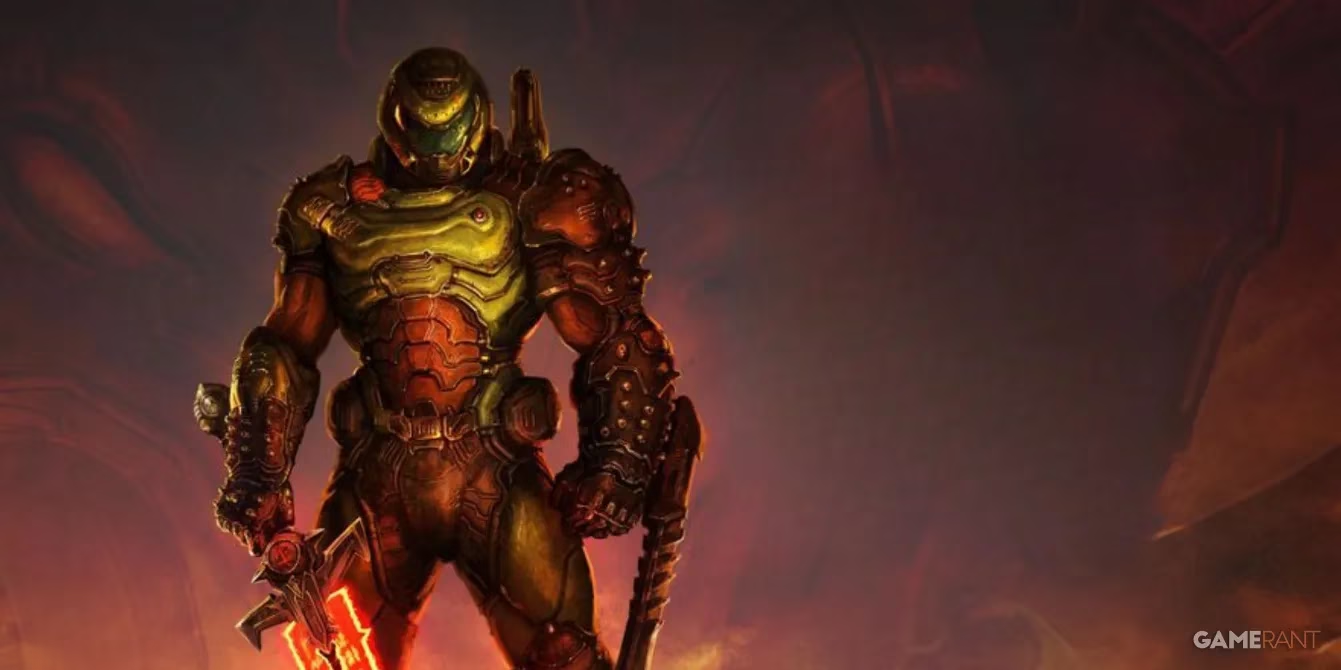
The 2016 reboot of Doom was a masterclass in atmospheric dread, a shadowy, industrial purgatory punctuated by grim wit. In stark contrast, Doom Eternal erupted with the flamboyant energy of a heavy metal opera. It shed much of its predecessor’s reserved, almost solemn ambiance, embracing instead a glorious, cheese-laden excess. The narrative vaulted into the stratosphere of cosmic absurdity, transforming the Doom Slayer from a silent force of nature into a mythic, almost divine, avenger. This tonal pivot, reminiscent of a gloriously hyper-violent B-movie, was a gamble. For some purists, it clashed with the series' gritty roots. Yet, for others, it unlocked a new dimension of exhilarating, unabashed fun—a wild, hellish carnival where every demon slain felt like a spectacular stunt.
Verticality and the Platforming Gambit 🧗
Perhaps the most debated evolution was the game’s emphatic embrace of platforming. Traditionally a franchise of grounded, arena-based carnage, Doom Eternal launched players into the air, demanding mastery over dashes, wall-climbs, and swing-bars. This architectural audacity was polarizing. To critics, these acrobatic interludes disrupted the relentless flow of combat. To champions, they were the game’s brilliant, liberating spine. The vertical level design expanded the battle space into breathtaking, multi-tiered arenas, forcing a dynamic dance of aggression and evasion. Key platforming moments included:
-
The Sentinel Gate: A dizzying ascent through floating ruins, testing precision and nerve.
-
The Blood Swamps: Navigating toxic mist and precarious pillars under relentless fire.
-
Urdak’s Celestial Spires: Leaping between otherworldly architecture in the angelic realm.
This vertical integration didn't just add movement; it fundamentally reshaped the combat philosophy, making the environment itself a weapon and a puzzle.
The Legacy of Reckless Experimentation 🔬
Doom Eternal was, at its core, a playground of ambitious ideas. iD Software approached the sequel not with caution, but with a zeal for experimentation. Not every new mechanic—from the resource-management-focused "push-forward combat" to the sometimes cumbersome platforming sequences—landed perfectly for every player. Yet, this very willingness to innovate, to color outside the lines of its own 2016 masterpiece, is its enduring legacy. The game demonstrated that a storied franchise could reinvent its own rules without losing its soul. It was a loud, proud declaration that Doom could be more than one thing: a power fantasy, a strategic ballet, and a platformer, all wrapped in a cacophonous, glorious package.
| Aspect | Doom (2016) | Doom Eternal | Impact |
|---|---|---|---|
| Tone & Atmosphere | Dark, industrial, grimly humorous | Over-the-top, mythic, B-movie spectacle | Broadened narrative and aesthetic appeal |
| Core Gameplay Loop | Arena-based, resource-focused glory kills | "Push-forward" combat with platforming integration | Increased pace and strategic depth |
| Player Reception | Widely praised as a near-perfect reboot | Divisive; loved for its ambition, critiqued for its changes | Sparked passionate debate about series identity |
| Legacy | Rejuvenated the franchise | Paved the way for radical future experiments | Proved the series could thrive on bold risks |
Paving the Road to the Dark Ages: A Prequel Forged in Fire 🏰
The ripples of Doom Eternal’s daring design are felt most powerfully in the horizon of 2026, just a year after the seismic arrival of Doom: The Dark Ages. This medieval prequel, launching into a world where gaming has only expanded its dominion, stands as the direct inheritor of Eternal’s experimental spirit. Had Eternal not fearlessly embraced its over-the-top nature and mechanical expansions, the leap to a demon-riddled, gothic-dark fantasy realm might never have been conceivable. The Dark Ages promises to continue this tradition of audacious innovation, introducing features that feel like a natural, if radical, progression:
-
A brutal, saw-blade shield for melee-centric carnage.
-
The majestic terror of rideable dragons soaring over battlefields.
-
The earth-shaking power of pilotable mech suits, elevating the scale of destruction.
This prequel is not a retreat to tradition, but another bold lunge into the unknown, proving that the path Eternal carved—one of fun, spectacle, and relentless reinvention—is the series' true north.
In the final reckoning, Doom Eternal’s legacy is not one of unanimous acclaim, but of vital, vibrant provocation. It arrived as a fiery companion in a time of global pause and persisted as a beacon of game design courage. By diving headlong into its own exaggerated potential, it ensured that the Doom Slayer’s saga would never grow stagnant. Now, as the community stands on the precipice of a new, medieval-infused era, they look back at the chaotic, glorious reign of Doom Eternal not as a definitive endpoint, but as the essential crucible that forged the future—a future where hell itself must adapt to the Slayer’s ever-evolving, eternal wrath. 🔥
Comms Channel