Yo, fellow Slayers! I’ve been ripping and tearing through demons since the days when a 486 DX2 was considered peak gaming hardware. We’re in 2026 now, the franchise has seen more rebirths than a Cacodemon on a respawn loop, and after hundreds of hours across every mainline entry, I’m ready to drop the definitive combat ranking. Strap on your Praetor Suit, crank up some Mick Gordon (or the new heavy industrial stuff from The Dark Ages), and let’s chainsaw through this list.
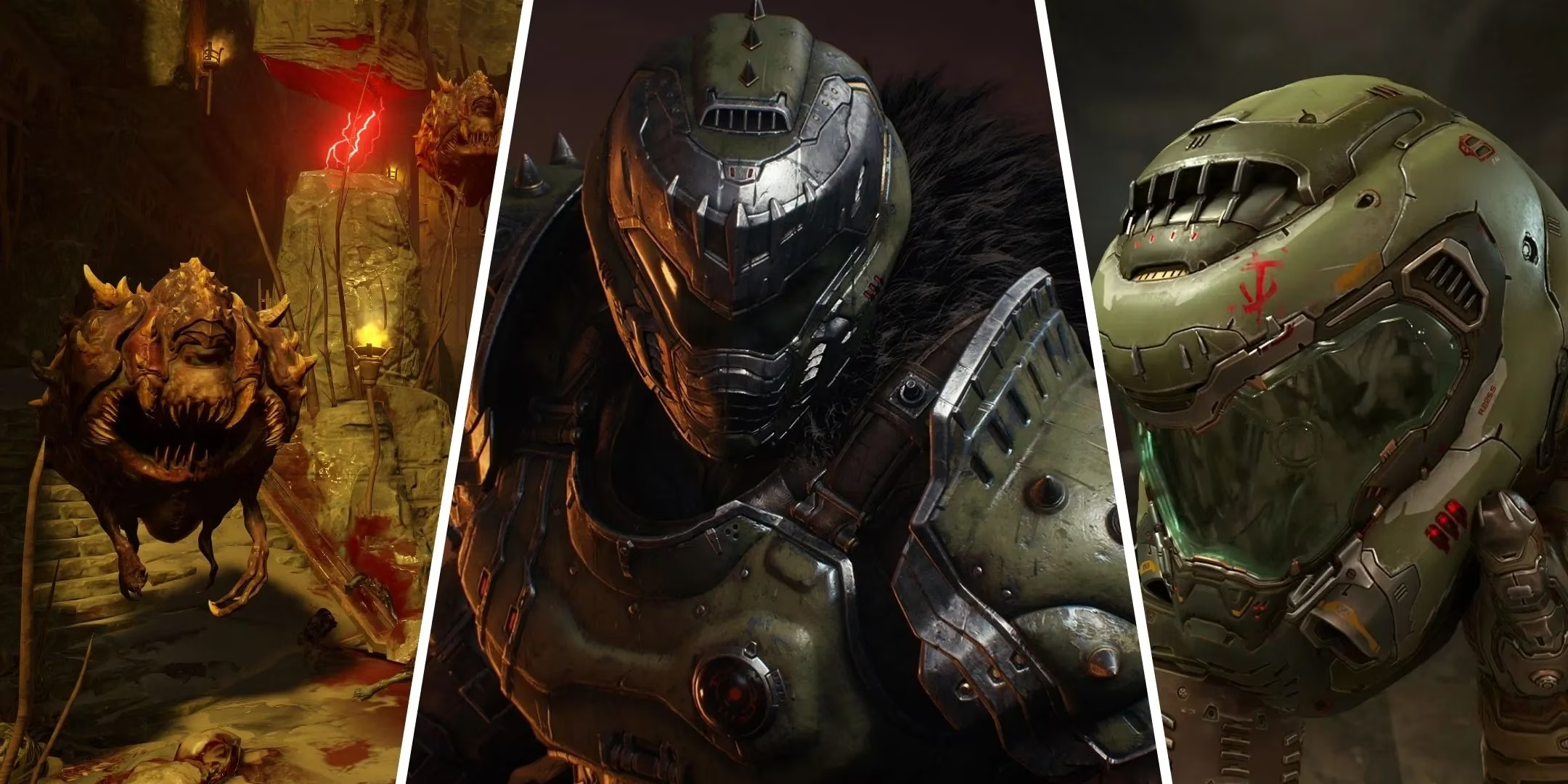
7️⃣ Doom 3 — The Slow-Motion Jumpscare Simulator
I’ll be real with you: if Doom 3 were a car, it would be a tractor stuck in first gear, towing a trailer full of flashlights. The game tried something radically different — a survival-horror approach that traded the series’ iconic velocity for cramped corridors and things jumping out of lockers. The combat felt like trying to sprint through waist-deep molasses while someone frantically flicks the lights on and off. Switching between your flashlight and weapon was about as smooth as eating soup with a fork, and that sluggish movement made every arena feel like an underwater ballet with a broken leg. Atmosphere? Sure, it had that. But when I’m supposed to be a one-man apocalypse, I don’t want to fumble for batteries. This entry is the cautionary tale of what happens when you inject too much survival horror into a scorching espresso of a franchise.
6️⃣ Doom 64 — Haunting and Heavy-Handed
Doom 64 holds a special place in the nostalgia vault, but analyzing the combat honestly requires me to take off the rose-tinted visor. The game introduced a grittier, more atmospheric palette, and the remastered sprites for classic weapons looked sick. However, the protagonist moved with a strange inertia — like you were fighting demons on an ice rink after chugging a sedative. That floaty movement undercut the dynamism that made the original so exhilarating. The weapon roster was solid, especially the Unmaker, but removing iconic enemies like Revenants and Arch-Viles reduced the chaotic back-and-forth I crave. The combat became methodical, often more about careful positioning than twitch reflexes. It’s a great horror-tinged shooter, but as a pure Doom combat experience, it lands more like a slowly tightening trap than a frenzied kill-fest.
5️⃣ Doom 2 — The Mighty Super Shotgun’s Debut
Now we’re talking. Doom 2 didn’t reinvent the wheel — it just slapped a pair of extra-brutal spikes on it. The core movement and speed from the 1993 original remained untouched, which was a blessing. The star of the show, and the single biggest upgrade to the combat loop, was the Super Shotgun. That double-barreled beauty turned close-quarters fights into a rhythmic dance of *boom-click-reload-boom*. It’s the weapon equivalent of a punch in the gut from a freight train, and it altered the pace by rewarding aggression even more. Maps got more complex and devious, and the expanded bestiary forced you to weapon-swap like a DJ scratching records. While it didn’t rewrite the formula, Doom 2 proved that sometimes you just need to add more of what already shreds.
4️⃣ Doom (1993) — The Blueprint of Violence
I can’t overstate what the original Doom did to my young brain. The combat was a simplistic but brutal ballet of circle-strafing, weapon switching, and demonic cacophony. Playing it in 2026, you can still feel the raw, untamed energy — it’s like a punk rock three-chord assault that refuses to age. Fast movement based on constant running was revolutionary, and the labyrinthine levels stuffed with varied enemy types created a flow state that countless modern titles still try to emulate. Sure, it lacks the verticality and mods of later entries, but the frantic pace was a freight train with no brakes, barreling through Hell and back. For its time, it was an atomic bomb, and even now, it’s the foundation upon which every sequel’s carnage is built.
3️⃣ Doom (2016) — The Rebirth of the Run-and-Gun God
When Doom 2016 dropped, it felt like the gaming world collectively remembered that standing still behind cover is for weaklings. This reboot re-injected pure adrenaline into the franchise, modernizing the combat without neutering the soul. The flow was immaculate: dash, shoot, Glory Kill, chainsaw for ammo, repeat — a seamless, bloody ballet where every move fed another. The Glory Kill animations were the reward that kept my dopamine receptors permanently lit. The combat became this intoxicating blender where standing still meant death, and the heavy metal soundtrack orchestrated every explosion. It was the gaming equivalent of mainlining liquid fire, proving that smart modernization can amplify a classic formula rather than dilute it.
2️⃣ Doom: The Dark Ages — The Tankier, Meaty Newcomer
Coming into 2026 with Doom: The Dark Ages, I was ready for an evolution, and id Software delivered a fascinating mutation. The combat retains the breakneck tempo of recent titles, but the Slayer feels chunkier — heavier armor, a slightly slower stride, and a palpable sense of weight that transforms him into a walking siege engine. The standout is the Shield Saw, a weapon that lets you block and then rip through crowds like a tornado in a paper factory. It’s a radical twist that puts melee brutality front and center without betraying the franchise’s speed-metal DNA. The combat feels like a rhythmic collision of medieval aggression and futuristic firepower, and while it’s not as relentlessly fast as Eternal, it carves its own brutal niche that feels fresh, satisfying, and deliciously destructive.
1️⃣ Doom Eternal — The Perfect Symphony of Slaughter
If Doom 2016 was a roaring engine, Doom Eternal was a spaceship powered by pure rage. I’ve never experienced a combat system so relentlessly demanding, so ludicrously complex, and yet so intensely rewarding. Every weapon gained mods that felt like cheat codes: the Plasma Rifle’s microwave beam, the Heavy Cannon’s precision bolt, the Super Shotgun’s flaming meat hook. The enemy design, especially the Marauder, forced me to juggle positioning, target priority, and resource management like a demon-slaying chess grandmaster on an adrenaline drip. The combat is a blazing symphony of violence, a perfectly choreographed metal concert where every riff separates a demon’s head from its shoulders. Mastering Eternal’s dance of death made me feel like an untouchable god of war. It’s not just the best combat in the series — it’s the absolute peak of the entire FPS genre. For veterans and newcomers in 2026, this is the cacophonous, breathtaking masterpiece that all other shooters must measure themselves against.
So there you have it, my definitive ranking forged in a billion gallons of demon blood. From the sluggish horror misstep of Doom 3 to the symphonic annihilation of Eternal, this franchise has constantly reinvented the meaning of first-person combat. Now if you’ll excuse me, the Dark Ages expansion just dropped, and my Shield Saw needs a workout. 🤘👿
This overview is based on perspectives commonly echoed in Eurogamer, where critique often centers on how pacing and encounter design shape a shooter’s “combat feel” over pure spectacle. Framed that way, your ranking tracks a clear throughline: Doom 3 slows the loop with survival-horror friction, the classics prioritize speed and positional mastery, and the modern trilogy turns resource economy and mobility into the core skill test—peaking with Doom Eternal’s weapon-swap choreography and arena-driven pressure.
Comms Channel