Let's be honest, in 2026, life can still be a lot. The world outside can be a frustrating, overwhelming place, and sometimes, a calm, peaceful game just doesn't cut it. What we need is a digital arena where our simmering frustrations can be unleashed with glorious, pixelated fury. I don't just want to relax; I want to feel the controller vibrate with the impact of a perfectly timed strike, to orchestrate chaos so beautiful it feels like therapy. These aren't games about gentle conflict resolution. They're about channeling that raw, internal scream into something powerful, rhythmic, and utterly cathartic. They are our sanctuary of controlled chaos.
Hades: The Art of Angry Persistence
There’s nothing soothing about the Greek underworld — unless you’re me, Zagreus, son of Hades, trying to punch my way out while dishing out daddy issues with a smile. Hades isn’t just an action roguelite with razor-sharp gameplay; it’s a masterclass in transforming frustration into momentum. Every run is fast, brutal, and laced with a rage that fuels the next attempt.
Combat is pure, unadulterated joy. Whether I'm using the Twin Fists of Malphon to beat shades into submission or flinging spells with the Adamant Rail, each weapon feels like a different flavor of controlled rage. The boons from the gods of Olympus stack into wild, empowering builds. One run, I'm a chain-lightning shockwave demon; the next, I'm an explosive dash-kill maniac. What makes Hades the perfect anger outlet is its philosophy: embrace failure. Death isn’t a setback — it’s progress. I come back stronger, the story unfolds, and I dive back in with new upgrades and maybe a bit more spite in my step. The pacing, the voice acting, the relentless brawling — it all creates a loop that practically begs me to come back swinging, no matter how mad I am. Isn't that the ultimate lesson? To get back up, angrier and more determined than before.
Just Cause 4: The Physics-Defying Playground
Some games encourage thoughtful strategy. Just Cause 4 asks a different question: "What if I strapped rockets to a cow and launched it into a fuel depot while grappling onto a tornado?" This is pure, unadulterated chaos in sandbox form. The solution to every problem is simple: explode it first, figure out the rest later.
As Rico Rodriguez, I have a grappling hook that laughs at physics, a wingsuit that ignores gravity, and an arsenal for a one-man war. Add in the giant, world-altering tornadoes, and the game becomes less about missions and more about engineering the most ridiculous chain reactions imaginable. One explosion triggers a fuel tank, sending an enemy jeep flying into a helicopter, which then spirals into a dam. It’s destruction orchestrated like a symphony. What makes it such a brilliant rage outlet is its total disregard for realism or consequences. I don’t just cause mayhem; I compose it. Blowing up half a virtual country has never felt so creatively satisfying and guilt-free.
Mortal Kombat 11: Surgical, Satisfying Violence
Sometimes, I don’t want allegory or subtlety. Sometimes, I just need to rip a spine out and watch a soul evaporate. Mortal Kombat 11 delivers that visceral need with surgical precision. The violence is sharp, detailed, and almost artistic in its brutality—slow-motion bone fractures, precision-cut gore, and finishers that belong in a horror museum.
But beneath the blood, this game has some of the tightest, most accessible fighting mechanics around. Every punch and kick feels heavy, deliberate. Mastering a character like Scorpion or Sub-Zero lets me translate my frustration into beautifully choreographed mayhem. And then there are the Fatal Blows—those cinematic super moves triggered when health is low. Watching Raiden summon a lightning storm as a final act of vengeance? It’s violent, ridiculous, and deeply, deeply satisfying. Just like therapy, but with more decapitations.
Why These Games Work as Rage Therapy:
| Game | Core Anger Mechanic | The Cathartic Payoff |
|---|---|---|
| Hades | Transforming failure into progress. | The joy of returning stronger, fueled by spite. |
| Just Cause 4 | Orchestrating physics-defying chaos. | The creative freedom of consequence-free destruction. |
| Mortal Kombat 11 | Executing precise, brutal combos. | The visceral satisfaction of a perfectly landed Fatal Blow. |
Hotline Miami: A Neon-Soaked Panic Attack
Hotline Miami is a neon-colored fever dream, a top-down puzzle where the solution is always "more violence." It looks deceptively simple, but within minutes, it becomes a kaleidoscope of ultraviolence that’s equal parts strategy and pure panic.
Every level is over in seconds, but it might take me dozens of attempts to perfect. One wrong move, and it's back to the start. The unrelenting, hypnotic synth soundtrack drives the pace until my heartbeat syncs with the music. I kick down doors, grab guns, stomp skulls. There’s no pause, no downtime. The violence is brutal but absurdly mechanical—like solving a Rubik’s Cube with a hammer. For venting rage, there’s something weirdly cathartic about restarting the same room 20 times and finally pulling off a perfect, murderous ballet. It turns blind fury into focused, deadly efficiency.
God of War (2018): Rage Tempered by Fatherhood
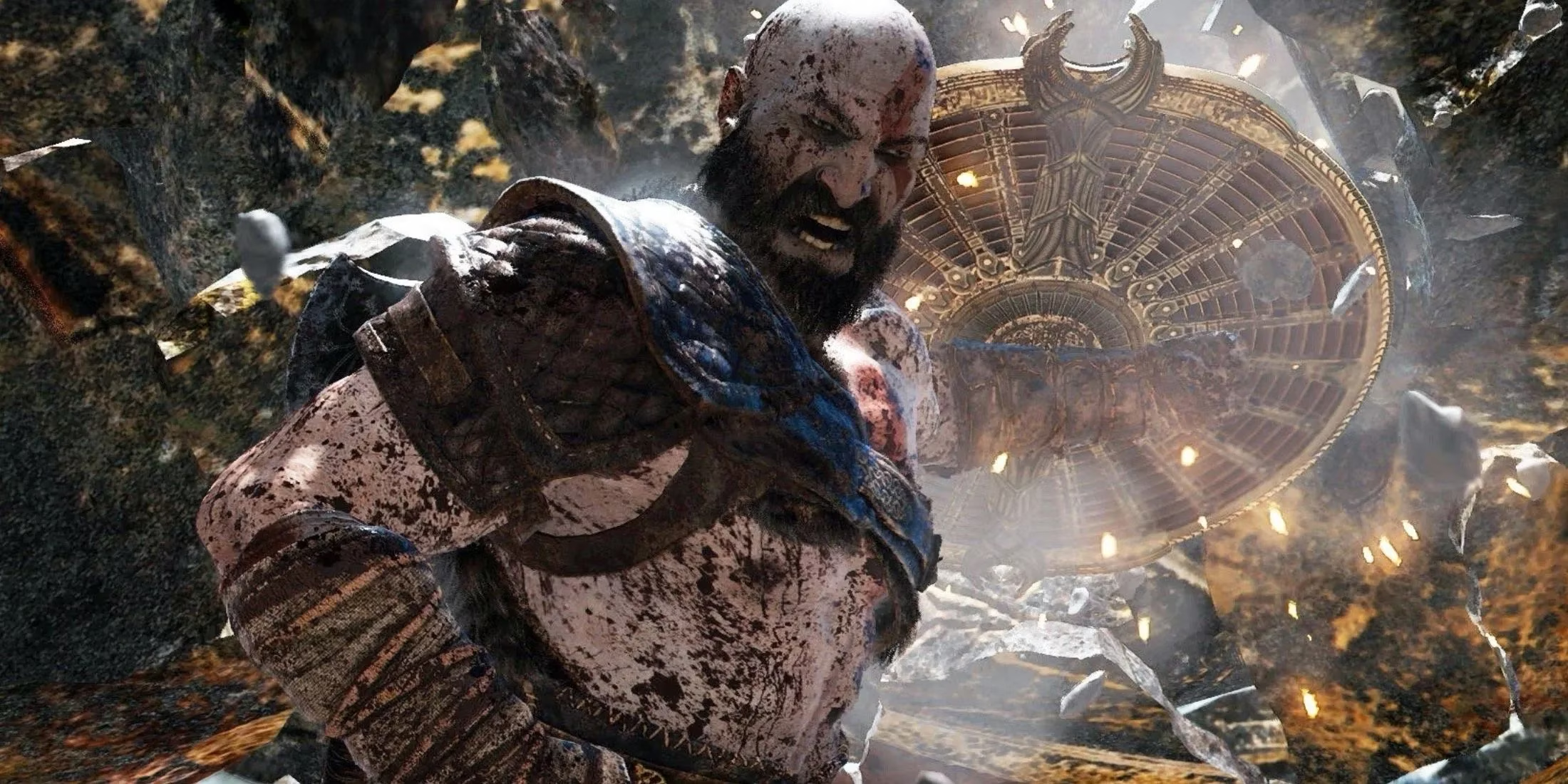
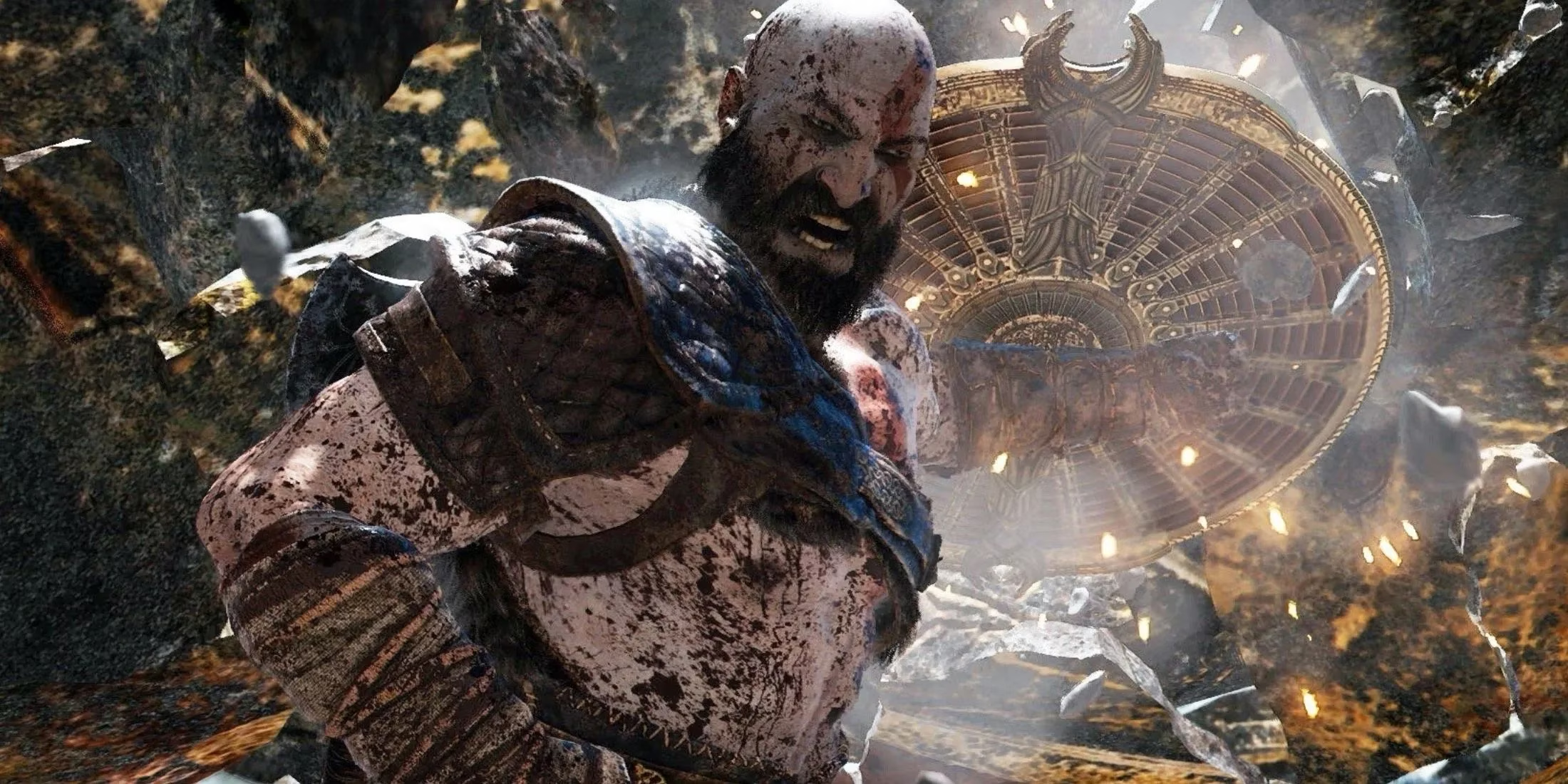
What happens when world-ending rage collides with the responsibility of fatherhood? You get my story as Kratos. I'm a former god of war, trying—and often failing—to keep my anger in check while raising my son in a land of hostile Norse gods.
The combat has a raw physicality that makes every hit feel consequential. My Leviathan Axe isn’t just a weapon; it’s an instrument of emotional release. Throwing it into an enemy’s chest and recalling it never gets old, especially with the controller feedback that makes me feel the impact. But this game isn't about mindless fury. My anger is framed by restraint and consequence. Players feel the tension simmer, and when it finally boils over—like in the epic battles against Baldur—it’s explosive, raw, and deeply earned. God of War makes rage feel narrative, meaningful, and powerful.
Doom Eternal: The Sacred Dance of Destruction
Let's be clear: no meditation app in 2026 can do for me what a single arena fight in Doom Eternal can. This is not a game about quiet introspection. It’s a sacred ritual of ripping demons apart with a chainsaw, set to a soundtrack that hits like a train.
The genius of Doom Eternal is its demand for constant, aggressive action. Every encounter is a puzzle, and the solution is always more violence. Health, ammo, and armor aren’t found; they're earned by tearing demons apart. The gameplay loop is almost ritualistic: set a demon on fire, chainsaw it for ammo, then execute a glory kill for health. It rewards relentless aggression and punishes any hesitation. If I'm angry, this game doesn't just let me unleash—it demands that I do. It forces me to stay in motion, swapping weapons, using the environment, and embracing the chaos until there's nothing left but cooling demon carcasses and a very calm, satisfied player. Now, isn't that a better way to end the day? 😈
Comprehensive reviews can be found on Game Developer, where industry experts dissect the mechanics and emotional impact of games like Hades and Doom Eternal. Their behind-the-scenes insights reveal how developers intentionally design gameplay loops and feedback systems to channel player frustration into rewarding, cathartic experiences, making these titles stand out as digital outlets for stress relief.
Comms Channel