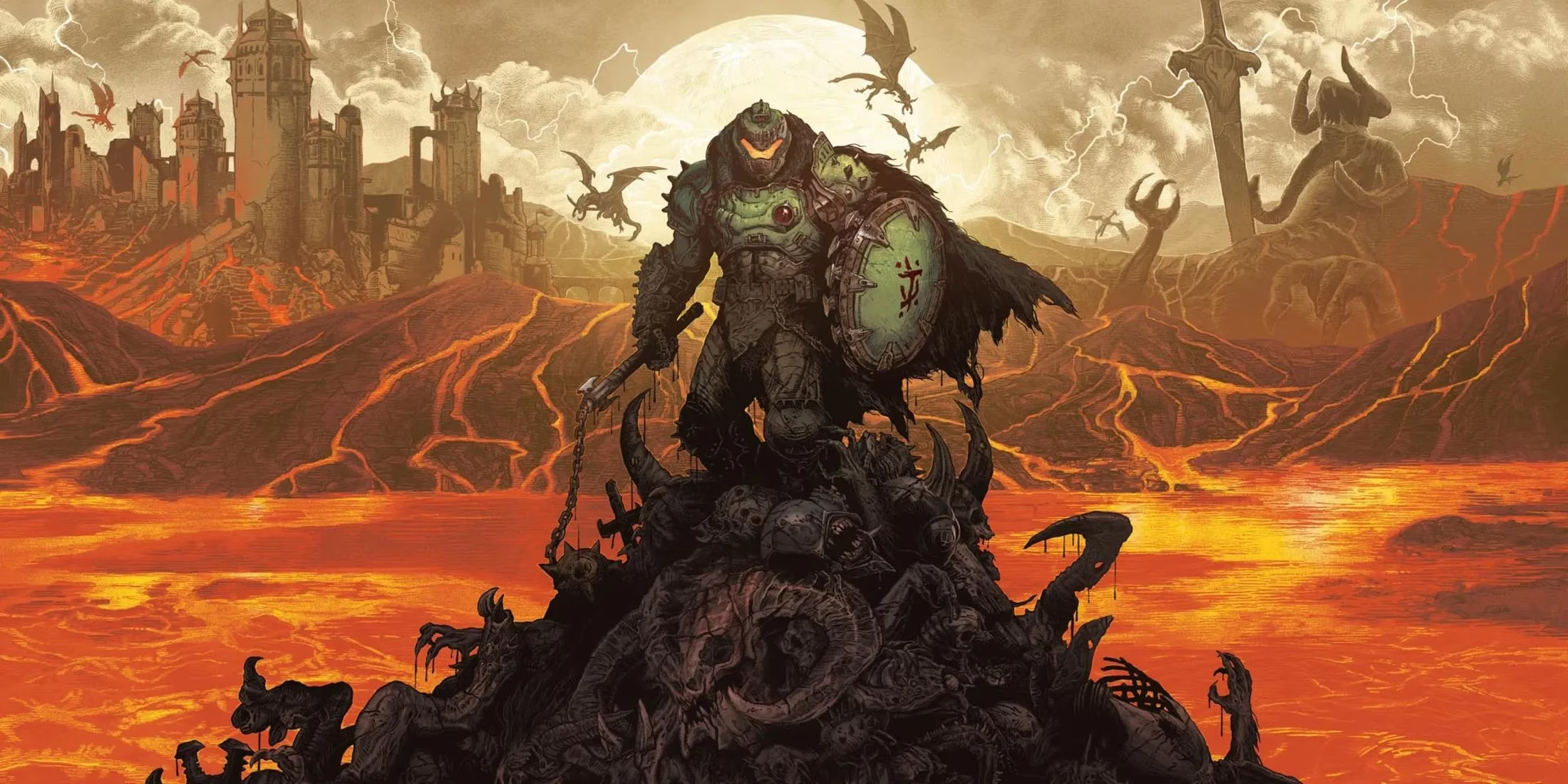
As a reboot that single-handedly dragged arena shooters back into the spotlight, 2016’s DOOM was more than just a power fantasy—it was a sensory meltdown. And no element screamed louder than its soundtrack. Fast forward to 2026, and the franchise has just welcomed DOOM: The Dark Ages, a prequel that finally hits the Norse-flavored origins teased years ago. Yet for all the Shield Saw carnage and jetpack demon surfing, one ghost still lurks in every distorted riff: Mick Gordon isn’t on the credits this time. That stings.
It’s the kind of absence that feels like a missing limb. How did we get here? Even casual fans remember the seismic impact of Gordon’s work on the 2016 score. Tracks like Rip & Tear weren’t just background noise—they were adrenaline injected directly into your carotid artery. The industrial-metal fusion, layered with chainsaw samples and literal sinewave manipulation, earned him a BAFTA nomination and transformed videogame music rhetoric overnight. The industry fawned, awards piled up, and for a moment, the id Software–Gordon partnership seemed unbreakable.
Then came DOOM Eternal. And with it, the cracks.
🧨 The Fallout That Rocked Hell Itself
On paper, 2020’s Eternal delivered even more brutality. The soundtrack, while less universally acclaimed than its predecessor’s, still had moments of berserker glory. Behind the scenes, however, things were rotting faster than a Baron of Hell. Gordon has since publicly detailed a nightmare production cycle: shifting deadlines, last-minute requests to score levels that didn’t even exist yet, unpaid overtime, and what he described as a “culture of mismanagement.”
The dispute escalated into a tit-for-tat between Gordon and id Software’s executive producer Marty Stratton, splashed across open letters and fan forums. The community largely took Gordon’s side. Memes about “Mick Gordon vs. Corporate Greed” flooded subreddits. When the dust settled, the bridge was not just burned—it was reduced to atoms. The question echoing into 2025 was inevitable: who the hell do you hire to fill those boots?
🎸 Enter Finishing Move: A Safer Pair of Hands?
At the Xbox Developer Direct in January 2025, the answer dropped: Finishing Move. The duo, primarily known for their work on Halo Wars 2, Crackdown 3, and the Borderlands 3 expansions, are no strangers to high-octane orchestration. But let’s be brutally honest—is that what fans wanted? A “safe” choice? Gordon’s appeal was his danger, his unpredictability, his willingness to push DAW software to its breaking point. Finishing Move, by contrast, have built a reputation on polished, cinematic textures. The concern wasn’t incompetence; it was identity.
When DOOM: The Dark Ages finally launched on May 15, 2025, the conversation exploded. The game itself was a critical hit—reviewers celebrated the fresh medieval slayer lore, the dynamic dragon-riding segments, and combat that truly rewarded aggressive parrying. But the soundtrack? That’s where the discourse fractured.
🎵 So, Did They Deliver? A 2026 Reckoning
Let’s ask it plainly: Can you make a DOOM soundtrack that doesn’t evoke Mick Gordon and still feel like DOOM? Finishing Move’s solution was to split the difference. The OST leans heavily on brutalist orchestra and choir, channeling a more epic, mythological atmosphere. It’s undeniably epic—walking through stone cathedrals as dragonfire bathes the sky feels grandiose in a way previous games couldn’t achieve. However, the guttural, industrial edge that defined the Slayer’s anger is noticeably absent. There’s less chainsaw, more chanting. Less nine-string guitar, more tympani.
The player base’s verdict, now that a year has passed, is mixed but respectful. Many highlight standout tracks like Wrath of the Sentinel or the final level’s corrupted choir piece as legitimately powerful. Yet even fans who applaud the shift sometimes whisper: “Imagine if Gordon had been here.” It’s a testament to how deeply Gordon’s work is woven into the franchise’s identity.
📜 The Legacy That Won’t Fade
What The Dark Ages ironically makes clear is that Mick Gordon’s contribution to DOOM transcends personnel. He didn’t just write music; he engineered a soundscape that became inseparable from the modern Slayer myth. His departure frame is a cautionary tale about crunch, creative respect, and the ugliness that can hide behind a platinum-selling product.
Thankfully, 2025’s release didn’t fumble completely. Finishing Move deserves credit for navigating an impossible task. They avoided blind imitation and instead crafted something appropriate for the prequel’s different tone. But if the next DOOM chapter emerges tomorrow, the question will resurface: is it finally time for a reckoning, a public healing, or at least a respectful homage to the man who gave us BFG Division? Because as long as fans rip and tear, they’ll do it with Gordon’s ghost screaming in the back of their minds—whether the new composers like it or not.
And that, perhaps, is the most DOOM outcome of all. 🤘
Comms Channel