In the ever-evolving landscape of the Doom franchise, 2026's Doom: The Dark Ages stands as a testament to id Software's relentless innovation. The 2016 reboot, now viewed as a foundational framework, served as a blank canvas for the studio's ambitious visions. While Doom Eternal embraced frenetic mobility and aerial acrobatics, The Dark Ages boldly charts a divergent course, immersing players in a grim, medieval-inspired conflict where confronting Hell's legions head-on is paramount. This prequel's dark fantasy aesthetic is perfectly complemented by archaic armaments like the Flail and the Shield, but the most transformative gameplay evolution lies in a seemingly modest yet profoundly impactful mechanical shift: the introduction of a weapon class pairing system.
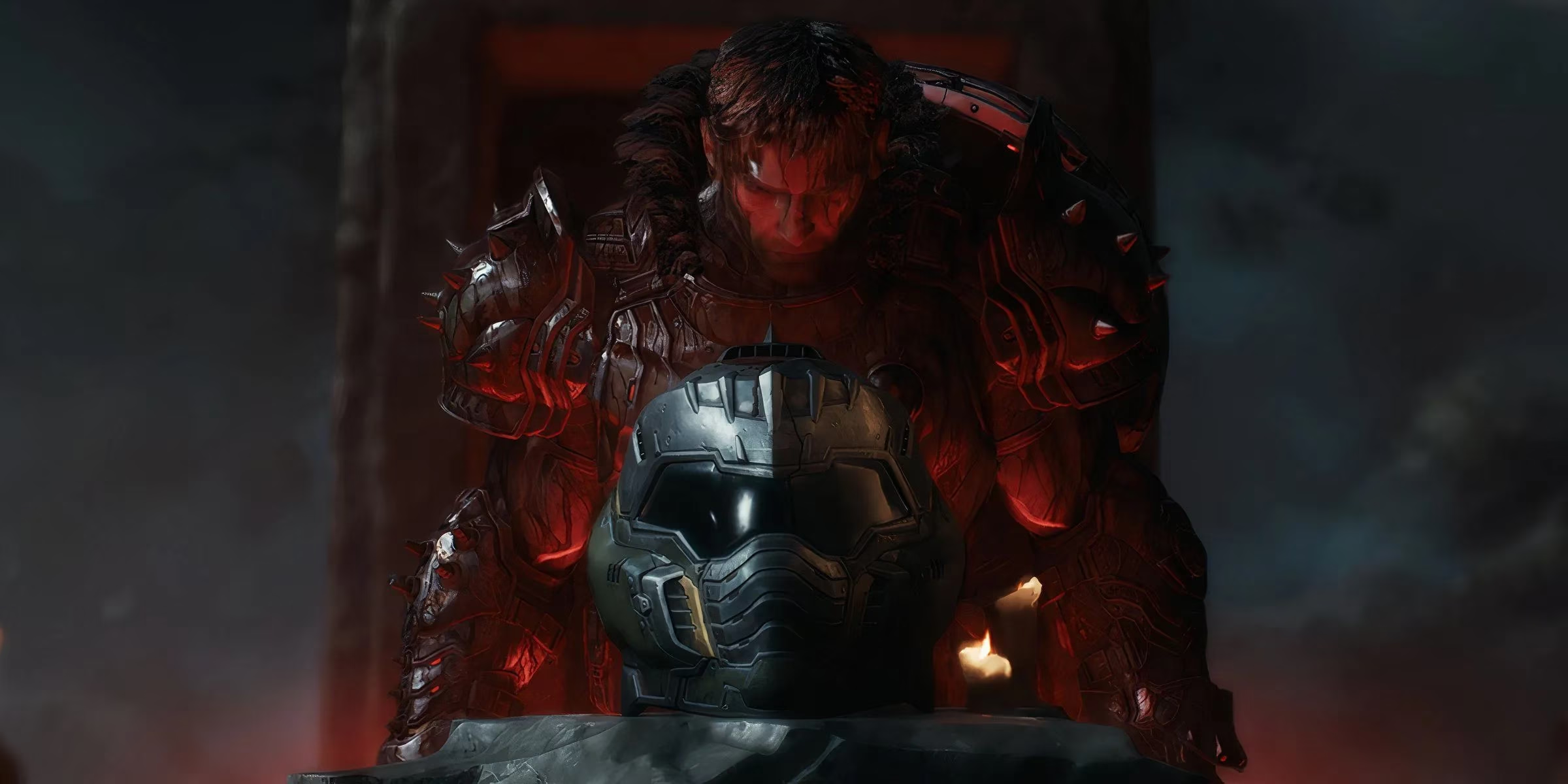
Previous entries, Doom (2016) and Doom Eternal, constrained players to a two-weapon swap system, necessitating frequent pauses to navigate a weapon wheel during intense encounters. This interruption, though mitigated by a slow-motion effect, could disrupt the high-octane flow these titles pride themselves on. Doom Eternal further layered complexity with demanding resource management—constantly juggling ammo, health, and armor replenishment via specific cooldowns and pickups—all while navigating arena combat akin to a lethal obstacle course. In this dense, multilayered ecosystem, fluid weapon access was a coveted luxury. Doom: The Dark Ages not only reimagines the series' core identity but ingeniously addresses this friction point.
Redefining Arsenal Accessibility
The Dark Ages' combat philosophy reduces the traditional reliance on constant weapon swapping. Tools like the formidable Shield Saw, when used in concert with the Power Gauntlet or Flail, can form the backbone of an engagement. However, the game's masterstroke is its weapon class system. While a weapon wheel remains for full arsenal access, the new pairing mechanic introduces unprecedented fluidity. Firearms are now organized into distinct classes, each containing two "sibling" weapons. This allows players to effectively have four readily accessible guns:
-
Two weapons swapped via the standard weapon swap button.
-
The paired "sibling" to each of those equipped weapons, accessible via a dedicated input.
This elegant system minimizes menu navigation, keeping players immersed in the brutal ballet of combat. For those who meticulously plan their loadout, it means less downtime. For others, it simplifies decision-making during chaotic fights, allowing for more instinctive play.
The Armory of the Dark Ages
True to its medieval-fantasy setting, The Dark Ages introduces an arsenal that blends iconic ballistic mayhem with brutal, thematically appropriate implements of destruction. The new class-based pairings are as follows:
| Weapon Class | Paired Weapons | Role / Description |
|---|---|---|
| Shotgun | Combat Shotgun & Super Shotgun | Close-quarters devastation. |
| Rail Spike | Rail Spike Shredder & Rail Spike Impaler | Precision armor-piercing tools. |
| Plasma Rifle | Accelerator & Cycler | Versatile energy-based firepower. |
| Launcher | Grenade Launcher & Rocket Launcher | Area-of-effect and heavy demolition. |
| Skullcrusher | Pulverizer & Ravager | Slow, monstrous melee-centric weapons for crushing blows. |
Standouts include the gruesome Pulverizer, a weapon that lives up to its name by turning demon skulls into paste, perfectly fitting the game's visceral, dark age tone. This classification might appear subtle—players devoted to the classic weapon wheel can overlook it entirely—but its benefit is colossal: streamlined, rapid access to a broader tactical toolkit without breaking combat momentum.
A Philosophical Shift Towards Lethal Efficiency
Doom: The Dark Ages possesses a distinct luster and flavor, trading neon UAC facilities for gothic castles and alien landscapes for dragon-infested skies. Yet, its core advancement is philosophical. The series continues to demonstrate it cannot be leashed or bottlenecked by its own legacy. Many of The Dark Ages' pivotal gameplay changes, especially the weapon pairing system, are engineered for greater accessibility and significantly reduced downtime. In a genre the series helped define, this evolution ensures the "run-and-gun" ethos is smoother and more intense than ever. By cleverly restructuring how players interact with their arsenal, id Software has once again raised the bar, proving that even in a medieval hellscape, the most impactful innovations are those that remove barriers between the player and the pure, unadulterated catharsis of combat. The Doom Slayer's crusade continues, not just with new weapons, but with a smarter, faster way to wield them.
Comms Channel