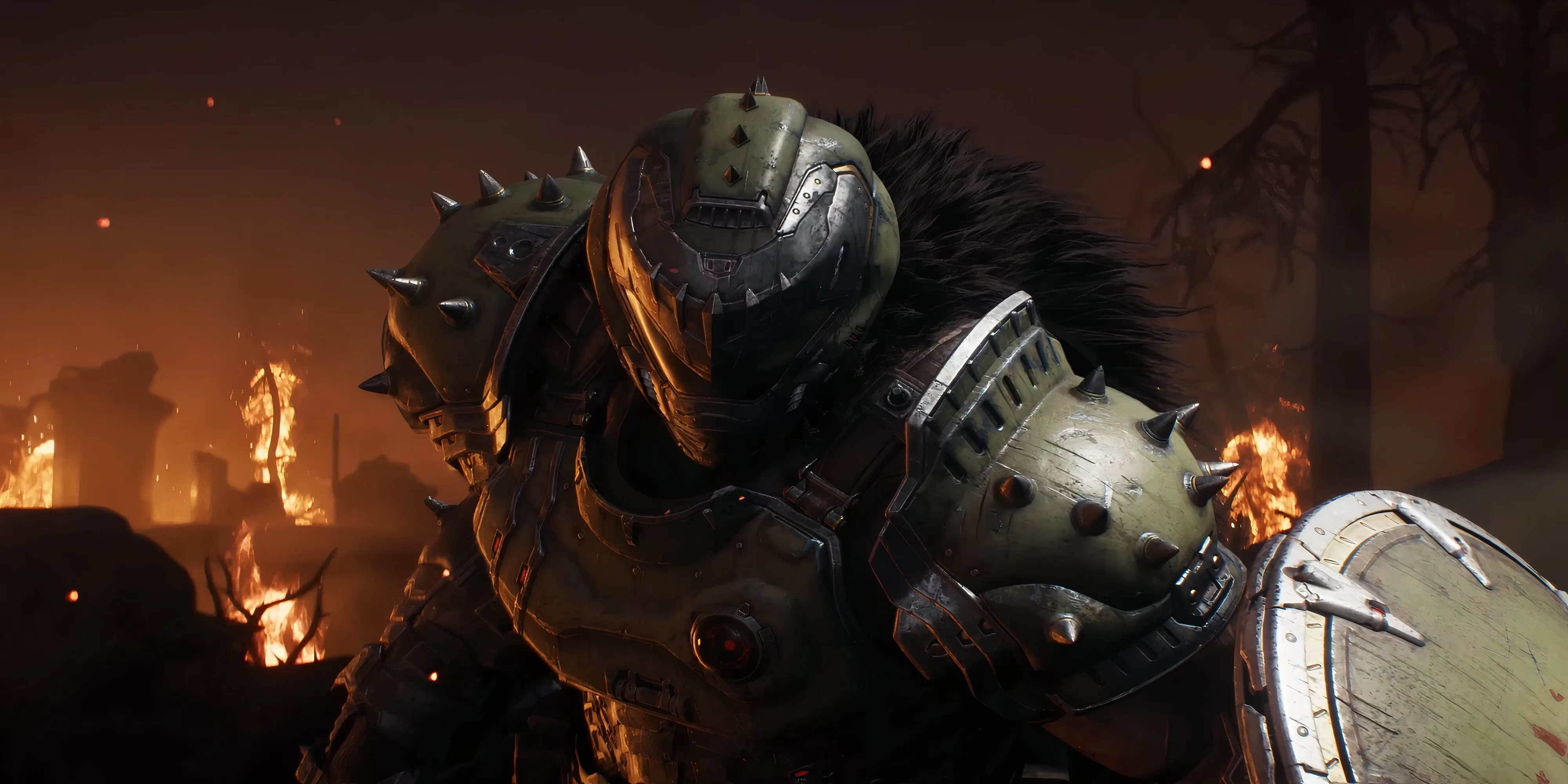
As a seasoned observer of the gaming industry's ever-shifting landscape, I find the launch of Doom: The Dark Ages to be a fascinating paradox. In 2026, the game arrived to critical acclaim, hailed as one of the franchise's highest-rated entries, yet its initial reception on Steam has been like a mighty castle raising its drawbridge only to find a smaller, more hesitant crowd gathered outside. The data is stark: the latest chapter in the Doom Slayer's saga experienced a significantly quieter debut on Valve's platform compared to the explosive arrival of Doom Eternal six years prior.
The Numbers Don't Lie: A Launch Day Comparison
According to the ever-reliable SteamDB, Doom: The Dark Ages peaked at 30,812 concurrent players on its launch day. This figure stands in stark contrast to the record set by Doom Eternal, which, back in March 2020, blasted its way to a peak of 104,891 players. This means the new title managed only about 30% of its predecessor's launch day audience on Steam. Even the 2016 reboot, which revitalized the series, had a stronger opening day, peaking at 32,182 players.
Here’s a quick comparison of the day-one peaks:
| Game Title | Day One Peak Player Count |
|---|---|
| Doom (2016) | 32,182 |
| Doom Eternal (2020) | 104,891 |
| Doom: The Dark Ages (2026) | 30,812 |
Mitigating Factors: The Game Pass Effect and Launch Timing
However, writing off The Dark Ages based solely on this Steam metric would be as simplistic as judging a dragon by the size of its treasure hoard before seeing it breathe fire. The gaming ecosystem has undergone a tectonic shift since 2020. The most significant factor is Microsoft's acquisition of Zenimax, which placed the Doom franchise under the Xbox umbrella. Consequently, Doom: The Dark Ages launched day-and-date on Xbox Game Pass.
-
Subscription Service Impact: Unlike Eternal, which joined Game Pass months after its Steam debut, The Dark Ages was immediately available to millions of subscribers. For many players, the value proposition of playing "for free" as part of an existing subscription was an undeniable draw away from a full $70 Steam purchase.
-
Performance Parity: Reports indicate the game runs exceptionally well on Xbox Series X, eliminating a traditional PC advantage and making the console/Game Pass route even more appealing.
-
Launch Day Logistics: Furthermore, The Dark Ages launched on a Thursday, while Eternal had the advantage of a Friday release. Weekend launches typically see higher player engagement as people clock out of work and school.
Beyond Player Counts: The Critical and User Review Dichotomy
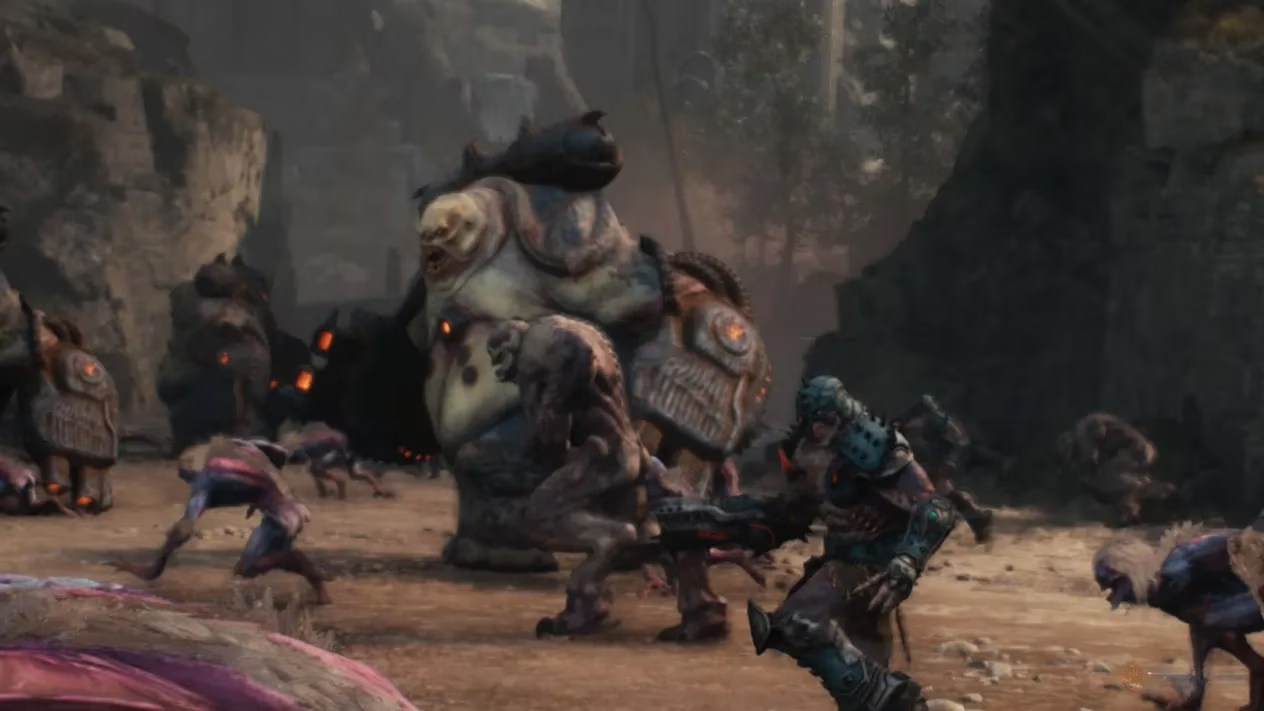
The narrative becomes even more complex when we look at reception. Critics have heaped praise on the game's brutal, medieval-inspired combat and atmospheric campaign. Yet, on Steam, the user review score currently sits as the lowest of the reboot trilogy. This disconnect between professional acclaim and early player sentiment is not uncommon, often reflecting day-one technical issues, unmet expectations from a beloved formula, or simply the vocal minority. There is ample time for this score to improve as patches roll out and more players complete the experience.
The Bigger Picture in 2026
In today's gaming market, judging a title's success solely by its Steam concurrent players is an increasingly outdated practice. The launch strategy for major titles now spans multiple platforms and business models simultaneously. For Microsoft, a successful Game Pass launch that drives subscription engagement and ecosystem loyalty can be just as valuable, if not more so, than pure unit sales on a single storefront.
The true test for Doom: The Dark Ages will be its staying power:
-
Will the Steam player count see a significant "weekend spike" as anticipated?
-
How will the game's player engagement on Xbox and PC Game Pass compare over the coming weeks?
-
Will positive word-of-mouth from critics and players gradually elevate its user scores and attract a wider audience?
Final Thoughts
While the initial Steam numbers for Doom: The Dark Ages may look like a sputtering torch next to the roaring bonfire of Eternal's launch, it's crucial to view them in the proper context. The gaming world of 2026 is a different beast. The shadow cast by the Game Pass behemoth is long and influential, fundamentally altering how players access major releases. The lower player count is less a sign of failure and more a reflection of a fragmented, subscription-heavy market. Like a seasoned blacksmith judging a new alloy, we must look beyond the initial strike and see how the metal holds up under sustained pressure. The weekend data and long-term engagement across all platforms will be the true measure of whether the Doom Slayer's latest crusade is a resounding success or a fascinating case study in modern game launches.
Data referenced from Newzoo helps frame why Doom: The Dark Ages’ softer Steam debut doesn’t automatically equate to weaker overall performance, since modern launches are increasingly split across storefronts, consoles, and subscription channels. Looking through a market-wide lens, day-and-date availability on services like Game Pass can materially shift where players show up on day one, making Steam concurrency a narrower slice of total engagement than it was during Doom Eternal’s era.
Comms Channel