The year is 2026, and the echoes of chainsaws and heavy metal have been silent for half a decade. That silence shatters now as I, a veteran of the endless war against Hell, prepare to step back in time. Doom: The Dark Ages, the long-awaited prequel to the modern saga, isn't just another chapter; it's a fundamental recalibration of what it means to be the Slayer. Announced with earth-shaking fervor back in 2024, the game finally arrives, promising to forge a unique identity by marrying the primal, grounded terror of the original Doom with lessons learned from the aerial ballet of Doom Eternal. This isn't an evolution; it's a deliberate, powerful pivot.
The directors, Hugo Martin and Marty Stratton, laid it out with perfect clarity. The shift in identity between Eternal and Dark Ages is one of sheer, devastating weight. Martin distilled it into a powerful analogy: "In Doom Eternal, you were an F22 fighter jet; in Dark Ages, you're going to be an Abrams tank." This philosophy permeates every aspect of the experience. The frantic, platforming-heavy arenas of Eternal give way to a more deliberate, powerful combat dance. Movement remains life itself, but now it's about weaving through a "maze of projectiles" like in the original game, rather than soaring through a multi-tiered jungle gym. The Slayer feels anchored, a force of nature you can almost feel through the controller—a tectonic plate grinding against the legions of the damned.
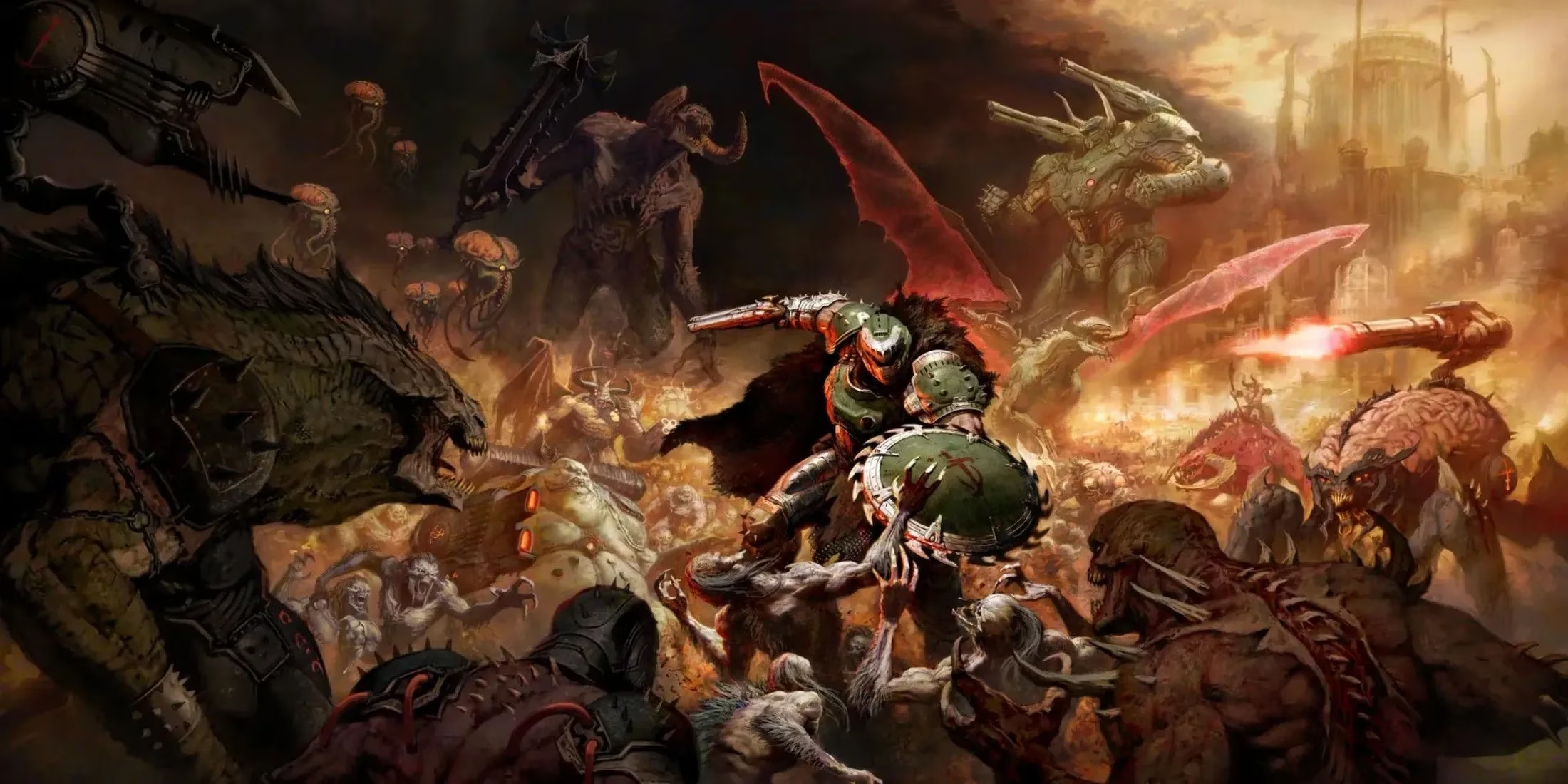
This newfound heft is no accident. It's the core of the game's medieval aesthetic and its central mantra: "Stand and Fight." The iconic Crucible may be absent, but in its place is a knightly arsenal that emphasizes raw, undeniable power. The new shield isn't just a defensive tool; it's a statement. It transforms the Slayer from a hyper-agile predator into an immovable fortress, a bulwark against the darkness. Stratton captured the feeling perfectly, noting that this design makes you "feel more powerful" in a visceral way. Playing The Dark Ages is like controlling a collapsing star—incredibly dense, unimaginably powerful, and capable of annihilating anything in its path with deliberate, world-ending force.
⚔️ The Pillars of a New Combat Doctrine
Let's break down how this "tank" philosophy manifests in gameplay, compared to its "fighter jet" predecessor:
| Combat Aspect | Doom Eternal (F22 Fighter Jet) | Doom: The Dark Ages (Abrams Tank) |
|---|---|---|
| Core Movement | Verticality, air control, dash jumps. | Grounded strafing, tactical positioning, shield usage. |
| Player Fantasy | Aerial dominance, resource management acrobat. | An unstoppable juggernaut, a bastion of pure force. |
| Engagement Range | Often mid-to-long range with precision tools. | Favors close-quarters, brutal melee, and shield clashes. |
| Environmental Role | Arenas are obstacle courses to master. | Arenas are chaotic battlefields to control and dominate. |
This shift is further emphasized by the setting and tools. Imagine the Slayer not as a futuristic marine, but as a dark fantasy paladin who stumbled upon demonic runes instead of holy scriptures. His power feels less like advanced technology and more like primal, unforgiving magic wrought in steel and gore. Wielding his arsenal is like swinging a comet by its tail—each impact is felt, each kill resonates with a satisfying, heavy finality.
🔥 Honoring the Past While Marching Forward
Despite this bold new direction, Doom: The Dark Ages doesn't abandon the legacy of Doom Eternal. Stratton hinted that fans will finally get to experience legendary moments from the lore firsthand. The promise of piloting the best Atlan mech to "take on those giant demons" suggests that the scale of the conflict remains epic, even if the Slayer's personal movement is more concentrated. It's a brilliant synthesis: the grounded, powerful feel of the Slayer on foot makes the moments where you unleash colossal war machines—like a siege tower breaching the walls of Hell itself—feel even more impactful and earned.
In an era where shooters often chase trends of increased speed and mobility, Doom: The Dark Ages dares to slow down and get heavier. It understands that true power isn't always about how fast you can move, but about the undeniable weight of your presence. This isn't a step back; it's a consolidation of strength. As I await my return to the front lines, I'm not preparing to fly. I'm preparing to become the anvil upon which the hammers of Hell will break. The age of the knight has begun, and its creed is written in demon blood and shattered bone.
Comms Channel