I never thought I'd say it, but Doom Eternal sometimes made me feel inadequate. Don't get me wrong — it was a masterpiece of blood-soaked ballet, a symphony of flaming hooks, chainsaw cuts, and perfectly timed weapon swaps. Game director Hugo Martin famously called the Slayer an "unstoppable fighter jet," and that description was dead-on. The problem? Not every pilot has the reflexes of an ace, and for many of us who adored Doom (2016), the sequel's relentless demand for perfection eventually turned the dance into an exhausting sprint. Now, in 2026, having spent a few hours with Doom: The Dark Ages, I can finally exhale. This is still the power trip I craved, but now id Software is inviting me to lead the dance — not just keep up or crash.
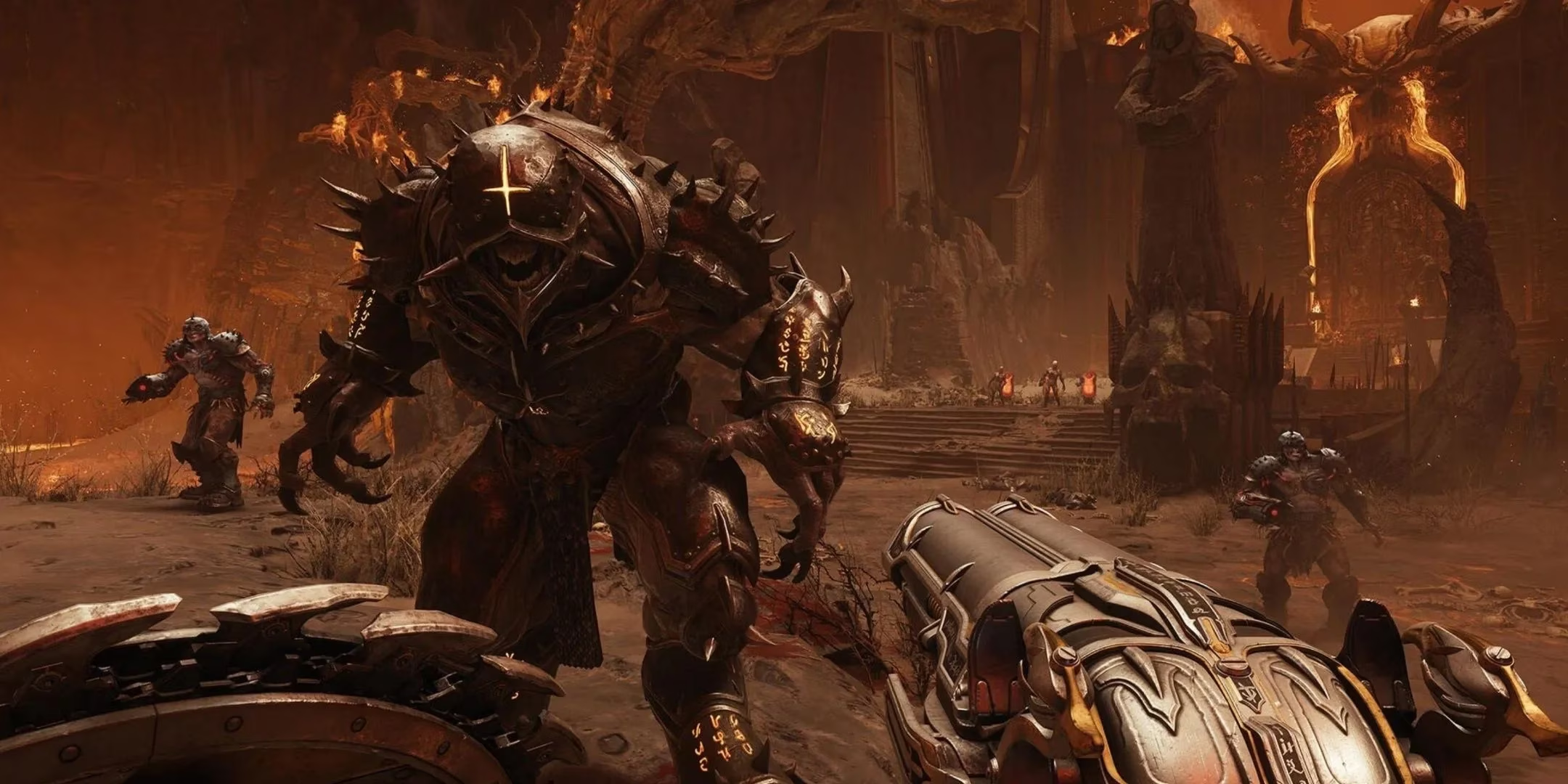
The internal motto that shaped this prequel says it all: Stand and Fight. That alone marks a philosophical shift miles away from the \u201cRun and Gun\u201d of 2016 and the \u201cJump and Shoot\u201d frenzy of Eternal. Does that mean the Slayer has become a lumbering tank? Absolutely not. Leaping, strafing, and dashing are still there, but the game now rewards me ruthlessly for planting my feet and staring Hell in the face. And the tool that enables this bold new attitude? The Shield Saw — a buzzing disc of violence that has quickly become my favorite piece of gear in the entire series.
Why be excited about a shield? Well, have you ever wanted to rip a demon\u2019s attack mid-swing and immediately turn that parry into a bone-shattering execution? That\u2019s the Shield Saw\u2019s magic. I can hurl it to pin a screeching imp against a wall, use it to block incoming projectiles, or time a perfect deflection that leaves even the biggest Hell knights staggered and begging for a takedown. Combine this with the new melee system of flails, gauntlets, and spiked maces, and suddenly the rhythm of combat feels like I\u2019m the composer. Instead of frantically swapping weapons because the game forces my hand, I now choose when to create an opening, when to advance, and when to simply plant my shield and invite a horde to break against it.
This shift in tempo could have been a disaster if it sacrificed the intensity that defines Doom. But id Software has threaded the needle beautifully. Remember those moments in Eternal when you had to juggle the flame belch, grenades, and blood punches all while airborne and missing half your health? The \u201crip and tear\u201d fantasy got buried under a mountain of cooldowns. The Dark Ages strips back that cognitive load not by making the game dumb, but by making it deliberate. Every encounter now feels like a violent puzzle I can solve at my own pace, and if I want things faster? There\u2019s a slider for that.
Yes, you read that right — a proper difficulty customization system. The team spent minutes in their deep-dive presentation showcasing how I can independently adjust the speed of combat, the aggression of enemies, and the damage I deal. Did you ever wish Doom Eternal had a \u201cheroic mode\u201d that let you feel unstoppable without becoming a sleepwalk? It\u2019s here. Or perhaps you\u2019re a masochist who wants the demons to be faster, meaner, and deadlier? Crank those dials. The Dark Ages isn\u2019t just a single difficulty curve; it\u2019s a playground. That admission from id Software — that not every Slayer wants to dance at 200 bpm — feels like a weight off my shoulders.
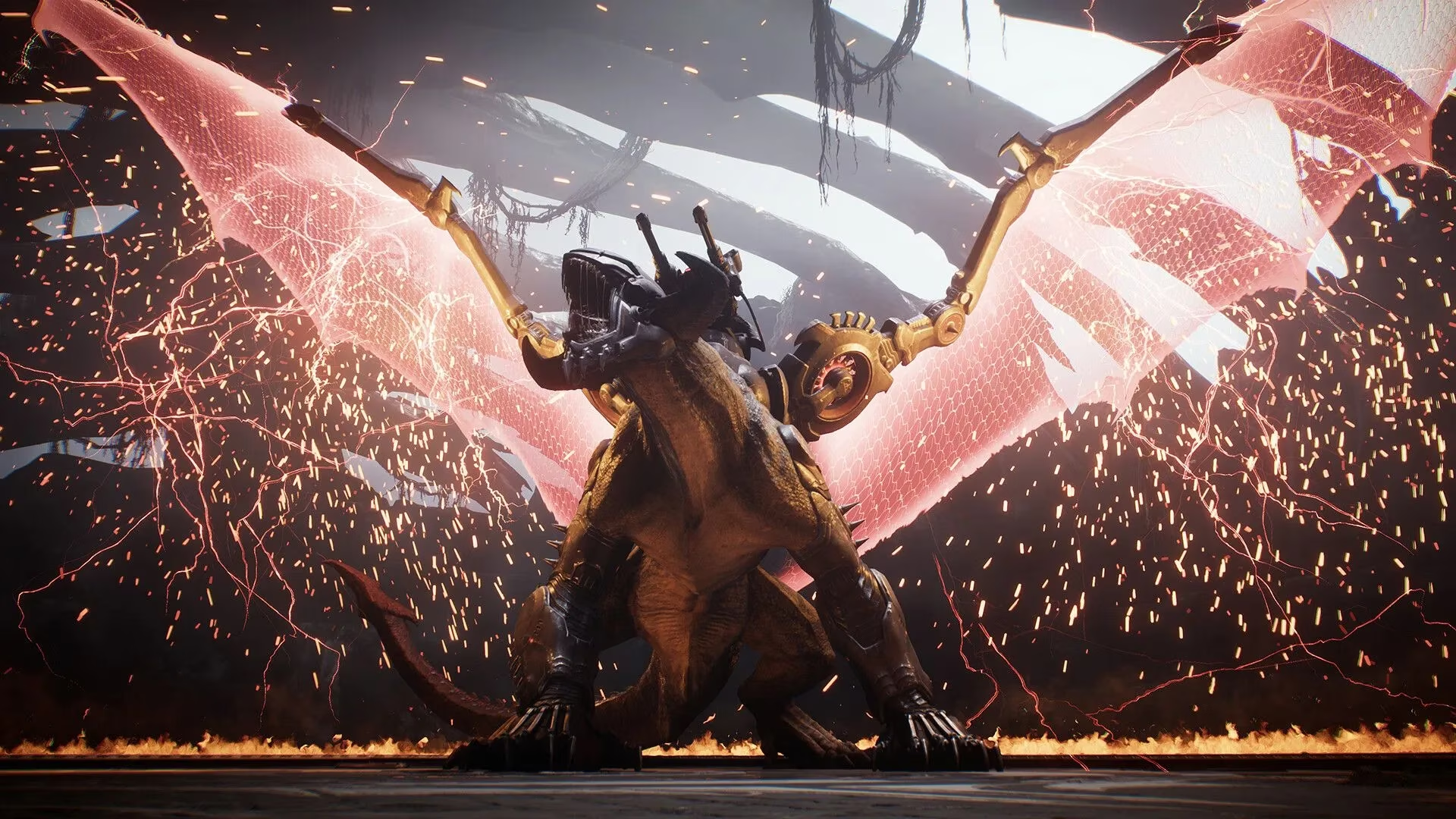
But the real surprise is how this philosophy extends beyond combat. Doom: The Dark Ages seems structured as a \u201cnot-quite-open world,\u201d with sprawling levels where I can explore dungeons, take on optional fights, and occasionally pilot a towering mech or ride a cybernetic dragon. Those spectacles are pure wish-fulfillment: burning a path through demon armies from the back of a horned beast, then hopping down to challenge a boss with my Shield Saw. In these moments, difficulty isn\u2019t the point. The fantasy is. And for a franchise that practically invented the power fantasy, that\u2019s a smart homecoming.
I can already hear the doubters: \u201cBut won\u2019t this dilute what made Doom special?\u201d With the Shield Saw in my hand and the new melee combos at my disposal, the answer is a firm no. Standing my ground doesn\u2019t mean playing passive. It means picking a spot, becoming a maelstrom of magnetically caught projectiles and parabolic shield throws, and daring the legions of Hell to move me. When an Archvile teleports behind me and I spin, parry its flame burst, and counter with a kick that sends it reeling, that\u2019s a kind of badass choreography I simply didn\u2019t have time to appreciate before.
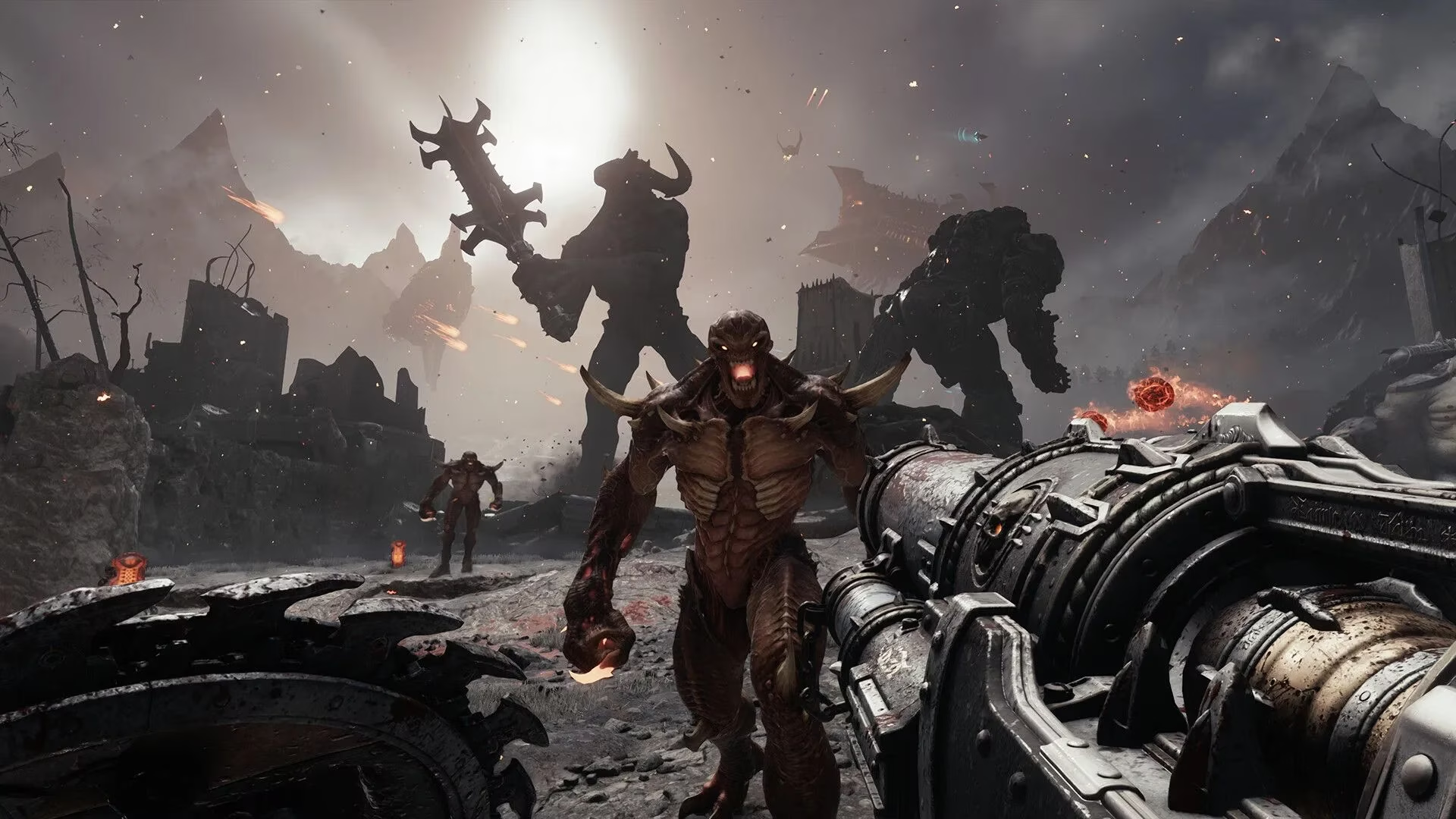
There\u2019s a certain pride that comes with mastering a game like Doom Eternal, and I respect those who crushed its highest difficulties. But for the rest of us, The Dark Ages throws open the gates. I don\u2019t have to be a superhuman to feel like the Slayer anymore; I just have to be ready to stand, to fight, and to watch Hell tremble at my stubborn refusal to back down. After years of breakneck sequels that kept racing ahead, Doom has finally learned to meet me where I am. And honestly? I haven\u2019t had this much demon-slaying fun since the 2016 reboot first taught me that \u201crip and tear\u201d wasn\u2019t just a catchphrase — it was a promise. Now it\u2019s a promise I can keep, on my own terms.
Comms Channel