In the year 2026, the gates of Hell have been reforged in a medieval crucible with the arrival of Doom: The Dark Ages. This latest chapter in the iconic saga casts players once more as the legendary Slayer, but this time, the battlegrounds are littered with the ruins of castles and the echoes of a darker age. While the core premise of relentless demon-slaying remains, id Software has dared to tinker with one of the franchise's most visceral modern staples: the Glory Kill system. This isn't just a minor tweak; it's a fundamental recalibration of combat rhythm that has the community buzzing, for better or worse.
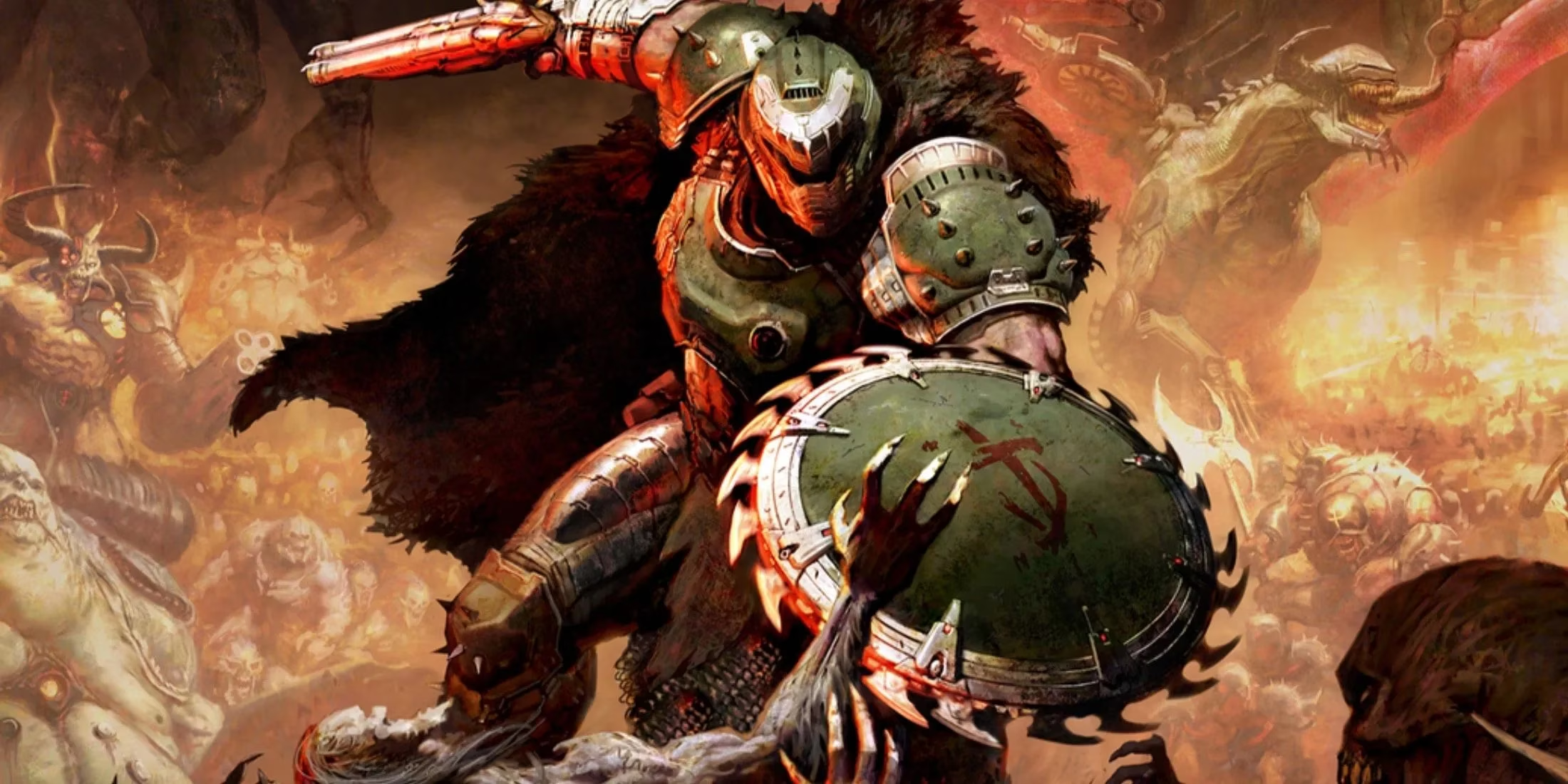
The most significant change is a shift in target priority. Gone are the days of triggering a gruesome cinematic finisher on every Imps and Zombie. In The Dark Ages, Glory Kills are now primarily reserved for the "Leaders"—the hulking, stronger demons that act as formidable mini-bosses throughout the campaign. This design choice is a classic case of "less is more," aiming to make these moments feel truly special and earned. When you finally stagger one of these behemoths, the ensuing animation is promised to be downright gnarly, as the Slayer rips and tears to claim their Demonic Essence in spectacular fashion.
The Pros: A Faster, More Fluid Slaughterfest 🏃♂️💨
The benefits of this new approach are immediately apparent in the flow of combat:
-
Uninterrupted Momentum: By removing the frequent pause-and-execute cycle against common foes, the Slayer can slash and shoot through hordes like butter. This creates a breakneck, almost rhythmic pace to standard encounters.
-
Enhanced Power Fantasy: This sustained velocity makes the player feel like an unstoppable force of nature, plowing through Hell's ranks with devastating efficiency. It's all gas, no brakes.
-
Preventing Fatigue: By making Glory Kills an event rather than a routine, the system avoids the risk of growing stale or repetitive over a long playthrough. Each one remains a hellishly satisfying payoff.
This refined focus allows the core gunplay and new medieval arsenal, like the brutal Shield Saw, to take center stage. The combat loop becomes more about constant movement, strategic weapon switching, and crowd control, which can feel incredibly satisfying and skill-based.
The Cons: A Gore-Filled Identity in Question 🩸😕
However, this shift isn't without its trade-offs, and for some fans, it's a bit of a bummer.
-
Diminished Carnage: The Glory Kill system, introduced in Doom (2016), became a defining feature of the franchise's modern rebirth. Its constant, up-close violence was a key part of the power fantasy—the visceral reward for aggressive play. Seeing less of it can feel like a dilution of that identity.
-
Lost "Fun Factor": There was a unique, cathartic joy in annihilating any demon, big or small, with a personalized execution. The new system removes that frequent, gratuitous feedback loop.
-
A Jarring Transition: For players who fell in love with the rhythm of the 2016 and Eternal titles, The Dark Ages might feel initially disorienting, as if a core piece of the combat puzzle is now on a strict cooldown.
The debate essentially boils down to a matter of taste. Does one prefer the methodical, execution-heavy pace of the previous games, or the hyper-fast, flowing combat The Dark Ages seems to promote?
What Compensates for the Change? ⚔️🤖
Fear not, for Doom: The Dark Ages is far from holding back on the action. id Software has packed the game with new toys and spectacles to fill the gap:
| New Feature | Description | How It Adds to the Experience |
|---|---|---|
| The Shield Saw | A brutal melee weapon that also functions as a defensive tool. | Encourages aggressive, in-your-face combat and offers new tactical options. |
| The Mech Suit | A hulking, pilatable war machine introduced in the campaign. | Delivers massive, screen-shaking power fantasy moments and changes the scale of combat. |
| Enhanced Leader Kills | More detailed, protracted, and gruesome executions for mini-bosses. | Makes these moments feel like epic, earned victories. |
| Medieval Arsenal | New weapons and tools themed around the era, like ballistae and flails. | Freshens the combat loop and provides new ways to dismember demons. |
Ultimately, the evolution of the Glory Kill system in Doom: The Dark Ages is a bold experiment. It shows that id Software isn't content to simply rest on its laurels and rehash a winning formula. They're willing to shake things up, even at the risk of alienating some fans, in pursuit of a new kind of combat rhythm. Whether this change is a masterstroke or a misstep will be for each player to decide when they don the Praetor Suit and step onto the gothic battlefields. One thing's for sure: the Slayer's mission remains the same—rip and tear, until it is done.
The legacy of Doom is built on pushing boundaries, and with The Dark Ages, the boundary being pushed is the very pace and punctuation of its violence. It's a high-stakes gamble that prioritizes flow over frequency, and the gaming world in 2026 is keen to see if this medieval twist will become a new classic or a fascinating footnote in the Slayer's eternal war.
Comms Channel