For years, the idea of a brand-new Doom launching on a PlayStation sounded like someone had wandered into the wrong timeline. After Microsoft swallowed ZeniMax Media in 2021, the assumption among fans was simple: id Software's next demon-slaying epic would be locked to Xbox and PC. But as the calendar crept toward the 2024 Xbox Games Showcase, a different truth began rattling through the community. Insiders claimed the next Doom game, rumored to be called Doom: The Dark Ages, would arrive on PlayStation 5 the same day it hit Xbox and PC. It was, for many, a genuine head-scratcher.
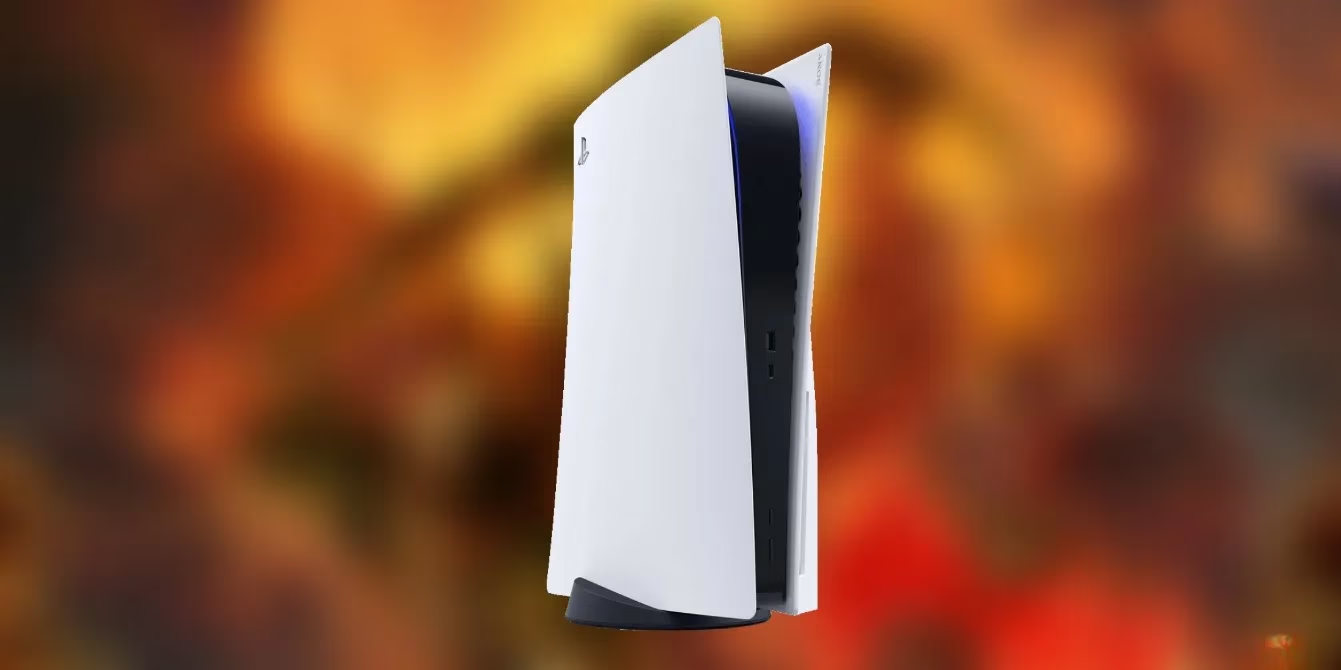
The rumor mill had no intention of hitting the brakes. NateTheHate, a respected leaker, set social media ablaze by saying the game would be "revealed as a multiplatform release" and was coming to PlayStation 5. Not long after, Windows Central's Jez Corden backed the claim. For a franchise as famously platform-flexible as Doom, that might not have seemed earth-shattering. But this was no ordinary moment. This was the first major ZeniMax title after the acquisition, and the implications reached far beyond one shooter.
Over at id Software, the team had spent four years tinkering after Doom Eternal. That game had earned enormous praise, and the Ancient Gods expansions kept the fires burning. A new entry was overdue. The studio's next move would be watched closely, not only because of the gameplay—but because of what it signaled about Microsoft's strategy.
When the Xbox Games Showcase arrived on June 9, 2024, industry watchers held their breath. Then came the reveal. Doom: The Dark Ages stood front and center, draped in dark medieval fantasy, gargantuan demons, and a Slayer who looked like he had stepped out of a heavy metal painting. More importantly, Sony's console was listed. The rumors were true.
Corden had also suggested that Microsoft would use that same stage to explain its evolving multiplatform strategy. After a test run earlier in 2024 with four smaller titles on rival hardware, the writing was on the wall. Executives hinted there was "no red line" for franchises crossing over. In that context, Doom: The Dark Ages didn't just walk onto PS5—it kicked down a door that had been cracking for months.
By the time the game finally launched in 2025, the industry had already changed. A major first-party game arriving day one on PlayStation, Xbox, and PC would have once been unthinkable. Now it simply felt like business. Players on both consoles tore through hordes of demons, compared weapon loadouts, and debated which boss fight made their palms sweat the most. The ancient battlefield settings, the massive mechanical beasts, and the relentless rhythm of the Slayer's new arsenal made the wait feel worthwhile.
As 2026 settled in, the conversation had moved from "Will it happen?" to "What's next?" Doom: The Dark Ages had become more than a game. It was a proof of concept. Longtime Xbox pillars like Halo, Gears, and Forza were suddenly part of the multiplatform conversation, and the old exclusivity playbook looked shakier than ever.
A quick look at the journey:
| Milestone | Timing | Significance |
|---|---|---|
| Microsoft acquires ZeniMax | 2021 | Fans expect Xbox-only future |
| Insider rumors surface | Early 2024 | PS5 version suggested |
| Official reveal | June 9, 2024 | Day-one multiplatform confirmed |
| Launch | 2025 | Released on PS5, Xbox Series X/S, PC |
| Aftermath | 2026 | Broader Xbox IPs seen as likely to cross over |
The Slayer had always been a lone wolf. But his return did something few single-player shooters manage: it rewired how the industry thought about platform loyalty. Whether that turns out to be a masterstroke or a slow erosion of Xbox's identity remains an open question.
For now, the demons don't care where you fight them. They just keep coming.
Comms Channel