In 2026, the rumor mill around id Software still crackles with the possibility of a new Doom game called The Dark Ages. Reports have suggested that the studio is preparing to unveil a fresh entry in the series, one that sends the Doom Slayer back to the medieval era to stamp out demonic hordes before they can properly take root. The premise carries an unmistakable Army of Darkness flavour: a modern, armor-clad engine of violence dropped into a world of castles, plague, and superstition. It is a brilliant way to mix up a franchise that has already torn through Mars, Earth, and the fringes of Hell, and it gives the series a chance to trade sci-fi corridors for torchlit crypts. Yet a more radical idea lurks beneath the surface: why stop at one historical period? Why not hand the Slayer a time machine and let him rip and tear across the entire space-time continuum?
Doctor Doom + Doctor Who = Doctor Whom? The equation is silly, but it captures the giddy potential of a Doom campaign that treats history itself as a blood-soaked playground. A single medieval setting could be magnificent, but a time-traveling Slayer could be something else entirely: a violent, hilarious, and surprisingly coherent tour through humanity's worst moments, with a shotgun as the tour guide.
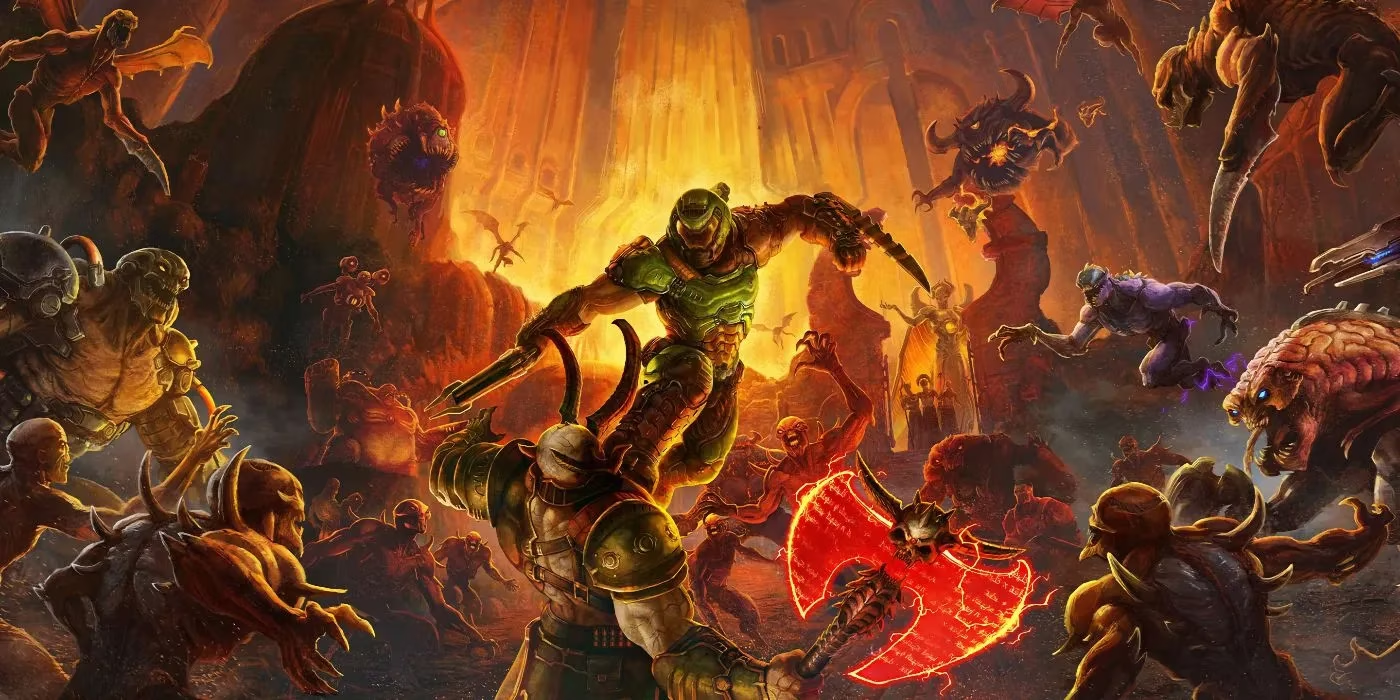
A Franchise That Never Took Itself Too Seriously
Ever since it was rebooted in 2016 and subverted lukewarm expectations with a modern shooter masterpiece, Doom has never taken itself too seriously. In conversations with NoClip, id Software's Hugo Martin noted that the narrative side of Doom (2016) arrived very late in development. The core focus was making the game play, look, and feel as rad as humanly possible. Even so, fans developed a soft spot for its storytelling. Doom Guy is a very angry dude who loves killing demons, and he is awfully miffed to wake up and find them swarming everywhere. That simple, furious premise gives the series a comic-book energy that can survive almost any setting.
The opening moments of Doom (2016) remain some of the coolest in modern shooters. The Slayer wakes up naked as the day he was born, kills a few demons, and then rocks into a room where his iconic armor awaits. A monitor flashes red and warns that a demonic invasion is in progress, which is both hilarious and undeniably cool. After equipping the armor and fighting through a handful of rooms filled with cookie-cutter enemies, he picks up a shotgun and takes an elevator down to the surface. It is the elevator ride, Samuel Hayden's narration, the title card, and Mick Gordon's face-melting riff that get the blood pumping. The Slayer punches the screen as the logo appears, and the player arrives on the red planet ready to rip hellspawn a new one.
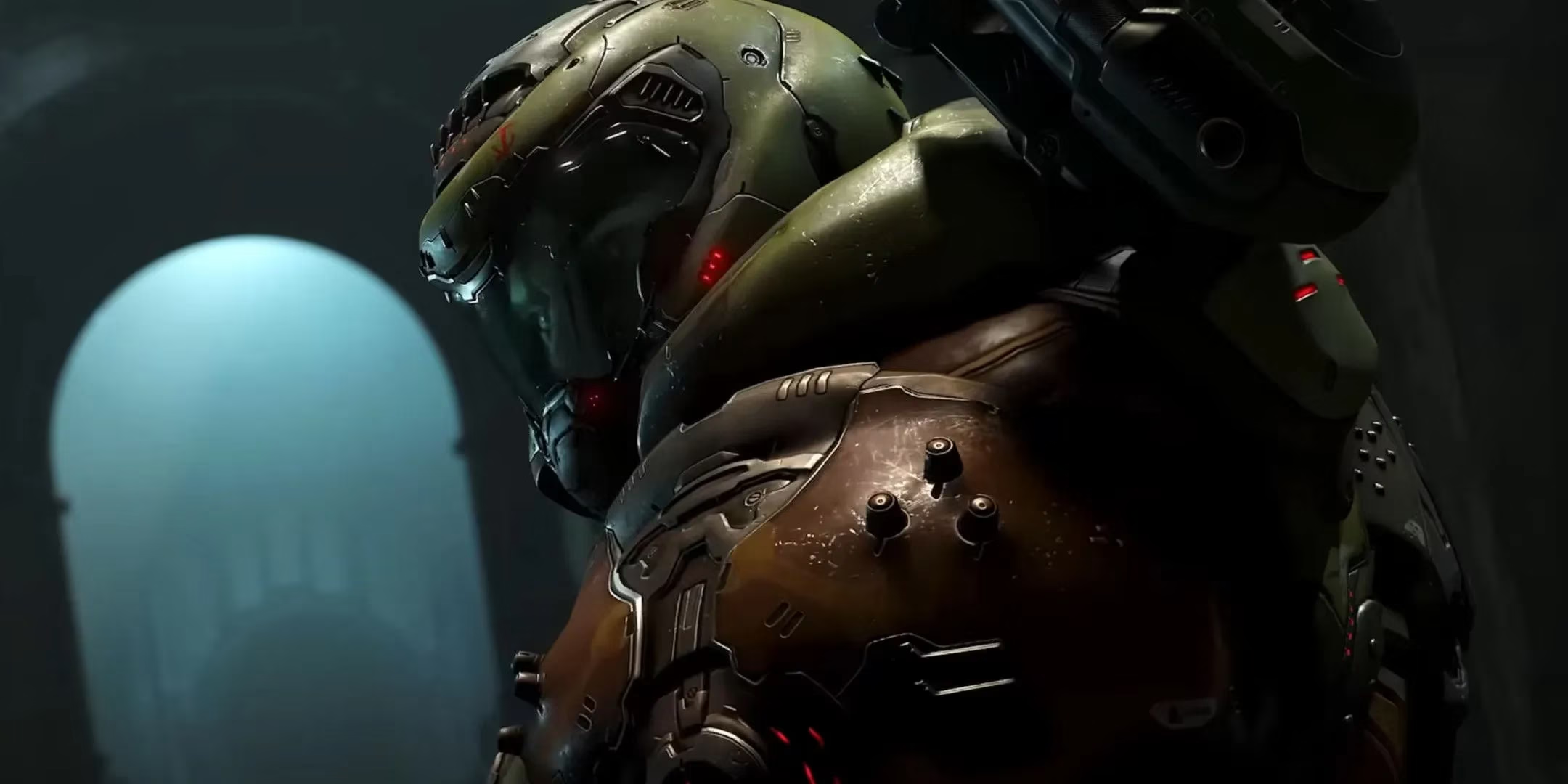
Ripping and Tearing Through Space and Time
Now imagine that badassery unconfined to a destroyed Earth and the fringes of space. The entire space-time continuum becomes a playground. An introduction could see the anti-hero enter a time machine for the first time, only for it to malfunction and throw him across history. The result would be a rollercoaster ride through all the levels and time periods he must eventually liberate, each one now crawling with the spawn of Satan. Demons with the ability to travel in time could dismantle humanity in countless ways, shaping the past, present, and future that the Slayer constantly jumps between. The campaign would become a tapestry woven by a caffeinated spider, frantic and strange but impossible to ignore.
It sounds ridiculous, but if The Dark Ages is already rumored to go medieval, why would exploring another era be any less ridiculous? Each time period could offer a unique weapon or skill, bespoke enemy designs, and boss battles that draw from and potentially satirize the moment in time. A medieval setting is being entertained not only for its own sake, but to pay homage to classics of the fantasy genre and the fish-out-of-water brilliance of a buff, no-nonsense character thrust into such a different environment. The concern is that a single time period might grow old over the course of an entire game. Time travel could be the perfect way to shake things up.
| Historical Era | Potential Slayer Tool | Demonic Threat | Boss Concept |
|---|---|---|---|
| Medieval | Broadsword-chainsaw hybrid | Plague knights | Fallen Crusader Titan |
| Ancient Egypt | Sun-forged khopesh | Locust swarms | Pharaoh of Flies |
| Wild West | Hellfire revolver | Possessed outlaws | Iron Baphomet train-demon |
| Cyberpunk future | Nanite BFG | Corrupted AI cult | Mech-Satan |
| Prehistoric | Obsidian war club | Raptor demons | The First Hellpriest |
History as a Pinball Machine
id Software could treat history as a pinball machine whose bumpers are plagues, crusades, and collapsing empires. The Slayer would bounce from one catastrophe to another, each era a new table with its own rules, enemies, and secrets. A medieval bestiary illustrated by a heavy metal album cover is one way to picture it. The comedy would come from the contrast: a futuristic killing machine in chainmail, a shotgun in a Viking longhouse, a BFG in a Renaissance workshop. The horror would come from the demons adapting to each age, twisting faith, technology, and folklore into new weapons.
This structure would also let id Software indulge in the kind of wild environmental storytelling that the series already loves. A medieval castle could hide a demonic portal beneath its chapel. Ancient Rome could become a coliseum where the Slayer fights corrupted emperors. A far-future city could collapse under the weight of its own artificial hell. Each jump would reset the visual language while preserving the core loop: move fast, shoot everything, and never stop smiling behind the visor.
The Risks and Rewards
A time-traveling Doom would need discipline. Without a clear structure, the campaign could become a scattered museum tour rather than a focused slaughter. But id Software has shown it can balance absurdity with tight design. Doom (2016) and Doom Eternal turned extreme violence into a ballet of resource management, momentum, and aggression. A time-machine premise could extend that philosophy across history. It could also give the series a fresh visual identity with every jump, from mud-soaked battlefields to neon-lit dystopias. The Slayer would remain the same blunt instrument, but the world around him would change like a stained-glass window that never lets the light settle.
If The Dark Ages is real, it may already be one step ahead of the wildest fan theories. Perhaps id Software has built a single, richly detailed medieval nightmare that justifies its own existence. Perhaps the game will be so dense with secrets, lore, and demonic machinery that one era is enough. But the idea of a time-traveling Slayer is too delicious to dismiss. It would let the franchise rip and tear through history itself, turning every age into a battlefield and every battlefield into a new reason to fear the guy in green armor. In 2026, as rumors continue to swirl, that vision remains a thrilling possibility: a Doom that is not just about killing demons, but about killing them in every when. ⚔️🕰️🔥😈
Comms Channel