My hands still tremble, not from the recoil of my trusty super shotgun, but from the memory of 2025's journey. I was the Doom Slayer, stepping from the cold, industrial corridors of Mars and the ravaged cities of Earth into a world I thought I understood: the grim, gothic expanse of Doom: The Dark Ages. The promise was intoxicating—a dark fantasy realm born from the rich lore meticulously laid by the 2016 reboot and Doom Eternal. Here, the science-fiction bedrock of the Sentinel civilization and their Maykr gods was brilliantly, indelibly woven into a tapestry of castles, cathedrals, and ancient, rusting spacecraft. It was a world where chainswords met energy shields, a setting that felt like a triumphant, earned evolution. I reveled in it, carving through stone halls and demonic hordes, feeling the weight of a new, brutal history. Yet, that very history, that deeply immersive medieval heart, would soon find itself overshadowed by a terror from beyond the stars.
The Undervalued Glory of the Medieval Realm 🏰⚔️
Let me be clear: the medieval biome of Argent D'Nur is terrific. After years of Martian processing plants and Hell's crimson wastes, the shift was more than refreshing; it was a narrative homecoming. The exposition paid off. I explored Sentinel fortresses where technology and superstition were one, battling demons amidst architecture that felt both ancient and ominously advanced. This wasn't just a palette swap; it was a living, breathing world with its own rules. Even my trips back to Hell, including that disorienting awakening after a fatal blow, felt different—filtered through this new, mythic lens. The franchise had made Hell a second home, but the Dark Ages made it feel like a conquered territory from a forgotten crusade. On paper, and in those first glorious hours, it seemed id Software had packed its bags for this realm for the long haul. The potential felt limitless.
The Cosmic Intrusion: Lovecraftian Horror Unleashed 🌌👁️
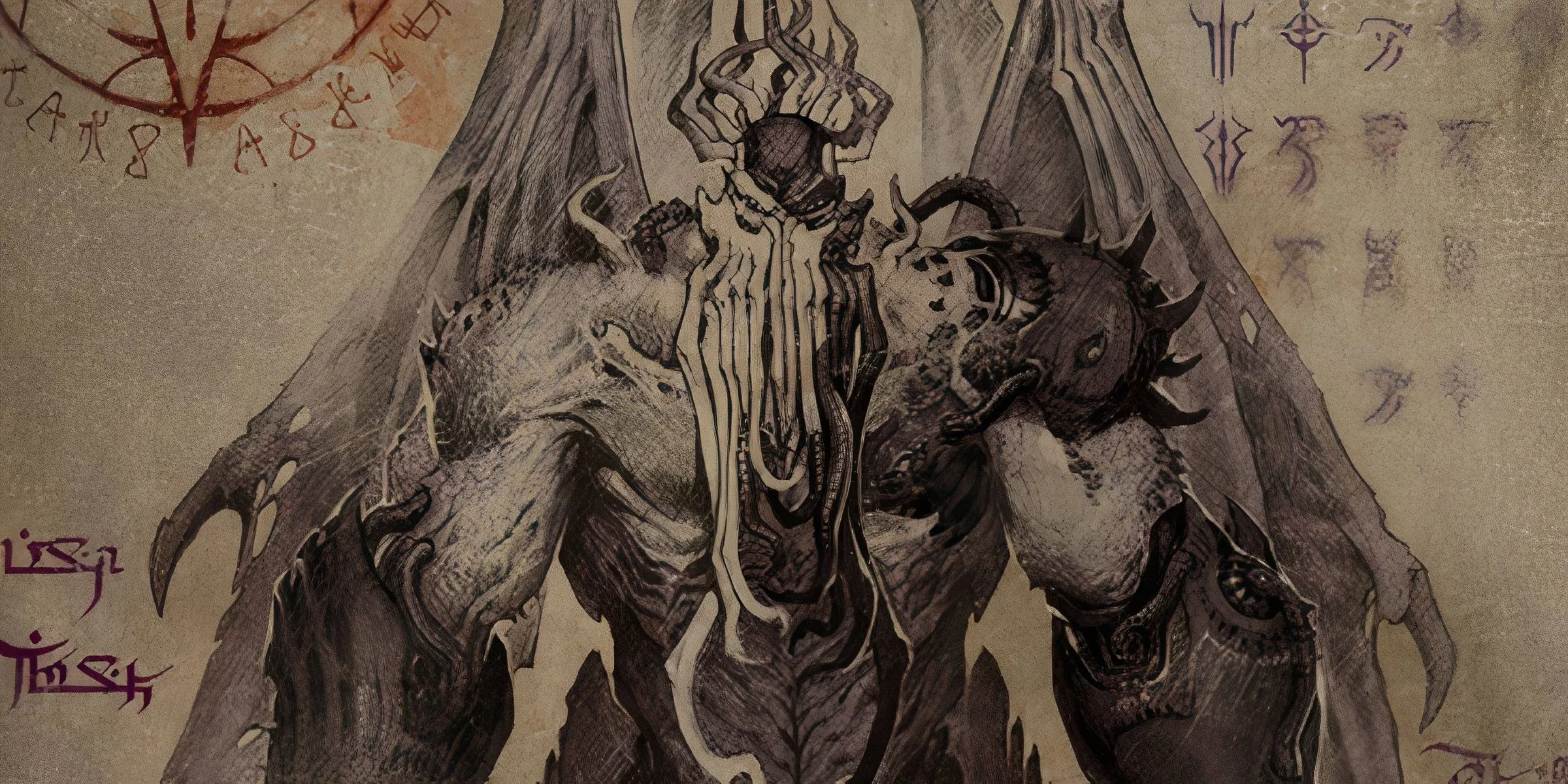
And then, the ground—or rather, the fabric of reality—beneath my boots gave way. A sizable chunk of the game's latter half transported me, and Commander Thira, to the Cosmic Realm. This was no subtle tease. It was a full-frontal assault of surrealist, Lovecraftian horror, a biome brand-new to the Doom series and revealed in extensive detail long before the game's release. The contrast was violently stark. One moment I was in a humble, torch-lit crypt; the next, I was adrift in a psychedelic nightmarescape of non-Euclidean geometry, pulsating organic masses, and existential dread.
| Biome Feature | Medieval Realm | Cosmic Realm |
|---|---|---|
| Primary Inspiration | Dark Fantasy / Gothic | Lovecraftian Cosmic Horror |
| Gameplay Focus | Brutal, grounded combat | Environmental puzzles & surreal traversal |
| Visual Palette | Stone, iron, blood, torchlight | Bioluminescence, void, impossible architecture |
| Key Antagonist | Classical Demons | The Old One & cosmic variants |
| My Personal Feeling | Familiar yet novel, like coming home | Awe-inspiring but strangely... finite |
The realm was fascinating, saturated with mind-bending environmental puzzles. The climactic battle against the Old One while piloting an Atlan war machine was epic, a spectacle of scale and fury. Yet, even in that moment of triumph, a nagging thought persisted. By showcasing so much—the enemies, the landscapes, the core aesthetic—The Dark Ages had, in my view, spent a treasure that might have been better saved.
A Dulled Luster? The Future Price of Present Revelation 🤔
This is my core conflict, the story of my playthrough. The Cosmic Realm stamps an unmistakable signature on Doom: The Dark Ages, but for two reasons, this feels like a narrative gamble:
-
The Mystery is Spent: If a future Doom game revisits this realm, its luster may be dulled. The unnerving, bewildering debut has already happened. What was unprecedented here risks feeling routine later, unless id Software accomplishes something truly novel beyond what we've already seen—more intricate underwater traversal or more spectacular demon variants may not be enough.
-
The Opportunity Cost: The magnificent medieval setting, the very premise of the game, arguably takes a backseat. It feels undervalued. We got a decent dose of cosmic horror, but at the potential expense of letting the dark fantasy realm fully revel and dominate its own story.
Had the Cosmic Realm been a mere post-credits teaser or a single, terrifying chapter, its impact might have been preserved as a tantalizing hook for the future. Instead, it shared the stage, and in doing so, perhaps consumed a bit too much of the narrative oxygen. As of 2026, the tethers to Commander Thira and this cosmic horror are clearly not severed. With a chronological gap still existing between The Dark Ages and the 2016 reboot, id could have more in store for both biomes. But I can't shake the feeling that the next time I stare into the void of the Cosmic Realm, part of its terrifying mystique will be lost, forever claimed by my first, glorious, and overly comprehensive visit in the year 2025. The medieval age was dark, but the cosmos, it seems, was an even more fleeting and precious darkness.
Comms Channel