I remember the first time I saw a demon glow purple in Doom: The Dark Ages. It was 2026, and after years of tearing through hell with the visceral, cinematic Glory Kills of the past, this new approach felt... different. The Glory Strike is a quick kick or a swift shield bash, over in a blink. No more lingering to watch the Slayer perform creative dismemberment. At first, I missed the spectacle. I mean, c'mon, who doesn't love a good demon evisceration? It felt like the soul of the franchise had taken a step back. But as I played, I realized this wasn't a step back—it was a deliberate pivot, a new rhythm for a new kind of war.
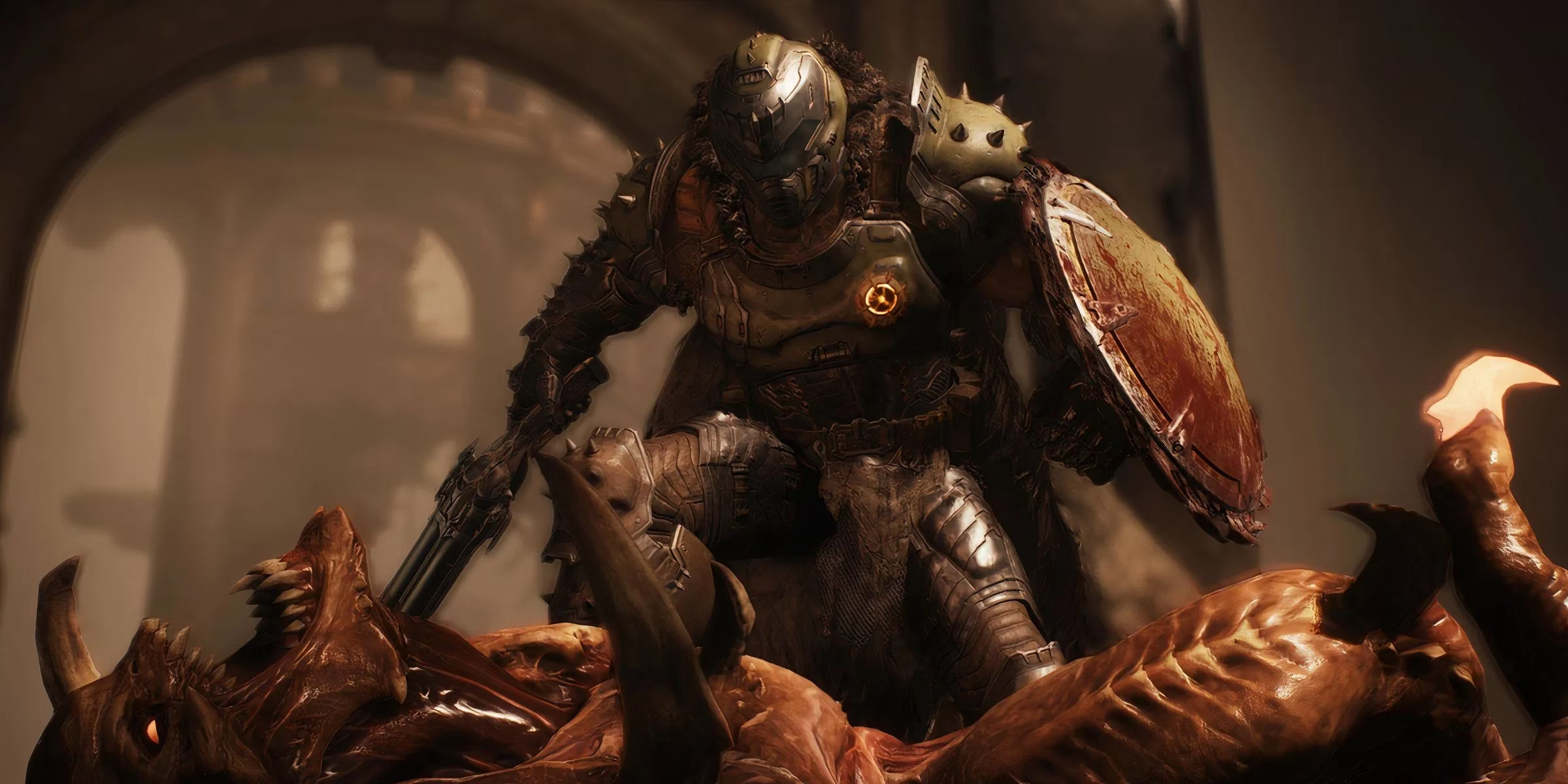
The New Combat Cadence: Why Strikes Replaced Kills
Let's be real for a second. In Doom (2016) and Eternal, those Glory Kills were my lifeline. A moment to breathe, a guaranteed health top-up, and a brutal reward all in one. But in The Dark Ages, the combat dance is fundamentally different. The developers didn't just remove dashes and speed for the fun of it. They built a system that prioritizes parries and deliberate melee engagements. If I was stuck in a two-second animation every few seconds, I'd be a sitting duck for all those green projectiles screaming across the screen. The Glory Strike is the pragmatic solution. It's fast, it gets the job done (health extraction included), and it throws me right back into the fray. It's less about watching a show and more about maintaining the flow of a deadly, methodical waltz.
The game whispers a new mantra: parry, strike, control. The slow-motion effect on a successful parry isn't just cool; it's a tactical tool. It creates pockets of time in the chaos, letting me line up a perfect shotgun blast or reposition. The health and armor gains are baked into this core loop—parry a projectile, get armor; land a heavy melee hit, get health. It's elegant in its simplicity. You're never truly desperate for resources if you play the game as intended.
A Trilogy of Tastes: Comparing the Doom Plates
Looking back at the soft-reboot trilogy now, it's clear each game is a distinct dish with its own flavor profile, and honestly, that's okay.
| Game | Core Flavor | My Personal Take |
|---|---|---|
| Doom (2016) | 🍔 The Classic Burger | Pure, unfiltered aggression. The foundation. It feels like a palate-cleanser now, simple and satisfying. |
| Doom Eternal | 🌶️ The Spicy Fusion Taco | High-speed, platforming, resource-management chaos. A cat-and-mouse chase that never lets up. |
| Doom: The Dark Ages | 🍷 The Hearty, Slow-Cooked Stew | Weighty, deliberate, and tactical. It's about mastering a few tools deeply rather than juggling a dozen. |
Some days I crave the insane acrobatics of Eternal. Other days, I just want to methodically dismantle a Mancubus with a perfectly thrown Shield Saw and a follow-up blast. The Dark Ages doesn't try to be its predecessors. It confidently serves its own meal, even if it means leaving a beloved ingredient like the full Glory Kill on the cutting room floor. And you know what? After a few hours, I stopped missing it.
Mastering the Tools of the Trade
The key to thriving in this new age isn't speed; it's pattern recognition. Most demons telegraph their moves, inviting a specific counter-string. My go-to combo became:
-
Parry the incoming attack (cue the awesome slow-mo).
-
Shoot a weak point with a precision weapon.
-
Strike with a melee or Glory Strike for the finish.
Heavier enemies like the Arachnotron or Mancubus have their own quirks. A fully upgraded Shield Saw throw? It's almost unfair how quickly it stuns them. Toss that buzzing disc of death, close the gap, and a single Super Shotgun blast to the face usually ends the discussion. The progression system feeds directly into this loop, making you feel like an increasingly efficient demon-deconstructing machine.
There's a satisfying crunch to the combat that the previous games lacked. Every shield block, every heavy melee swing, has a tangible weight to it. It reminds me that the Slayer isn't just a force of nature here; he's a craftsman, and demon slaying is his trade. The Glory Strike fits that aesthetic. It's a professional, efficient termination, not a theatrical performance.
The Big Picture: A Symphony, Not a Mosh Pit
Doom: The Dark Ages has a lot of moving parts, but it feels more manageable than Eternal's glorious, overwhelming symphony of destruction. I'm not juggling the Flame Belch, the Blood Punch, the Crucible, dashes, and double-jumps all at once. My focus is narrower, deeper: Shield, Shotgun, Saw, Parry.
In this refined ecosystem, lengthy Glory Kills would have felt like an awkward, disruptive solo in the middle of a tight ensemble piece. The epic beats now come from pulling off a flawless parry against three projectiles at once, or clearing a room using only well-timed melee strikes and environmental hazards. The power fantasy is still there—it's just channeled differently.
So, do I miss the old ways? Sometimes. The creative violence of the Glory Kills was a signature move. But playing Doom: The Dark Ages in 2026, I've come to appreciate its bold redesign. It asked a question: "What if the Slayer had to be more of a strategist than a whirlwind?" The answer is a combat system that rewards patience and precision as much as it rewards aggression. The Glory Strike is the symbol of that shift—swift, utilitarian, and utterly focused on the fight ahead. It's not a downgrade; it's an evolution. And honestly? After mastering it, going back to the old animations feels... almost indulgent. This new war has its own brutal grace, and I, for one, have learned to love its rhythm.
Comms Channel