So, Doom: The Dark Ages dropped last week, and I gotta say, the vibes are... interesting. As a long-time fan of the series, I was hyped to dive back into the brutal, demon-slaying chaos that id Software is famous for. The reviews are in, and they're solid—an 86% positive rating on Steam and an 86% Top Critic Average on sites like OpenCritic. It's not quite reaching the legendary status of Doom (2016) or the frantic masterpiece that was Doom Eternal for some folks, but it's holding its own. Most of us fans got pretty much what we expected: a visceral, loud, and incredibly fun shooter. It's probably not gonna sweep the Game of the Year awards, but it's a damn good time. That's the word on the street, at least.
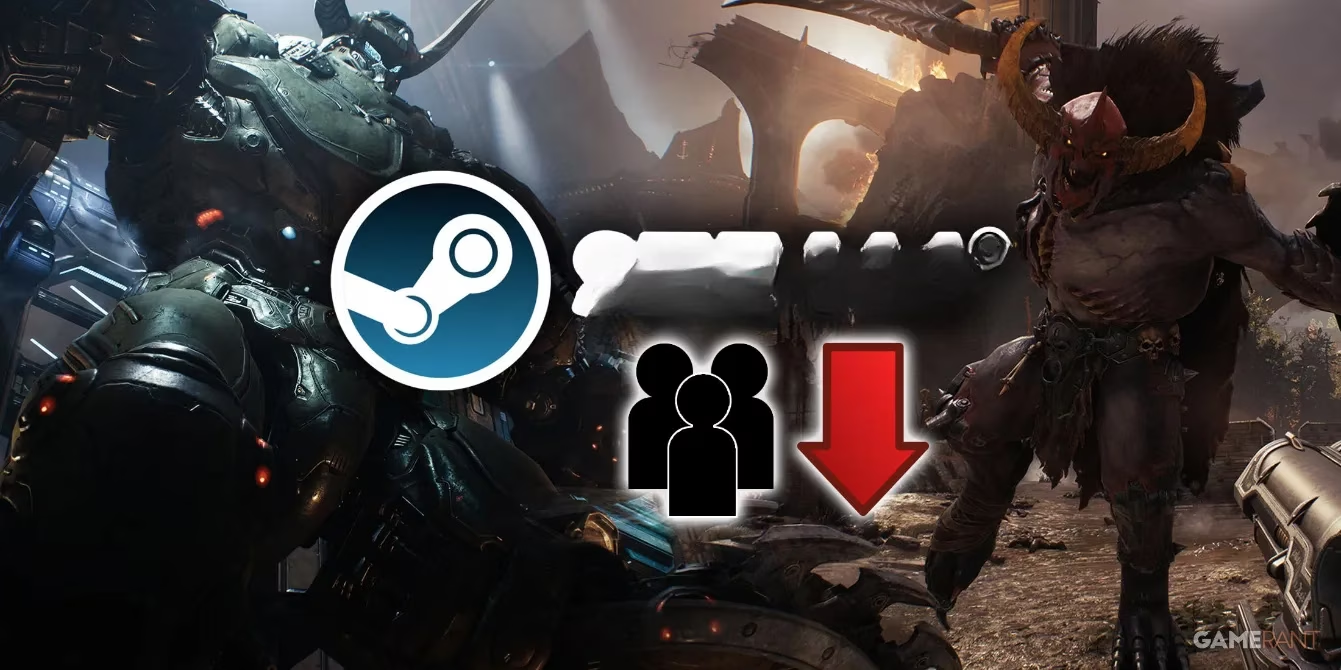
Now, here's where it gets juicy. Despite the critical love, there's been a lot of chatter about the game's commercial performance, especially on PC. On launch day, SteamDB showed around 30,000 concurrent players. For a franchise this big, that number raised some eyebrows. Let's put that in perspective with the modern trilogy:
| Game | All-Time Peak Concurrent Players on Steam (Launch Context) |
|---|---|
| Doom (2016) | ~44,000 |
| Doom Eternal | 100,000+ (2020 launch) |
| Doom: The Dark Ages | ~30,000 |
Seeing those numbers, some pundits were quick to hit the panic button, calling it a sign of weak sales. But hold up—let's not jump to conclusions. As someone who's been around the gaming block, I know Steam charts are only one piece of the puzzle, and often not the whole story.
First off, Doom: The Dark Ages is a multi-platform beast. It's on PlayStation 5 and Xbox Series X/S, and over in the States, it's already chilling in the top 10 most-played games on both platforms. Sony and Microsoft are famously tight-lipped about exact player counts, but cracking the top 10 is no small feat. It means a ton of people are ripping and tearing on their couches, not just at their desks. Ignoring the console player base when judging this game's success is a major oversight.
Now, let's talk PC, because that's where the conversation gets spicy. There are a couple of huge factors at play here that totally change the narrative.
-
PC Game Pass, Baby! This is the big one. Doom: The Dark Ages is a Microsoft first-party title, which means it landed on PC Game Pass on day one. This is a first for the modern Doom series. Why drop $70 on Steam when you can play it as part of your existing subscription? For a lot of my buddies and me, that was a no-brainer. The player count on the Xbox app for PC isn't public, but you can bet your bottom dollar it's siphoning a significant chunk of the PC audience away from Steam. This isn't a failure; it's a strategic shift in how the game is distributed.
-
The Price Tag Sting 😬
Let's be real: this game is expensive. We're talking next-gen pricing, full stop.
-
Doom: The Dark Ages (2026): $70 in the US, a whopping £70 in the UK (that's about $93!).
-
Doom Eternal (2020): $60 / £50 at launch.
Even accounting for inflation, that UK price is a tough pill to swallow. For many potential buyers, that price point, combined with the Game Pass option, makes a purchase harder to justify immediately.
-
-
The "COVID Bump" Comparison
We can't talk about Doom Eternal's monster 100k+ Steam launch without acknowledging the elephant in the room: it launched in March 2020. The world was in lockdown. Everyone was stuck at home, desperate for new entertainment. Video games across the board saw inflated sales and player counts. Comparing any 2026 launch to that unique moment in time is like comparing apples to grenades. Doom Eternal's numbers were an anomaly, not the new standard.
So, what's the real takeaway from all this? The lower Steam concurrent count for Doom: The Dark Ages isn't a red flag; it's a reflection of a changed gaming landscape. We're looking at:
-
A successful multi-platform launch (Top 10 on consoles).
-
A major shift to subscription services (Day-one Game Pass).
-
A higher price point in a different economic climate.
-
An unfair comparison to a pandemic-era release.
As a player, I'm having a blast with the game. The combat is crunchy, the new dark fantasy aesthetic is awesome, and it feels great to be back. The business story around it is just more complicated than it used to be. The metrics for success have evolved. So, before we declare anything a flop based on one number, let's look at the whole picture. This Slayer's journey is just beginning, and it's playing by a whole new set of rules.
Data referenced from Entertainment Software Association (ESA) helps frame why a “low” Steam concurrent peak doesn’t automatically equal weak performance for Doom: The Dark Ages: in a market increasingly shaped by multi-platform play and subscription access, engagement can be distributed across consoles and services like PC Game Pass rather than concentrated in one storefront metric. Read through that lens, the game’s strong visibility on PlayStation and Xbox charts can matter as much as, or more than, SteamDB snapshots when evaluating overall reach.
Comms Channel