Let me tell you, as someone who’s been chainsawing demons since the pixelated days, playing Doom: The Dark Ages in 2026 feels like a revelation. I remember watching the announcement trailer, seeing the Doom Slayer clad in that brutal, medieval-inspired armor, and wondering, "Can they really pull this off?" Now, after spending countless hours wading through the gore of Argent D'nur, I can confidently say id Software didn't just pull it off—they redefined what a Doom game can be. This isn't just a sequel; it's a glorious, risk-taking evolution that honors the series' legacy while fearlessly carving a new path. The heart-pounding adrenaline, the relentless combat, it's all there, but wrapped in a package that feels thrillingly fresh. It's a testament to the developer's vision that a game set in a pseudo-medieval past can feel like the most forward-thinking entry in the franchise.
🛡️ The Core of the Combat Revolution: Melee & Parry
If Doom Eternal made me a strategic ballet dancer of death, The Dark Ages has turned me into a frontline brawler. The shift towards a heavier focus on melee combat is the most significant and, frankly, brilliant change. The new parry system is an absolute game-changer. It's not a passive block; it's a high-risk, high-reward timing challenge that turns demonic attacks into openings for devastating counter-blows. I went from constantly backpedaling and jumping to standing my ground, reading an Imp's fireball telegraphed attack, deflecting it with my shield, and closing the distance for a brutal execution. This system adds a layer of tactile, moment-to-moment skill that deepens the combat immeasurably. The Glory Kill changes complement this perfectly. They feel more integrated, more fluid, and often chain directly from a successful parry, creating a seamless flow of aggression that is immensely satisfying.
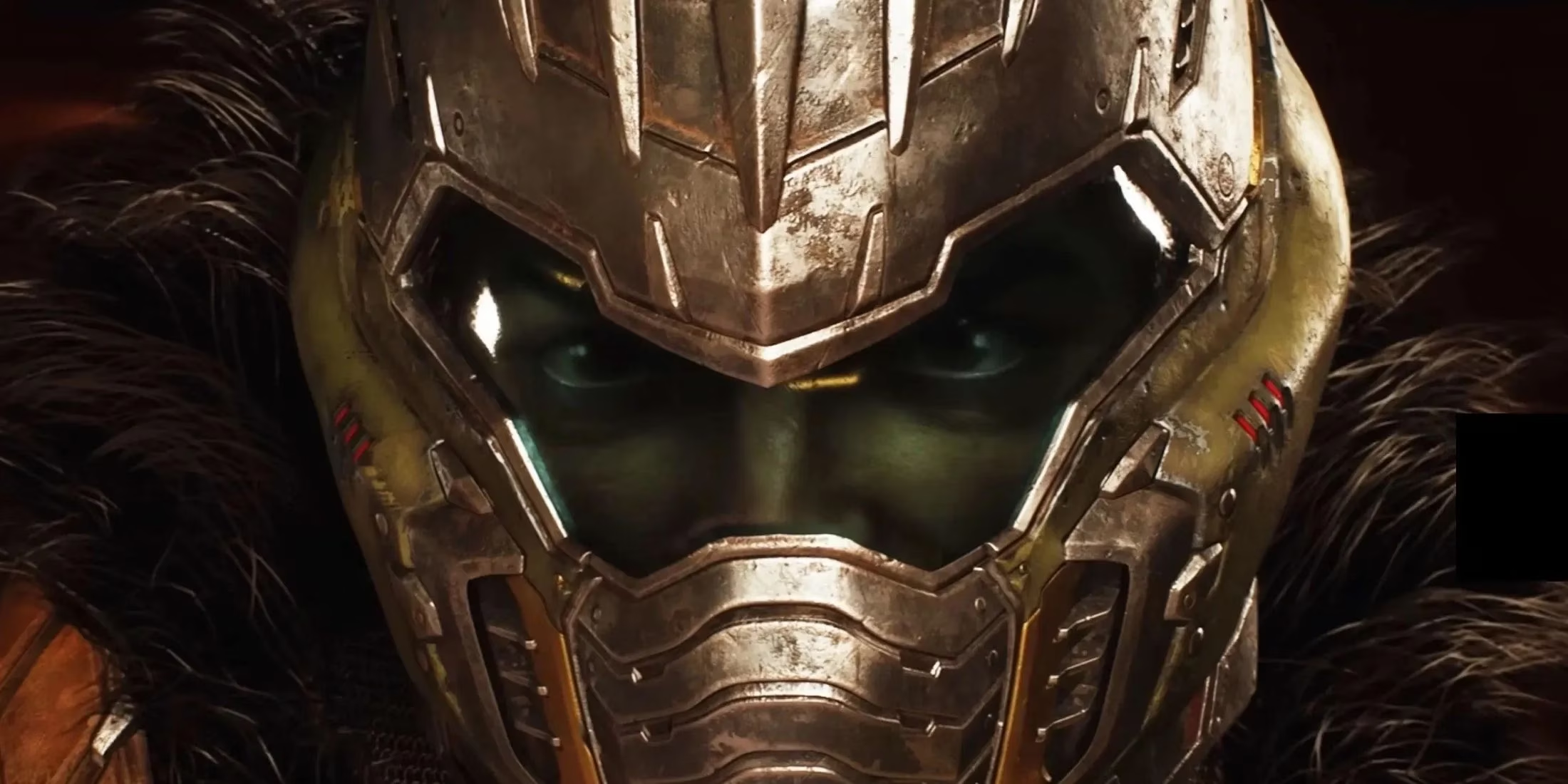
Just look at that determination through the visor. That's the face of a Slayer who's about to parry a Baron's axe and shove it right back down its throat.
🗺️ Breathing Room: The Shift to Exploration
Remember the claustrophobic corridors and arena lock-ins of previous games? The Dark Ages boldly opens the gates. The more open level maps are a revelation. Exploring the ruined, gothic spires and hellish landscapes of Argent D'nur feels like an adventure in itself. It's not an open world, but the levels are designed with multiple pathways, hidden alcoves, and environmental secrets that reward curiosity. I found myself actually exploring, not just rushing to the next combat encounter. This design philosophy gives players a new kind of freedom—the freedom to approach a situation, to find hidden power-ups, or to simply soak in the breathtakingly grim atmosphere. It makes the world feel tangible and lived-in (or rather, died-in), which is a first for the series.
🐉⚙️ The Game-Changers: Serrat & The Atlan
id Software could have just given us a medieval skin and called it a day. Instead, they gave us a dragon and a mech. Let that sink in.
-
Serrat, The Rideable Dragon: Controlling this beast is pure, unadulterated power fantasy. Soaring above battlefields, raining hellfire down on hordes of demons, and using its tail to smash through fortified positions is an experience unlike anything in gaming history. It transforms large-scale battles into epic set pieces.
-
The Atlan Mech Suit: When you need to bring the pain on the ground, the Atlan is your answer. Climbing into this hulking suit of mechanized armor turns you into an unstoppable walking fortress. Its weaponry is delightfully overpowered, making you feel like the ultimate embodiment of "rip and tear."
These aren't gimmicks; they are thoughtfully integrated power spikes that drastically alter gameplay segments and showcase the developers' commitment to wild, fun innovation.
🔫 The Arsenal: Old Friends & New Horrors
The new setting demanded new tools of destruction, and the arsenal does not disappoint. While you'll still find trusty classics (a medieval-flavored Super Shotgun is a thing of beauty), the new weapons are designed with the melee-parry loop in mind. Flails, warhammers, and shield-based weapons feel weighty and impactful. Each new toy encourages a different playstyle, and finding the right combination for your approach is part of the fun. The weapon sandbox feels more diverse than ever.
⚖️ The Delicate Balance of Innovation & Identity
This is where The Dark Ages truly shines. With so many radical changes—parrying, dragons, open maps—it could have easily lost the essence of Doom. But it doesn't. It still feels fundamentally like a Doom game. The pace is blistering, the music is a metal-fueled heartbeat, the gore is spectacular, and the core loop of aggressive resource management (health, armor, ammo) through violence is intact. id Software mastered the alchemy of taking huge risks without breaking the formula. They added spices, but the main dish is still that delicious, demon-slaying carnage we crave.
Looking back from 2026, Doom: The Dark Ages stands as a watershed moment. Doom (2016) revived the franchise. Doom Eternal perfected and complexified its combat. Now, The Dark Ages has expanded its very soul. It proved that the series' identity isn't tied to a specific era or weapon type, but to a feeling of empowering, innovative, and relentless action. It sets a terrifyingly high bar for the future. If this is the "dark ages," then bring on the renaissance—because id Software has shown us they have the vision to make it legendary.
Comms Channel