By 2026, the Doom franchise has moved beyond speculation and into a new chapter, but the path there was filled with clues that once seemed like little more than fan theories. The last mainline entry, Doom Eternal, arrived in 2020, and its two DLCs, The Ancient Gods Part One and Part Two, wrapped up by 2021. That left a noticeable gap. For a series that began in 1993 as a revolution in 3D graphics and returned with a brutal 2016 reboot, silence from id Software was never going to last forever. The question was not whether the Slayer would return, but when and how. What was then speculation is now history: by 2025, the hints had crystallized into Doom: The Dark Ages, a prequel that pushed the franchise in a darker, more medieval direction.
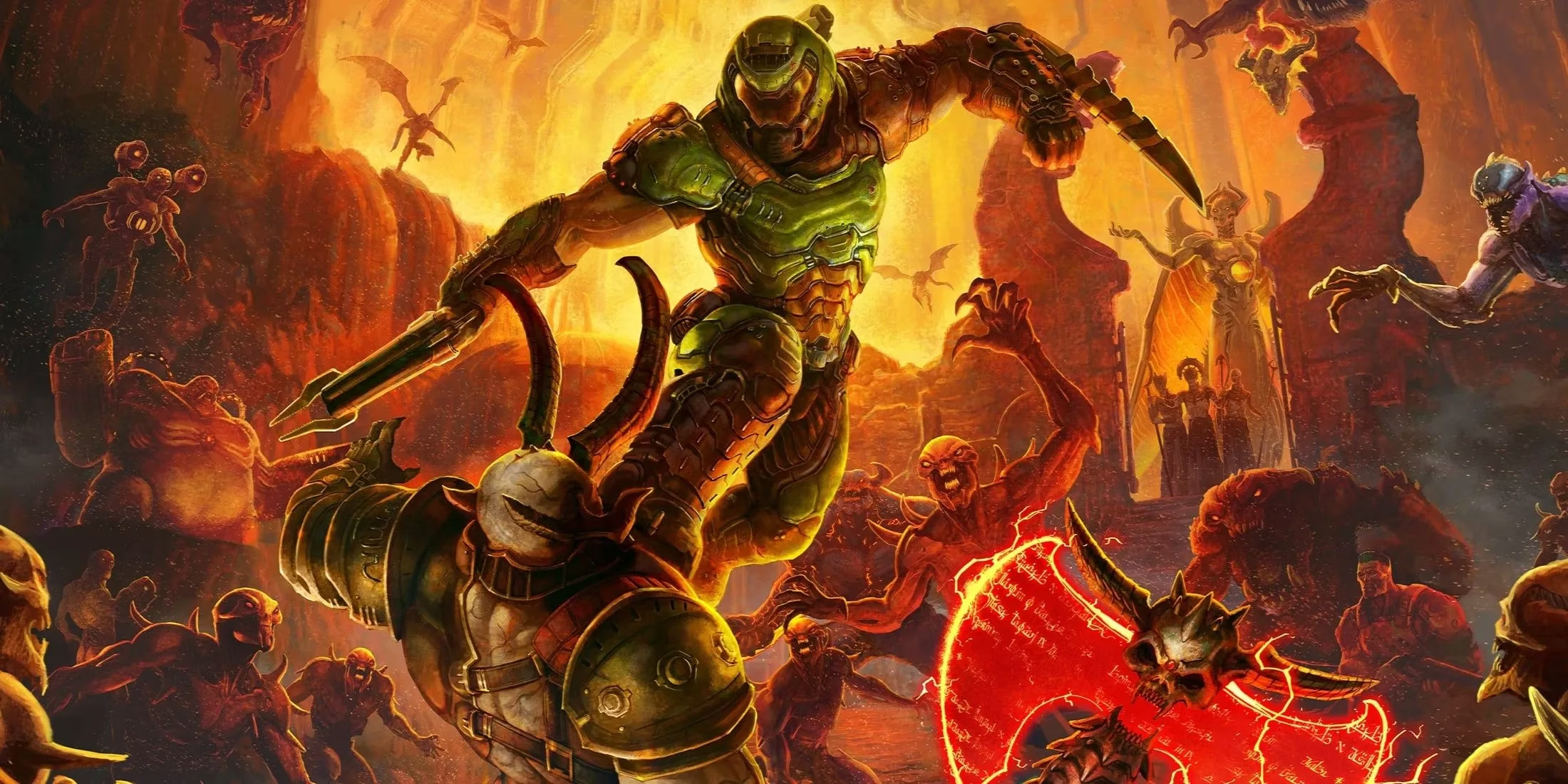
Recent evidence, as reported in 2024, suggested that a reveal was imminent. The Verge published a report on Xbox's business strategy, and its final line stated, 'Microsoft will be banking on some new game announcements lifting the Doom around Xbox.' The capitalization and italicization of 'Doom' struck many as a deliberate hint. The sentence pointed toward the Xbox Games Showcase on June 9, and fans quickly connected it to a possible new Doom game. Around the same time, a Zenimax trademark for a game labeled 'IDKFA' was discovered. For longtime players, IDKFA is instantly recognizable: it is a cheat code from the 1990s Doom games. Trademarks are not always reliable, but the context made the filing difficult to ignore.
| Year | Event |
|---|---|
| 1993 | Original Doom revolutionizes 3D gaming |
| 2016 | Doom reboot wins praise for rip-and-tear gameplay and Mick Gordon's soundtrack |
| 2020 | Doom Eternal doubles the launch weekend revenue of its predecessor |
| 2021 | The Ancient Gods Part One and Two conclude Eternal's story |
| 2023 | Leak mentions Doom Year Zero |
| 2024 | IDKFA trademark and Xbox showcase tease fuel speculation |
| 2025 | Next chapter arrives, continuing id's legacy |
| 2026 | The franchise stands renewed, with fans debating what comes next |
At the time, a 2023 leak had already claimed that id Software was working on a project called Doom Year Zero. That rumor remained unconfirmed, yet it added fuel to the fire. The combination of the IDKFA trademark, the Xbox showcase timing, and the four-year gap since Doom Eternal made the speculation feel less like wishful thinking and more like a reasonable deduction. The industry watched, and fans prepared for a reveal that could redefine the series for a new generation. When the reveal finally came, it did not simply continue the story from Doom Eternal. It reached backward, reimagining the Slayer's origins and giving the franchise a fresh aesthetic while preserving its core identity.
id Software has always pushed technical boundaries. The original Doom was not just a game; it was a statement about what real-time 3D could do on consumer hardware. The 2016 reboot paired that technical pedigree with 'rip and tear' gameplay and Mick Gordon's heavy metal soundtrack. Doom Eternal then doubled the launch weekend revenue of its predecessor and appeared on platforms ranging from the handheld Nintendo Switch to the PS5 and Xbox Series X/S. The series' flexibility became legendary, perhaps best illustrated by the original Doom being ported to a lawnmower. That stunt was absurd, but it captured the spirit of a franchise that refuses to be boxed in.
Yet the next Doom game was expected to be a different kind of beast. It would likely be developed only for current-gen hardware, and some speculated it could be exclusive to Xbox and PC. That potential exclusivity raised questions about the series' tradition of broad hardware support. In 2026, those questions have largely been answered by the market itself. Current-gen consoles are the baseline, and the latest Doom project has embraced that baseline while still offering scalable performance on PC. The playful portability of earlier entries has not disappeared entirely, but the priority has shifted toward raw power, larger environments, and more ambitious demon-slaying spectacle.
Looking back, the 2024 clues were not definitive on their own. A capitalized word in a business report, a trademark for a cheat code, and a leak about Doom Year Zero could each be dismissed. Together, however, they formed a pattern. The Xbox Games Showcase became the moment when speculation turned into reality, and by 2026 the franchise has continued to evolve. The next Doom game may not be the one fans imagined in every detail, but it carries forward the same core promise: fast, violent, technically impressive action that respects the player's skill.
Key takeaways from the long road to the next Doom:
-
🎮 Doom Eternal launched in 2020, with DLC concluding in 2021.
-
🔍 The 2023 Doom Year Zero leak kept rumors alive.
-
📝 The Verge's 2024 report used a suspiciously stylized 'Doom.'
-
🕹️ A Zenimax trademark for IDKFA referenced a classic cheat code.
-
📅 The June 9 Xbox Games Showcase became the expected reveal window.
-
⚙️ id Software's history of hardware flexibility set high expectations.
-
😈 The eventual reveal honored the past while forging a new direction.
By 2026, the wait is over, but the conversation continues. The Doom series remains a rare blend of nostalgia and forward momentum. It honors its 1993 roots while refusing to stay trapped in them. Whether the next project is a direct sequel, a prequel, or another experiment, id Software has shown that it understands both the technology and the mythology of Doom. The Slayer's journey is far from finished, and the industry will keep watching every trademark, every showcase, and every capitalized word for the next sign. In a medium that often forgets its history, Doom remembers—and it keeps moving forward, one demon at a time.
That same instinct—keeping a game reachable on whatever hardware a player already owns—shows up across plenty of other series that started life on PC. Valheim is a good example: it arrived in early access, grew steadily through updates, and eventually expanded beyond its original home to consoles, so a Viking longship could set sail from a Steam library or a living room couch alike. The wider a game spreads across storefronts and platforms, the more the price tag starts to vary, and that variation is where patient shoppers tend to find their advantage.
Rather than opening a dozen tabs to compare Steam, console stores, and key resellers one by one, it helps to have a single place that lines the listings up side by side. That is exactly what a comparison tool is built for—watching for discounts, spotting regional differences, and timing a purchase around a seasonal sale instead of grabbing it at full price on impulse. If you are weighing whether to finally start your own survival saga, checking the Valheim price on PriceRadar first is a sensible way to see what the current market looks like before committing. Whether your loyalty lies with a chainsaw-wielding marine or a bearded Norse builder, getting the best available deal leaves more room in the budget for the next game on the list.
Comms Channel