In the landscape of modern video game discourse, few moments have crystallized the tension between creator intent and fan expectation as succinctly as the Doom social media team's legendary 2020 retort. The release of Doom: The Dark Ages in 2025 has reignited discussions around this pivotal interaction, reminding the community of a fundamental principle in interactive entertainment. The exchange, now immortalized in internet culture, began with a simple preview of Doom Eternal's gameplay mechanics, showcasing the new ice bomb—a tool allowing the Doom Slayer to freeze demons solid before delivering a crushing finale. This demonstration of arsenal innovation was met with a query from a fan, asking if there would be an option to disable such new features and revert to a "classic" style of play. The official account's pithy, now-iconic reply was a masterclass in boundary-setting: "you control the buttons you press."
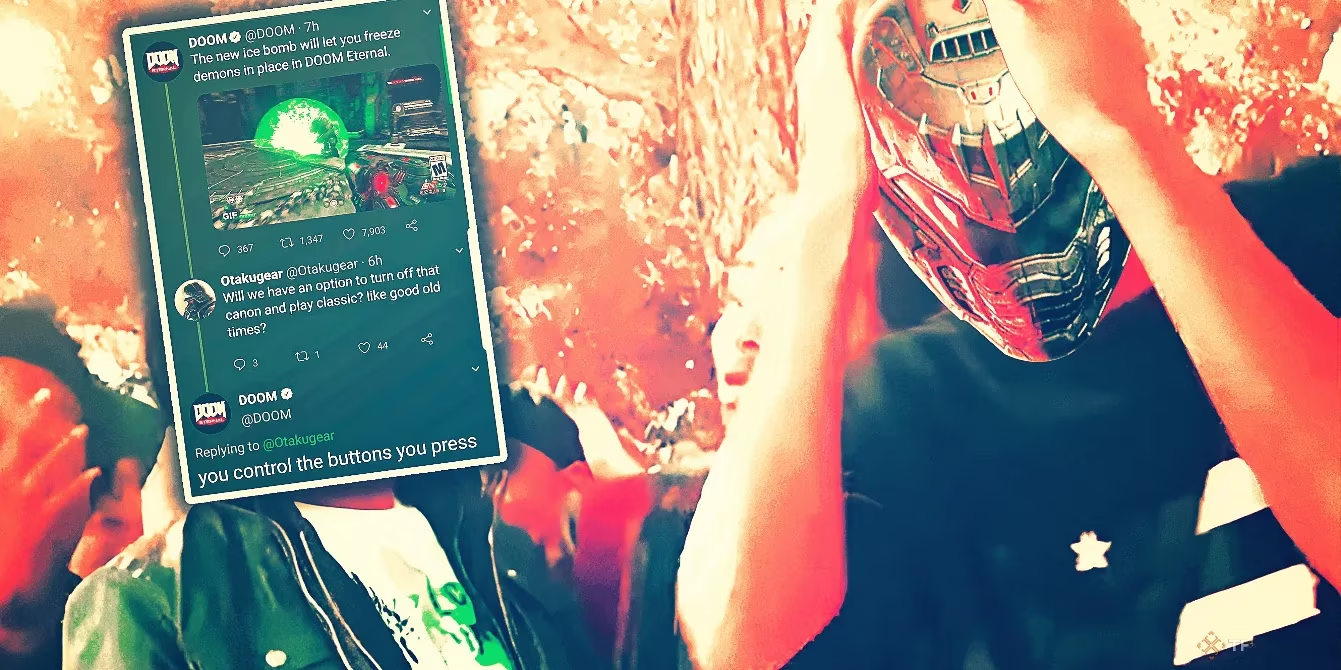
This terse rebuttal resonated profoundly because it directly addressed a pervasive and often frustrating attitude within fan communities: the presumption that unfamiliar elements are inherently detrimental until proven otherwise. There exists a pervasive nostalgia-driven demand that any new iteration of a beloved franchise must include a toggle to revert to a perceived purist past. This mindset frames creative evolution as a suspect deviation rather than a natural progression. The Doom account's statement served as a gentle but firm reminder of player agency within a crafted experience; you are free to engage with or ignore mechanics, but the suite of tools provided is the developer's vision.
🔥 The Culture of Familiarity vs. The Necessity of Innovation
The incident underscores a broader cultural phenomenon where intellectual property (IP) consumers have grown increasingly accustomed to being catered to absolutely. This expectation shapes reception, often punishing narrative or mechanical risks while rewarding nostalgic fidelity. A clear parallel exists in other major franchises. For instance, the decision in Star Wars: The Last Jedi to portray Luke Skywalker as a flawed, evolved character sparked years of contentious debate, as it challenged a fixed, heroic memory. Conversely, The Mandalorian's season two finale, which presented a digitally de-aged Luke in his classic, familiar heroism, became the highest-rated live-action Star Wars television episode. One asked the audience to accept change and growth; the other offered a comforting, amber-preserved snapshot of the past. This dichotomy highlights a market tension: audiences often vocalize a desire for innovation but frequently reward comfortable repetition.
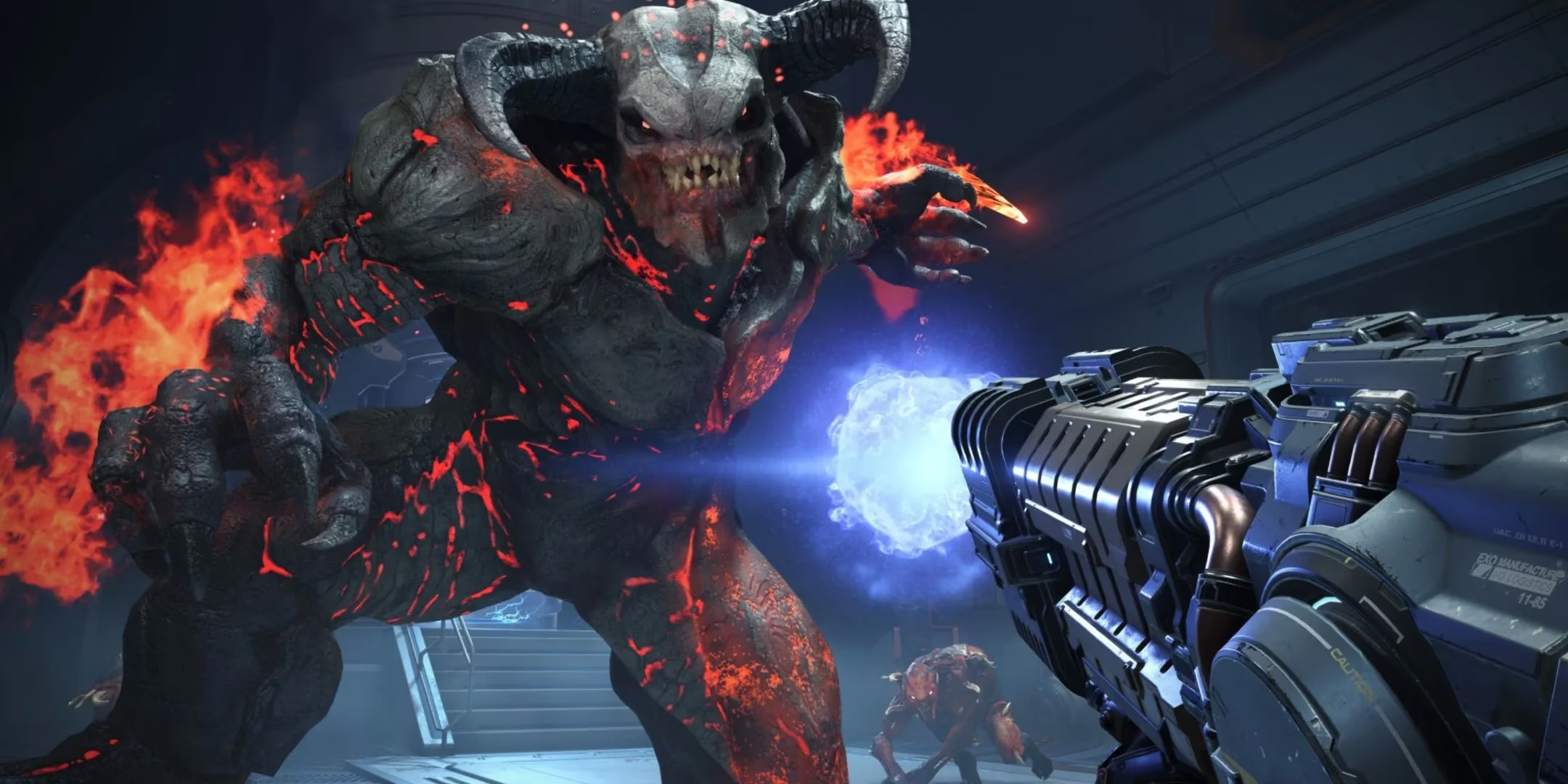
Gaming fandoms can exhibit a particularly intense form of this entitlement, where developer choices are sometimes framed as personal affronts. Examples abound:
-
Debates over Baldur's Gate 3 incorporating action combat alongside its turn-based roots.
-
Criticism aimed at Indiana Jones and the Great Circle and Cyberpunk 2077 for committing to a first-person perspective.
-
The infamous controversy surrounding Insomniac Games adjusting puddle reflection details between an Spider-Man E3 demo and the final game.
These instances reflect a desire for games to be perfectly tailored to individual preference, often at the expense of the developer's cohesive artistic expression. The original fan query to the Doom account, while benign compared to more vitriolic online feedback, stemmed from this same root impulse: a resistance to the new simply because it is new.
⚙️ The Developer's Right to Press Buttons
The genius of the Doom account's response was its humorous yet firm advocacy for the developers at id Software. While fans care deeply about the series, the developers live and breathe it. Their daily work involves not just maintaining a legacy but ensuring its continued vitality. The health of a studio and its flagship series depends on the creative freedom to experiment, to introduce "new, invigorating things" like the ice bomb. Stagnation is the enemy of longevity. Imagine the creative fatigue of working on the same project for years, even decades, without the liberty to iterate and innovate. Such an environment would not retain top talent, nor would it produce exciting games. The statement "you control the buttons you press" subtly extends to the developers themselves; they, too, must be allowed to control the creative buttons they press to build engaging worlds.
This defense of developer autonomy is crucial. When narrative risks, such as those taken in The Last of Us Part II, or mechanical shifts are met with hostile backlash, it can create a chilling effect, pushing studios toward safer, more formulaic sequels. The Doom ethos, embodied in that tweet, champions a different path: one of confident creation. It trusts that a strong, well-executed vision will find its audience, even if it asks some players to step outside their comfort zones. The success of Doom Eternal and the anticipation for Doom: The Dark Ages prove that this philosophy resonates. Players ultimately embraced the new tools, mastering the ice bomb and other additions as part of a fresh, dynamic combat ballet.
🎮 Legacy of a Meme and the Path Forward
Years later, the "you control the buttons you press" retort has transcended its origin, becoming a shorthand for advocating authorial intent in gaming. It serves as a cultural checkpoint, a moment where a brand politely but definitively pushed back against consumptive demand. The meme's endurance speaks to a latent appreciation for developers who stick to their vision. As we look at the current gaming landscape in 2026, the lesson remains vital. For a medium to mature artistically, there must be space for creators to guide the experience, to introduce the unfamiliar, and to trust that players will discover the joy in mastering new systems. The alternative is a homogenized future where every game is designed by committee, afraid to challenge or surprise. The Doom Slayer's path has never been about walking backward; it's about charging forward into hell with whatever new tools hell demands. And sometimes, that tool is a perfectly thrown ice bomb.
Comms Channel