I stand in the ashes of Earth, the air thick with the scent of ozone and sulfur, my heart pounding a rhythm that syncs with the heavy metal soundtrack screaming in my ears. This is Doom Eternal, not just a game I play, but a realm I inhabit—a brutal, beautiful ballet of carnage that, even now in 2026, remains the undisputed peak of id Software's demon-slaying vision. My journey through the more accessible, if less ambitious, corridors of Doom: The Dark Ages only served to crystallize this truth. It was a fun, worthy romp, but returning to Eternal was like coming home to a symphony after hearing a pleasant tune; the depth, the complexity, the sheer unadulterated demand of its combat revealed itself not as a flaw, but as its glorious, defining heart.
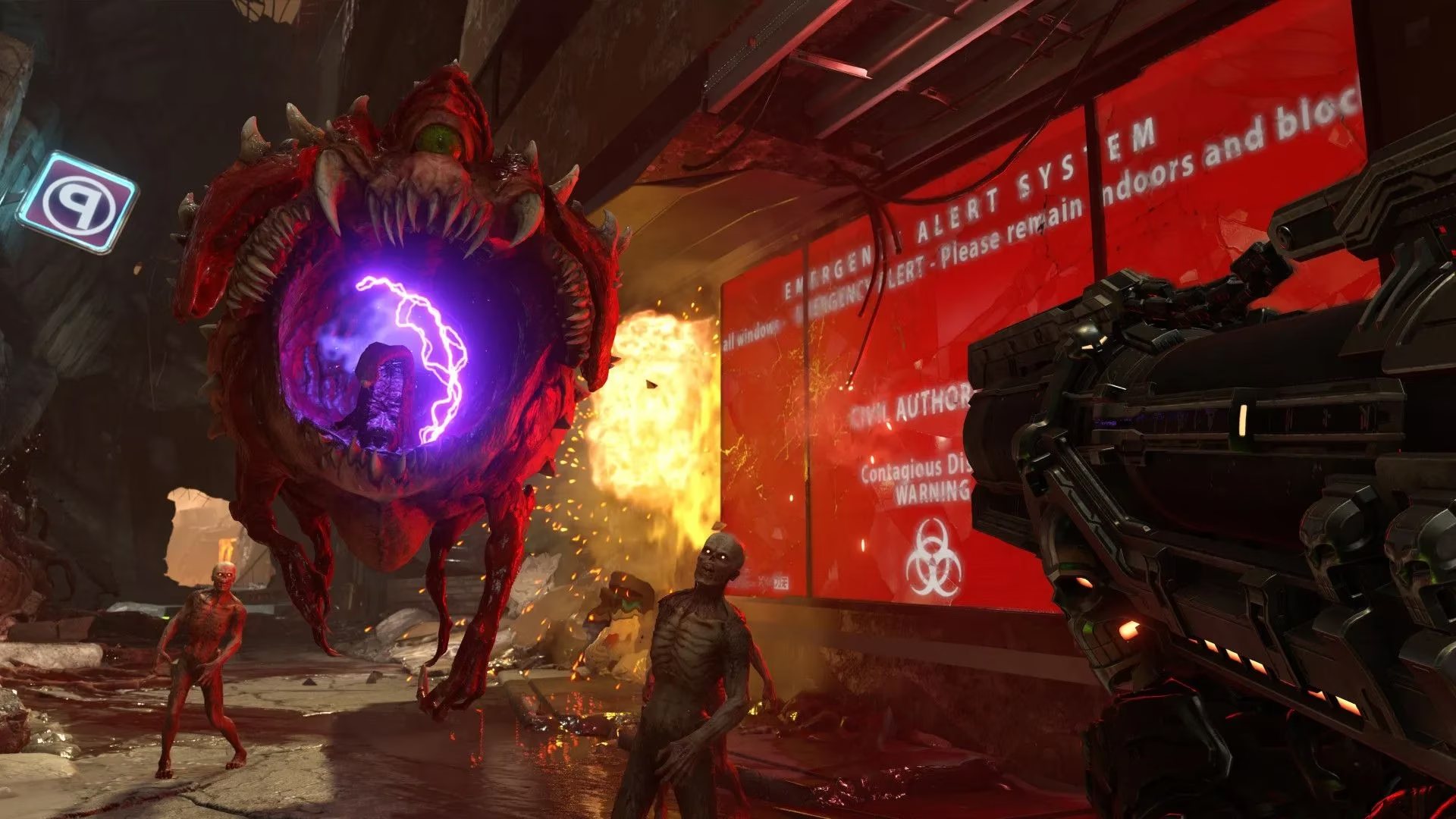
I remember my first, foolish impression. Released on that fateful day in March 2020, a day also claimed by tranquil island life, I treated Eternal as a side note. I found its systems cumbersome, an overcomplication of the 2016 reboot's pristine violence. Oh, how blind I was. Eternal doesn't complicate; it elevates. It transforms the power fantasy into a high-stakes resource-management symphony. Health, armor, ammunition—they are no longer mere pickups, but rewards violently torn from the flesh of my enemies. A glory kill for health. A burst of the shoulder-mounted flamethrower for armor. A chainsaw rip for bullets. This is the game's core mantra: move, adapt, and never stop harvesting. To pause is to perish. The arena becomes a chessboard painted in blood, and I am both king and pawn, dancing on a razor's edge.
The arenas themselves are temples of pandemonium. The Dark Ages offered straightforward battlegrounds, but Eternal's are multi-layered masterpieces of verticality and chaos. I swing from monkey bars, dash across gaps, and double-jump over pits while a cacophony of hellspawn descends. An Imp fires from a distant ledge. A Cacodemon floats menacingly above. A pack of Hell Knights charges from below. The game doesn't just throw enemies at me; it orchestrates them.
-
The Marauder 👹: A dark mirror, a punishing test of timing and patience that shatters any notion of mindless shooting.
-
The Archvile 🔥: A force multiplier that demands immediate, violent priority, reshaping the entire battlefield with its presence.
-
The Doom Hunter 🛡️: A two-phase puzzle of armor and flesh, a lesson in target switching and weapon efficiency.
Each encounter is a puzzle with a thousand violent solutions, and the satisfaction of solving it in real-time, under a hailstorm of plasma and fire, is unmatched.
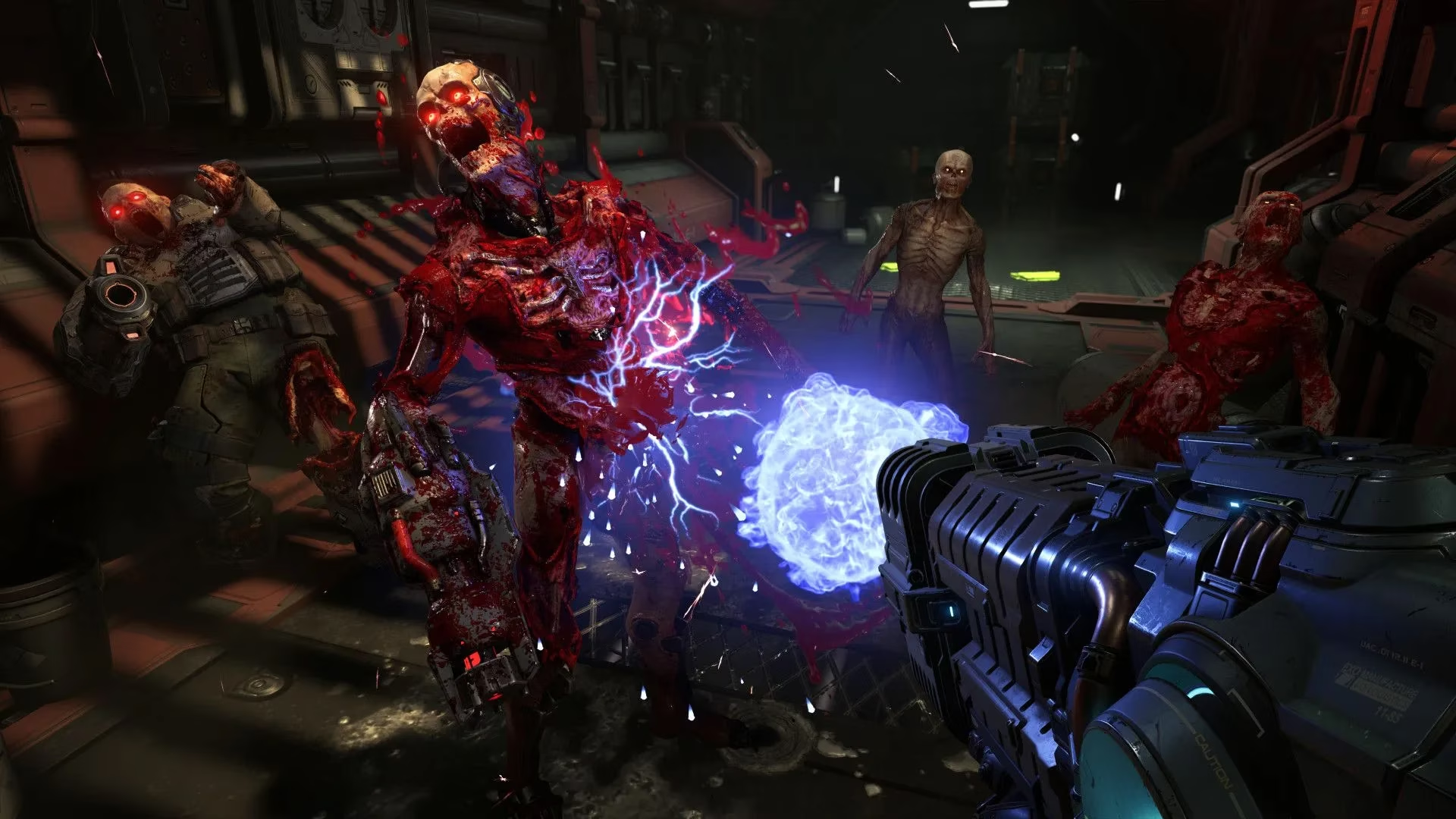
Playing on a harder difficulty now, I feel every choice resonate. Which rune to equip? Which weapon mod to master? Should I use the Ice Bomb to control the crowd or the Frag Grenade to shatter armor? The game offers a staggering arsenal, and mastery feels less like memorization and more like improvisational jazz. The Super Shotgun's Meat Hook isn't just for closing distance; it's a mobility tool, a getaway vehicle, a way to yank myself out of a deadly corner. The Ballista isn't just a sniper rifle; it's a tool for quick-swapping to unleash devastating damage combos. This isn't just shooting; it's a performance.
And what a stage it is. While The Dark Ages retreated to a familiar, gothic aesthetic, Eternal's ambition is galactic. I battle across the decaying, overgrown skyscrapers of a dead Earth. I desecrate ancient satanic temples dripping with otherworldly ichor. I soar through the impossible geometry of Urdak, heaven's brutalist answer to hell. The narrative, told through environmental lore and stark visuals, builds a mythos so grand and so utterly, wonderfully absurd that I can't help but be absorbed. It's the perfect backdrop for director Hugo Martin's love letter to the genre—a game made by fans, for fans who crave depth.
The Dark Ages was a reaction. It felt like id Software listening to those who found Eternal "too much" and offering a streamlined, if potent, alternative. Its "Stand and Fight" philosophy is satisfying in its own right, but it lacks the desperate, creative genius of Eternal's "Dance or Die" ethos. One is a powerful hammer; the other is an entire, nuanced toolbox.
So here is my confession, my revised gospel: Doom Eternal is officially the best game in the reboot trilogy. It is a demanding teacher, yes. It will chew you up if you refuse to learn its rhythms. But for those who submit to its brutal logic, who embrace the chaos and find grace within it, the reward is a shooter experience that stands alone, even six years later. If you walked away from it once, or if you've just emerged from the worthy but simpler halls of The Dark Ages hungry for more, there has never been a better time to return. The demons are waiting. The music is cued. The dance floor of hell is open, and it demands a master. I am answering the call, once more, and finding it more brilliant than ever.
Comms Channel