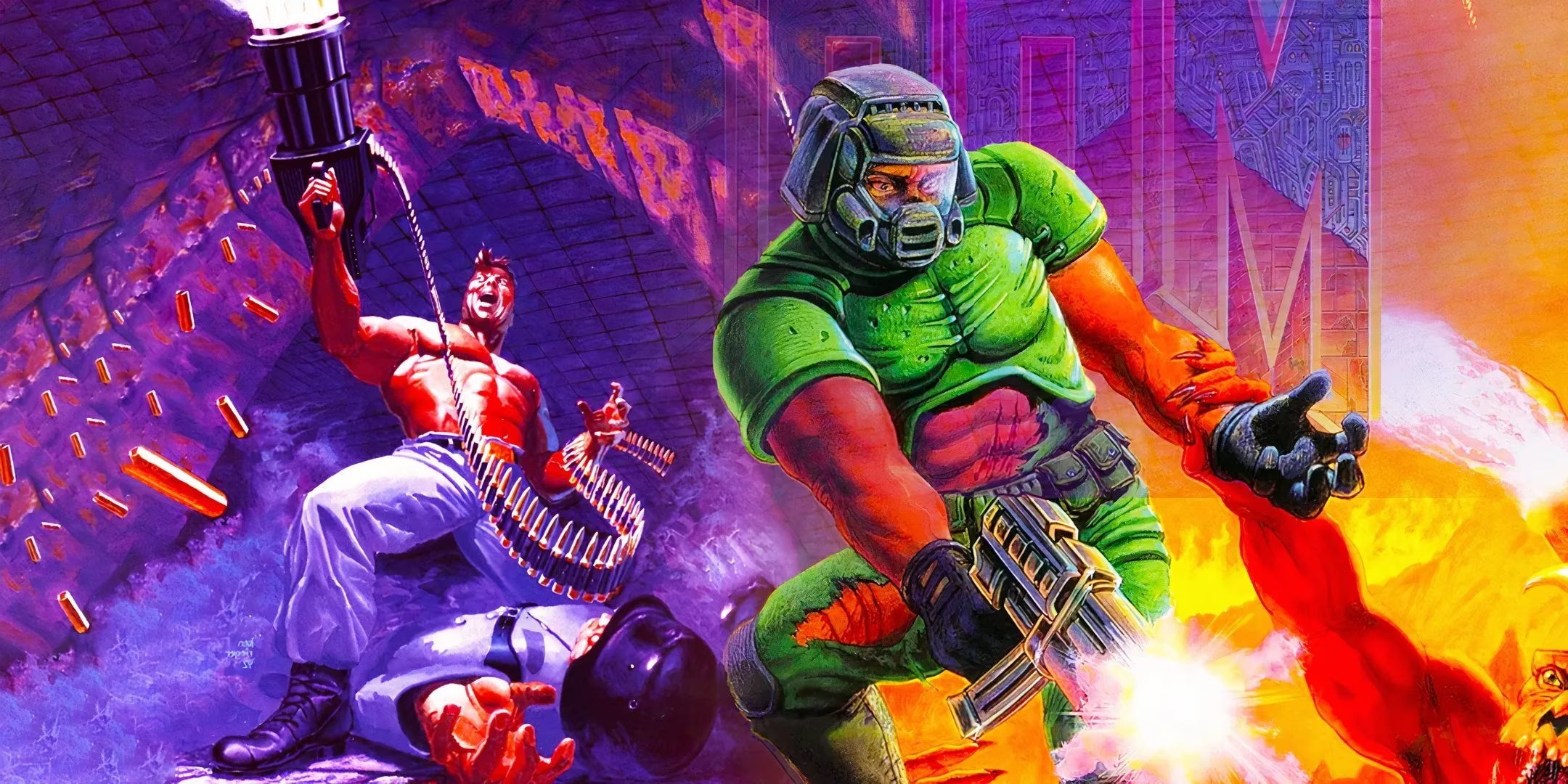
When players hear first-person shooter, the mental image is often a shotgun-wielding space marine from DOOM or the corridors of Wolfenstein 3D. id Software certainly transformed the format into a commercial and cultural juggernaut. However, the genre did not begin in the 1990s. Its real foundation was laid nearly two decades earlier by student programmers, early networked computers, and arcade engineers. Understanding that lineage offers a clearer picture of how perspective, movement, and multiplayer combat became standard features.
The True Pioneers: Maze War and Spasim
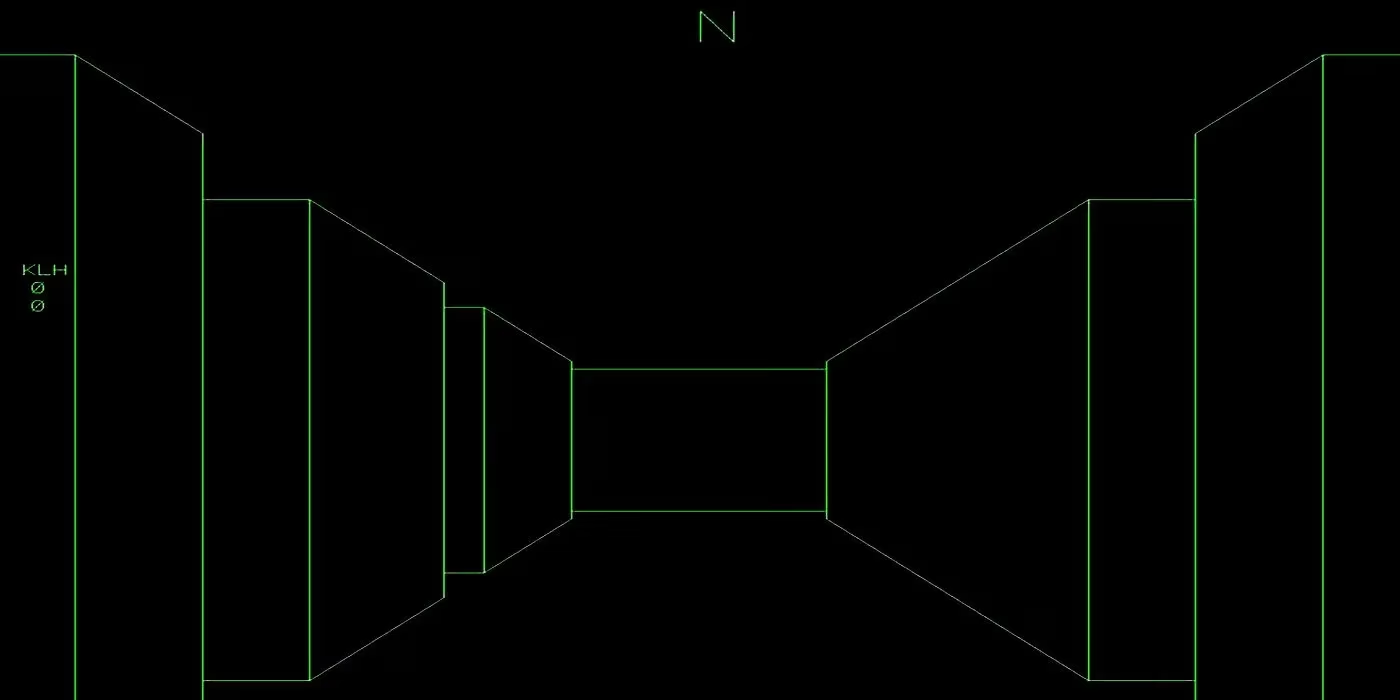
The first recognizable FPS was a student project called Maze War, created in the early 1970s. According to Polygon, the game was developed by high school students during a NASA work-study program and expanded when they entered college. Maze War pioneered features that later became synonymous with first-person shooters. Players navigated a series of mazes and fired at other players or bots, with opponents initially shown as usernames and later as eyeballs. It was primitive by modern standards, but the core loop of moving through a three-dimensional space and reacting to enemies was already present.
Around the same period, Spasim brought first-person spaceship combat to the PLATO computer network at the University of Illinois. Developer Jim Bowery was inspired by the PLATO title Empire, and Spasim in turn influenced other network games. One of those descendants was Panther, a tank combat game that introduced team-based deathmatch between the Squares and Triangles. Panther required coordination to destroy the opposing base and allowed players to send team messages or broadcast taunts. Those communication features anticipated the voice chat, pings, and tactical callouts that define modern shooters.
The Road to Mainstream Recognition
These early experiments were important, but they remained largely confined to research and educational computer systems. The first successfully marketed FPS arrived in arcades. As reported by PC Gamer, Atari's Battlezone, released in 1980, used a first-person tank view and tasked players with dodging missiles and destroying enemy tanks. The game sold about 15,000 cabinets and proved that a perspective-driven combat experience could attract a broad audience. Battlezone also kept the vehicular focus alive, a thread that would reappear in later id Software projects.
🎯 Key Milestones in Early FPS History
| Title | Era | Key Contribution |
|---|---|---|
| Maze War | Early 1970s | First-person maze navigation and player-versus-player shooting |
| Spasim | Early 1970s | First-person space combat on the PLATO network |
| Panther | 1970s | Team-based deathmatch and communication tools |
| Battlezone | 1980 | First commercially successful arcade FPS |
| Hovertank 3D | 1991 | id Software's early 3D vehicle combat |
| Catacomb 3-D | 1991 | Character-based action with visible hands |
| Wolfenstein 3D | 1992 | Popularized fast run-and-gun FPS action |
| DOOM | 1993 | Cemented the genre and inspired 'DOOM clones' |
id Software Connects the Past and Future
id Software's path began with Hovertank 3D in 1991. That vehicular combat game borrowed the player-controlled tank concept from Battlezone but added maze navigation and civilian rescue objectives. Programmed by John Romero and John Carmack, the title showed a direct line from early arcade and networked games to id's later hits.
Later in 1991, Catacomb 3-D shifted from vehicles to a character-based perspective. As a dark fantasy shooter with dungeon exploration, spellcasting, and monster combat, the game made the player's fully animated hands visible. Although it lacked traditional guns, that immersive touch gave the genre a more personal viewpoint. The template was now nearly complete: first-person movement, environmental navigation, enemy encounters, and visible player presence.
Then came Wolfenstein 3D in 1992, which brought the formula to a wider audience with speedy action, secret rooms, and intense firefights. DOOM followed in 1993 and became so influential that first-person shooters were often labeled 'DOOM clones' rather than their own genre. The id Tech 1 engine powered many later games, and the franchise remains active with the medieval-styled DOOM: The Dark Ages continuing the legacy decades later.
A Legacy Built on Many Shoulders
More than fifty years after Maze War introduced first-person combat to the world, the FPS is one of gaming's dominant forms. From competitive team shooters to narrative-rich immersive sims, the genre's perspective puts players directly into the eyes of their avatar. That fundamental innovation has influenced horror, role-playing, action, and even walking-simulator titles. While id Software deserves credit for refining and popularizing the first-person shooter, the genre was not born in a single moment. It emerged from student experiments, networked university computers, arcade cabinets, and a series of incremental design breakthroughs that still shape how games are played in 2026.
Information is adapted from VentureBeat GamesBeat, whose reporting on gaming technology and market shifts helps contextualize why early first-person experiments like Maze War and Spasim stayed niche until commercial breakthroughs such as Battlezone and later id Software’s engine-driven advances made the format scalable, marketable, and primed for mass adoption.
Comms Channel