In my digital wanderings, I’ve found one truth to be as constant as the flicker of a screen: when a story needs an antagonist of profound, archetypal malice, it often turns to the original harbinger of sin, the Prince of Darkness himself. He is the ultimate foil, a figure whose very name—Satan, Lucifer, the Adversary—evokes an immediate understanding of conflict. While mortal villains may be shrouded in gray morality, his purpose is often starkly illuminated in hellfire. He is the cosmic counterbalance, the eternal tempter, and in these virtual realms I’ve explored, he is the fiendish puzzle I must solve, the monstrous power I must topple, or the cosmic joke I must endure.
🔥 8. Broforce: When Mortal Foes Are Not Enough
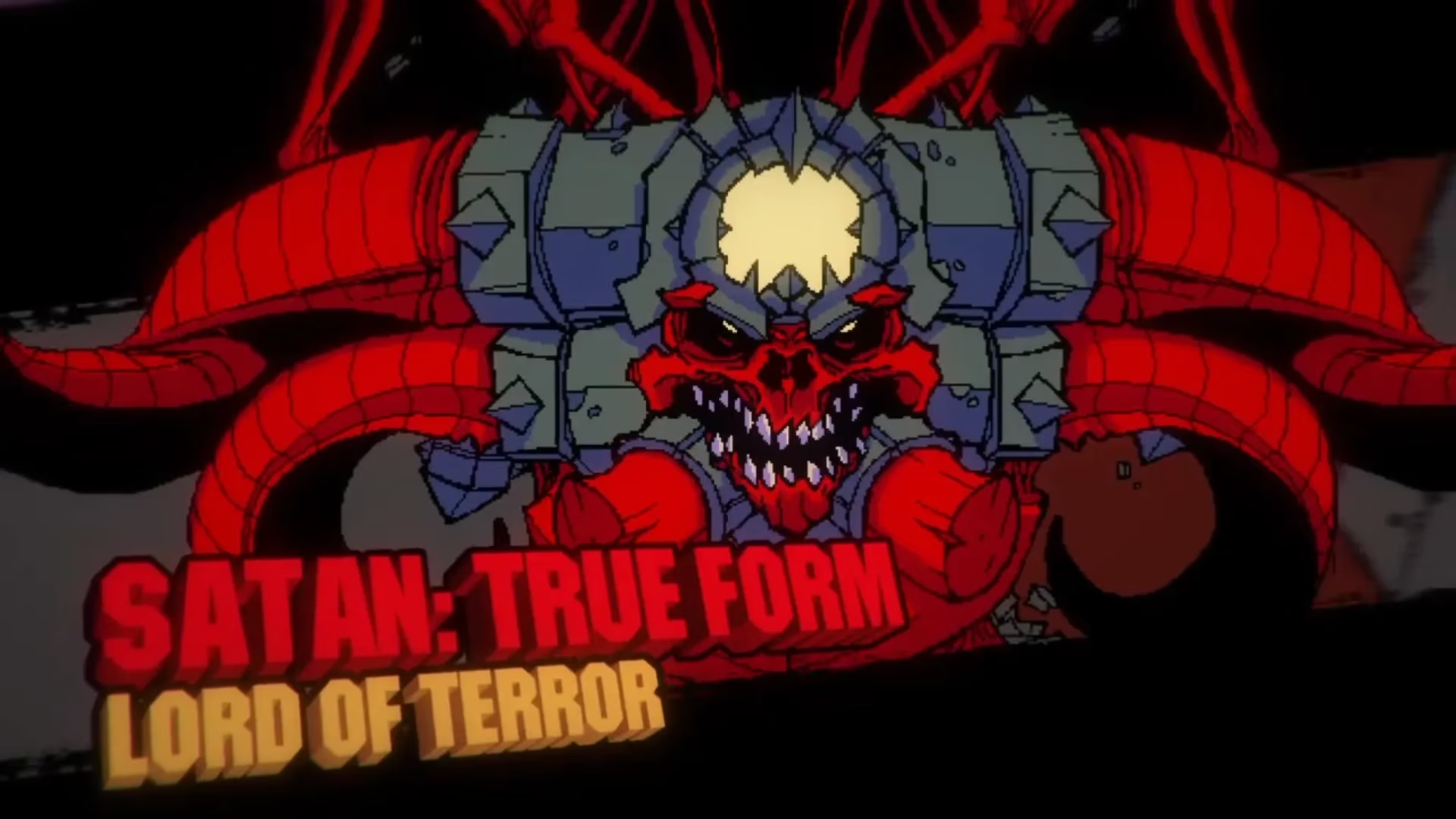
A game as steeped in unadulterated, explosive bravado as Broforce could never be contained by earthly conflicts. No mere mortal adversary could hope to withstand the onslaught of so many iconic, freedom-loving bros. The enemy iconography—horned skulls and ominous 666s—tells the tale clearly: this is an invasion from the netherworld itself, with the Devil as its supreme commander.
Naturally, he serves as the ultimate trial. My first confrontation was with a deceptively slender, horned figure in a crisp business suit. But the facade melted away in an instant, revealing a hulking brute whose musculature rivaled the mightiest of my brothers-in-arms. He rained literal hell upon us, but the bros stood strong. True to form, he had a final, desperate gambit: a monstrous pillar erupting from the earth, writhing with bony tendrils and spewing beams of pure damnation. Was it a metaphor for unchecked corporate greed or militaristic hubris? Perhaps. But in the moment, it was just another demonic structure to reduce to rubble with a well-placed explosive. The mission was simple: kick demonic butt, save the world.
😈 7. Saints Row: Gat Out Of Hell: From Alien Overlords to Infernal In-Laws
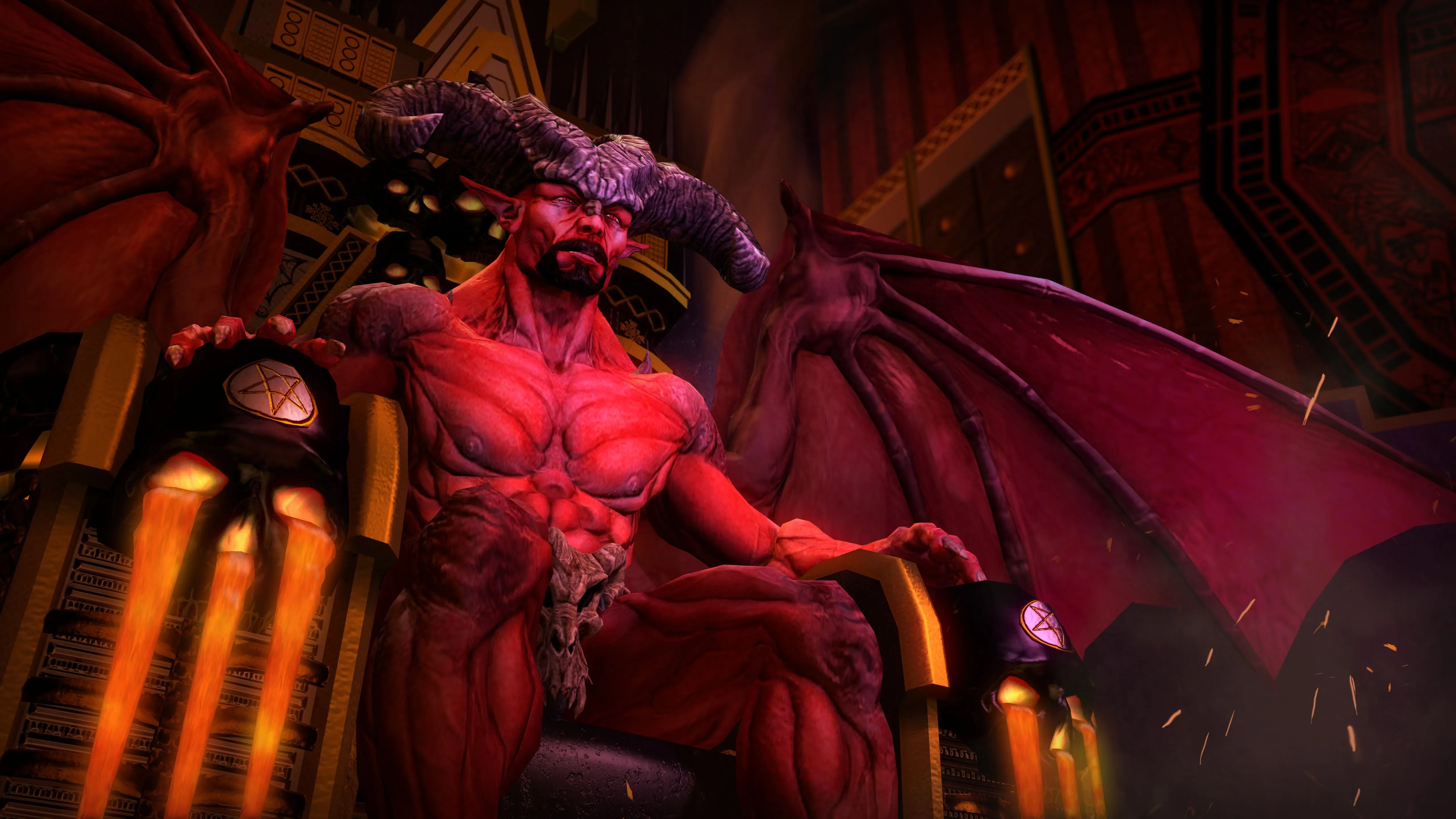
After battling an alien overlord in a virtual simulation in Saints Row 4, the only logical direction left to go was down. Saints Row: Gat Out Of Hell plunged me into a fantastical, fiery abyss. The premise was absurdly brilliant: The Boss was abducted by Satan to be forced into matrimony with his daughter, Jezebel. My mission, alongside Johnny Gat, was a rescue operation straight into the heart of perdition.
The journey was a cacophony of demonic shenanigans and over-the-top violence, culminating in a spectacular confrontation with the Lord of Lies himself. This Satan was not a wispy philosopher but a positively yoked behemoth, a brawler who absorbed bullets like rain. His defeat revealed a surprisingly mundane, toxic family drama: the whole scheme was merely a ploy to secure a ruthless general for his endless war against Heaven. It was a poignant, if ludicrous, reminder that even cosmic evil is often rooted in petty, familial dysfunction.
🎮 6. Pony Island: Lucifer, the Incompetent Coder
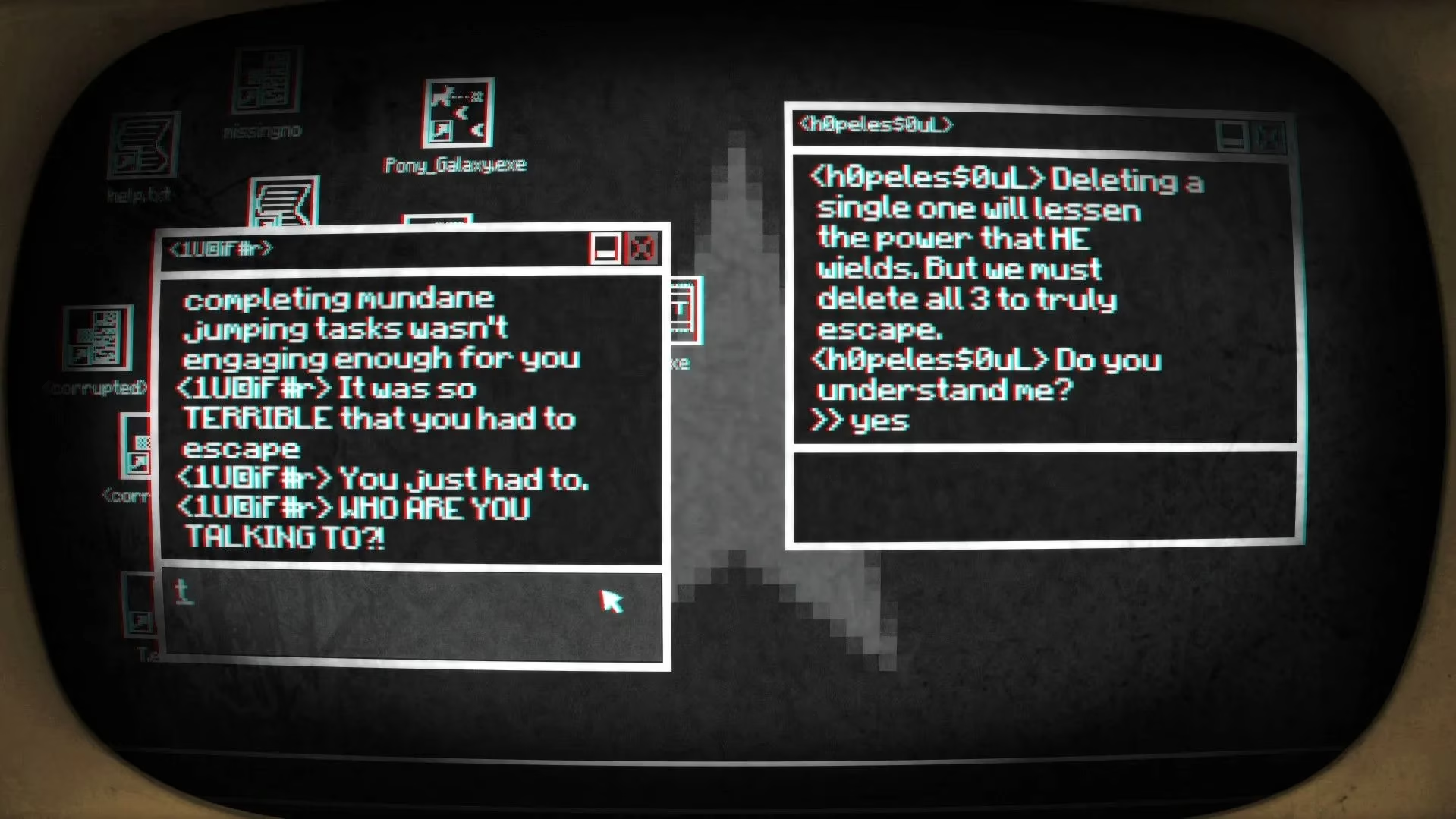
Here, I encountered a Devil who traded the fiery pit for a debug console. In Pony Island, Lucifer’s temptation was not worldly power or riches, but a video game of his own creation. Trapped in his extradimensional arcade, I was forced to play his bug-riddled, pony-themed platformer. This Lucifer was a petulant, terrible programmer, his creation a glitchy mess of poor design.
His furious insistence that his game was a masterpiece only made my subversion sweeter. I didn’t play to win; I played to break, exploiting his shoddy code to navigate behind the user interface, disabling his digital daemons and corrupting his core files. His ultimate defeat was a system crash—a core dump that freed countless captive souls. His greatest anguish seemed less about losing his prisoners and more about my refusal to appreciate his artistic "vision." It was a delightful inversion: defeating the Devil not with holy power, but with superior software troubleshooting.
📺 5. Antonblast: A Cartoonish Crimson Feud
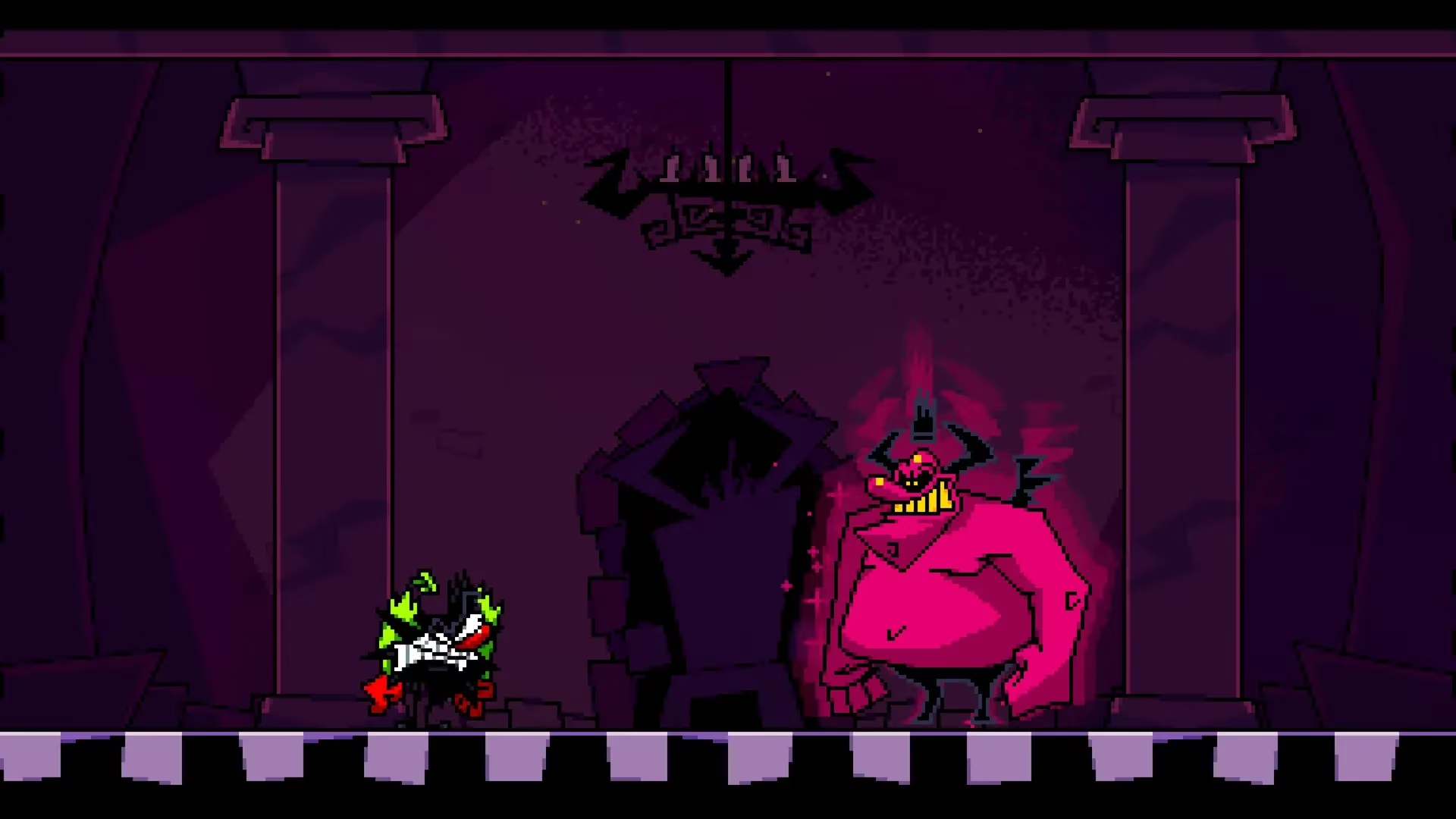
Antonblast is a love letter to the anarchic cartoons of my youth, and its villain is a direct homage to that era’s iconic, pantsless prankster. This Satan is vain and obsessed with his signature hue. His entire sinister plot is ignited not by a desire for souls, but by a searing envy: the protagonist, Anton, is a richer, more vibrant shade of red.
To rectify this chromatic injustice, Satan steals Anton’s spirits to lure him to Hell and siphon his redness. He succeeds, becoming a monstrous, ultra-buff crimson titan. But even drained of color, Anton’s spirit proves unbreakable. Reborn as a demon himself, he engages Satan in a battle of glorious, ridiculous spectacle: giant lasers, rock-paper-scissors, and the terrifying sight of Satan’s colossal buttocks crashing down from the sky. It was the most absurd, heartfelt, and hilarious battle I’ve ever fought in the underworld.
⚔️ 4. Shin Megami Tensei 5: The Cosmic Revolutionary
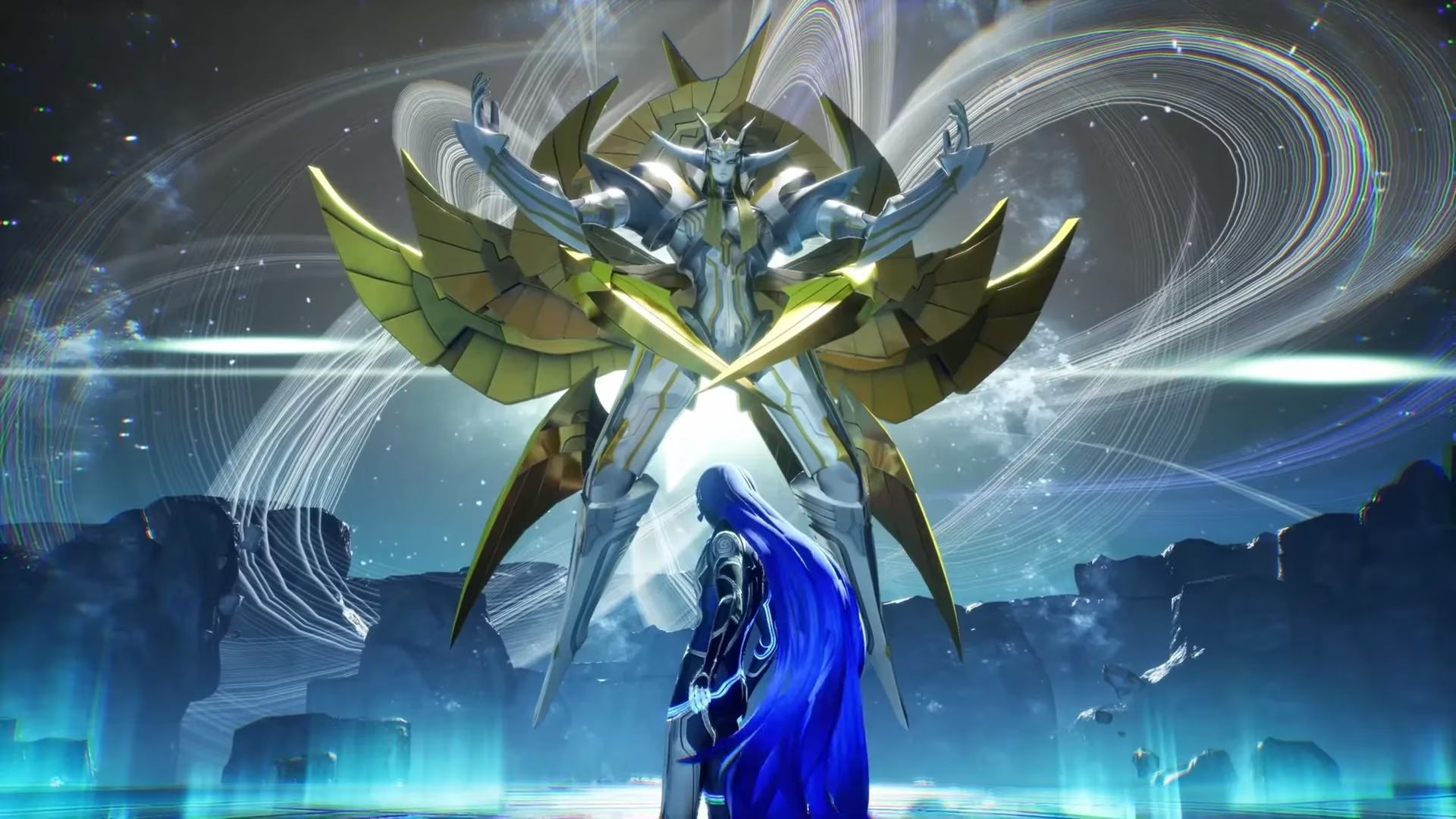
In the stark, post-apocalyptic expanse of Shin Megami Tensei 5, Lucifer is not a mere monster but a cosmic revolutionary. He has committed the ultimate deicide: murdering the Creator. This act shatters the divine order, creating a vacuum that angels, demons, and gods scramble to fill. He is the architect of the world’s desolation, a calm, almost detached force of anarchy.
He appears near the journey’s end, a final obstacle in most paths. His rationale is grimly logical: the world is trapped in an eternal, bloody conflict between all its factions. The only way to end the cycle, he posits, is to defeat him and claim the vacant Throne of Creation. The battle is a test of supreme strength, especially on the neutral path where he unveils a devastating second form with inverted elemental powers. To ascend, you must prove you can survive in the godless universe he has wrought.
| Game | Devil's Role | Primary Motivation |
|---|---|---|
| Broforce | Final Boss / Hell's General | World Domination |
| Saints Row: Gat Out of Hell | Abductor / Father-in-Law | Securing a Military General |
| Pony Island | Incompetent Game Developer | Collecting Souls via Bad Games |
| Antonblast | Vain Color Theorist | Stealing Someone's Better Red Hue |
| Shin Megami Tensei 5 | Cosmic Revolutionary | Ending a Cycle of Conflict via Anarchy |
🔫 3. Doom Eternal - The Ancient Gods: Davoth, The Dark Lord
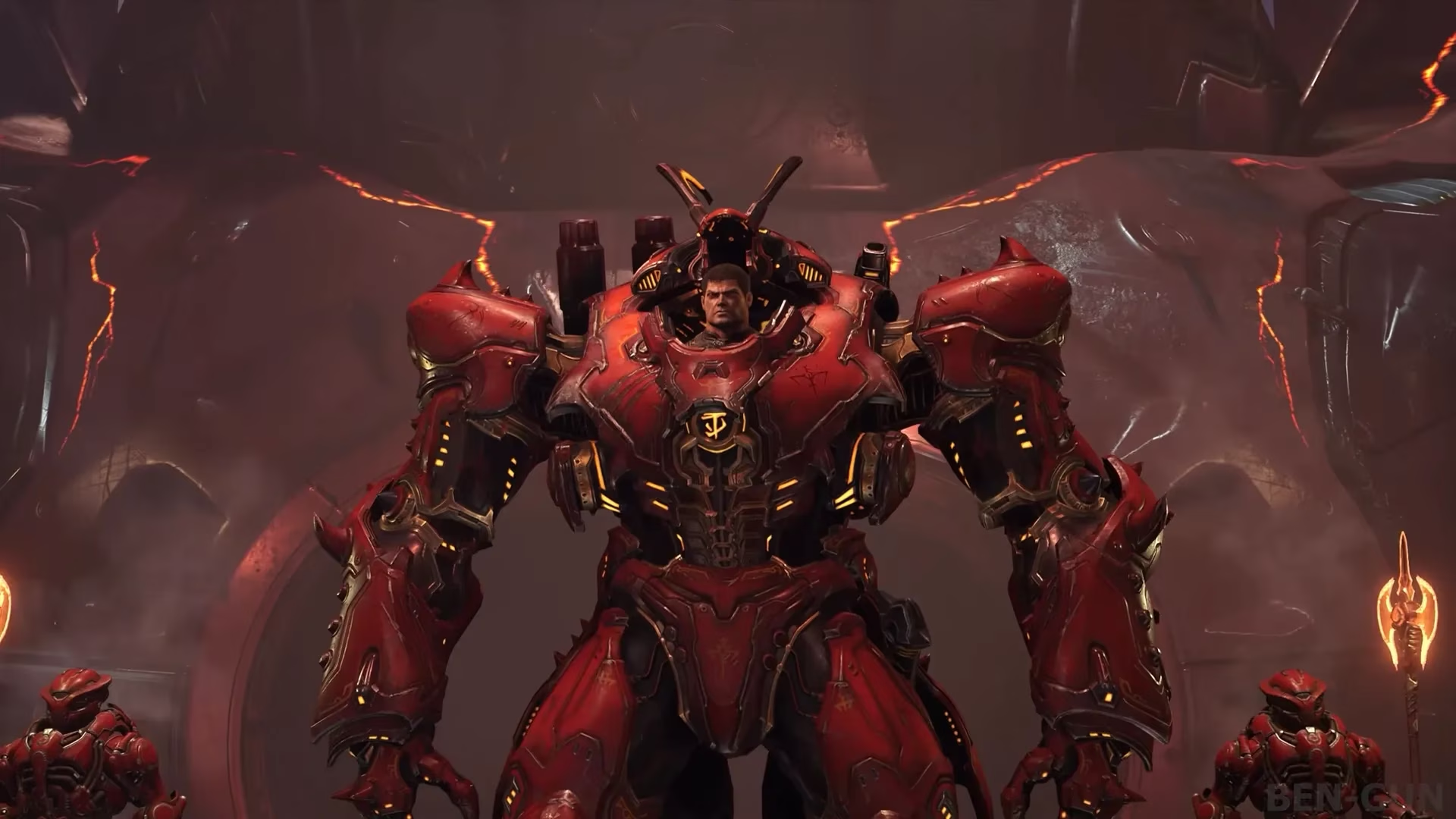
Throughout the Doom saga, I’ve rip-and-torn through countless legions of hellspawn, always sensing a greater power lurking behind the Icon of Sin and the Maykrs. In The Ancient Gods DLC, I finally met him: Davoth, the Dark Lord. Imprisoned in a celestial orb, he is the primordial first being, betrayed by his creator and the true sovereign of Hell. For all intents and purposes, he is this universe’s Satan.
My mission was deliberate and simple: release him so I could kill him. The irony was profound—he inhabited a cloned body identical to my own, the Doom Slayer. The battle was less a personal grudge match and more a primal contest of will between two ultimate forces. He was a worthy opponent, a master of the very arsenal I wielded. When he fell, it was not with a curse, but with a strange, resigned grace. I had not slain a cartoonish fiend, but ended the suffering of a fallen god.
☕ 2. Cuphead: Don't Deal With The Devil
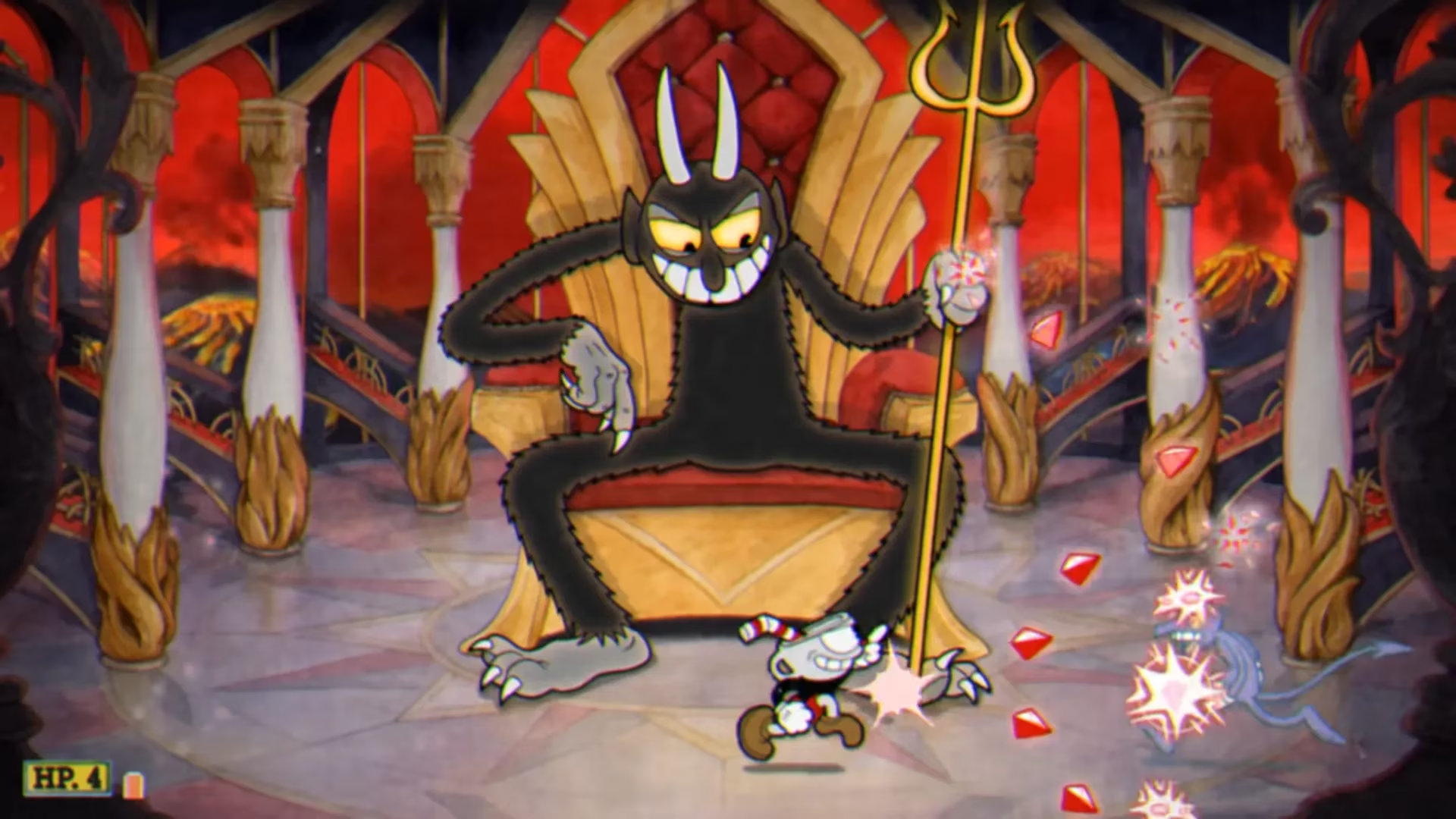
The title itself is the warning Cuphead and Mugman foolishly ignored. After losing a rigged dice game in his glittering, infernal casino, the two brothers find their souls forfeit. Their entire quest—challenging and defeating a roster of runaway debtors—is a frantic effort to collect the contracts for souls owed to the Devil.
The final confrontation is a masterpiece of 1930s animation brought to life. In his fiery throne room, the Devil is a shapeshifting, size-changing spectacle of malice. He is playful, cruel, and endlessly inventive. Defeating him feels less like a heroic triumph and more like forcing a slick con artist to honor a deal. With a final, defeated puff of smoke, he relinquishes all the contracts. The lesson was learned the hard way: never gamble with a being whose office is literally in Hell.
👶 1. The Binding Of Isaac: Rebirth: A Demonic Hierarchy
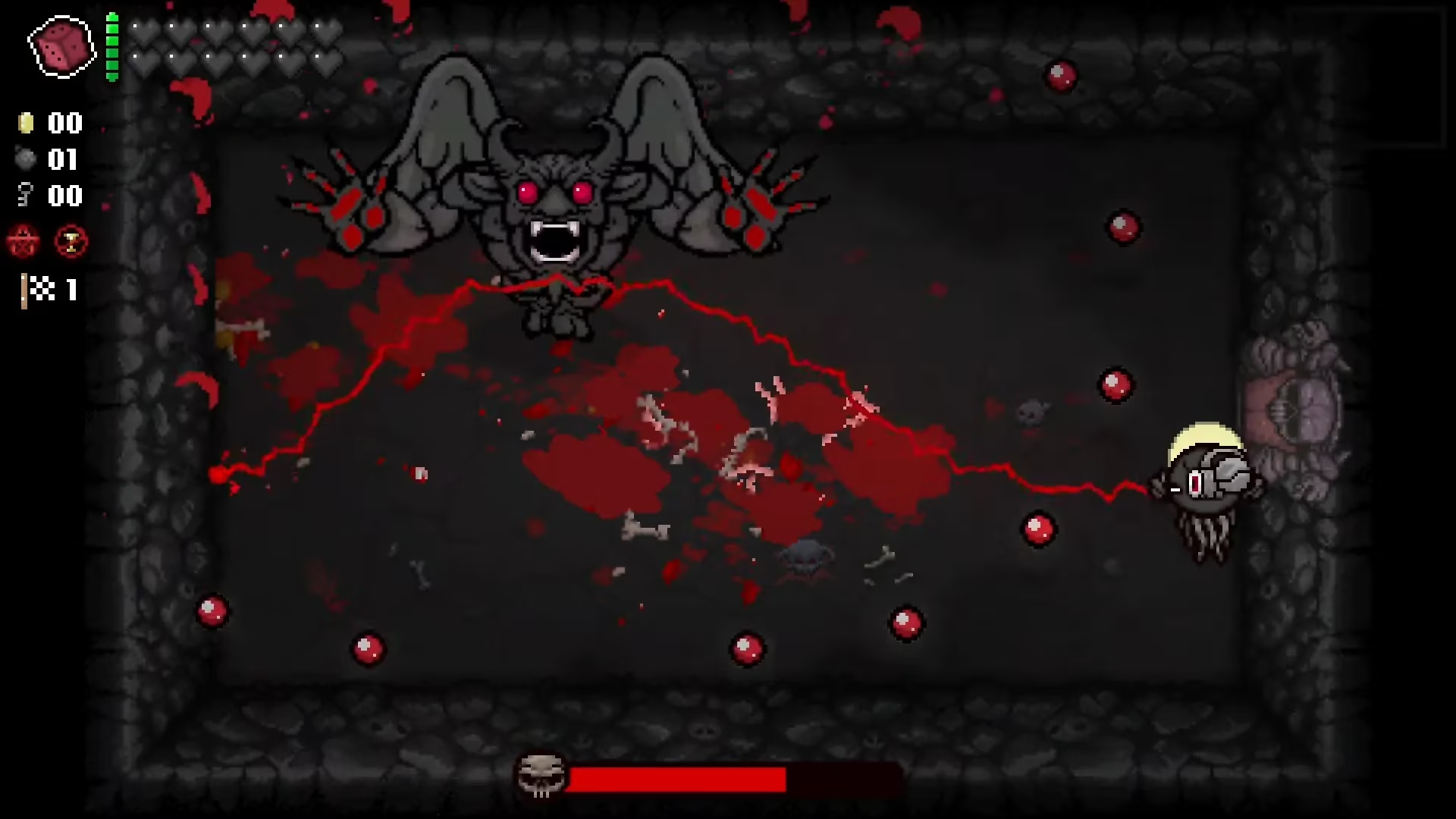
In Isaac’s twisted, basement-born nightmare, the Devil is not a singular entity but a recurring theme, an infection in the game’s very code. After piercing through the trauma of maternal figures, the true horror reveals itself: Satan. He begins as the familiar, goat-like figure from the Devil Deal rooms, then transforms into a colossal, laser-spewing monstrosity. His final phase is so vast only a single, stomping hoof can be seen.
And yet, this is not the end. In the game’s dense layers of endings, I faced Mega Satan, a being so enormous only his grimacing face and massive hands are visible, a boss that truly evokes biblical-scale terror. The Repentance DLC later introduces The Beast, another apocalyptic iteration of the same infernal concept. In Isaac’s world, the horror is recursive; you defeat one devil only to find a larger, more terrible one waiting. It’s a poignant reflection of trauma: you conquer one layer of fear, only to discover another lurking beneath.
My journey through these infernal landscapes has been more than a series of boss fights. It has been a tour of our collective imagination's darkest corners. From the corporate Satan of Broforce to the deadbeat-dad Devil of Saints Row, from the pathetic programmer of Pony Island to the cosmic revolutionary of Shin Megami Tensei, each incarnation reflects a different facet of our fears, our vices, and our dark humor. They are mirrors held up to our own capacity for pride, envy, wrath, and folly. In 2026, as these games continue to be celebrated, their devilish antagonists remain timeless—not because they are universally powerful, but because they are perpetually, compellingly us, reflected in a hellfire glow.
Comms Channel