Every year, the gaming world is blessed with titles that come incredibly close to achieving perfection. These games captivate players with their stunning worlds, engaging mechanics, and unforgettable stories. Yet, for all their brilliance, a handful of them are held back from true greatness by small, often frustrating flaws that linger in players' minds long after the credits roll. These issues don't make the games bad—far from it. They remain outstanding, genre-defining experiences. But those tiny cracks in the foundation prevent them from being the flawless masterpieces they could have been. 😤
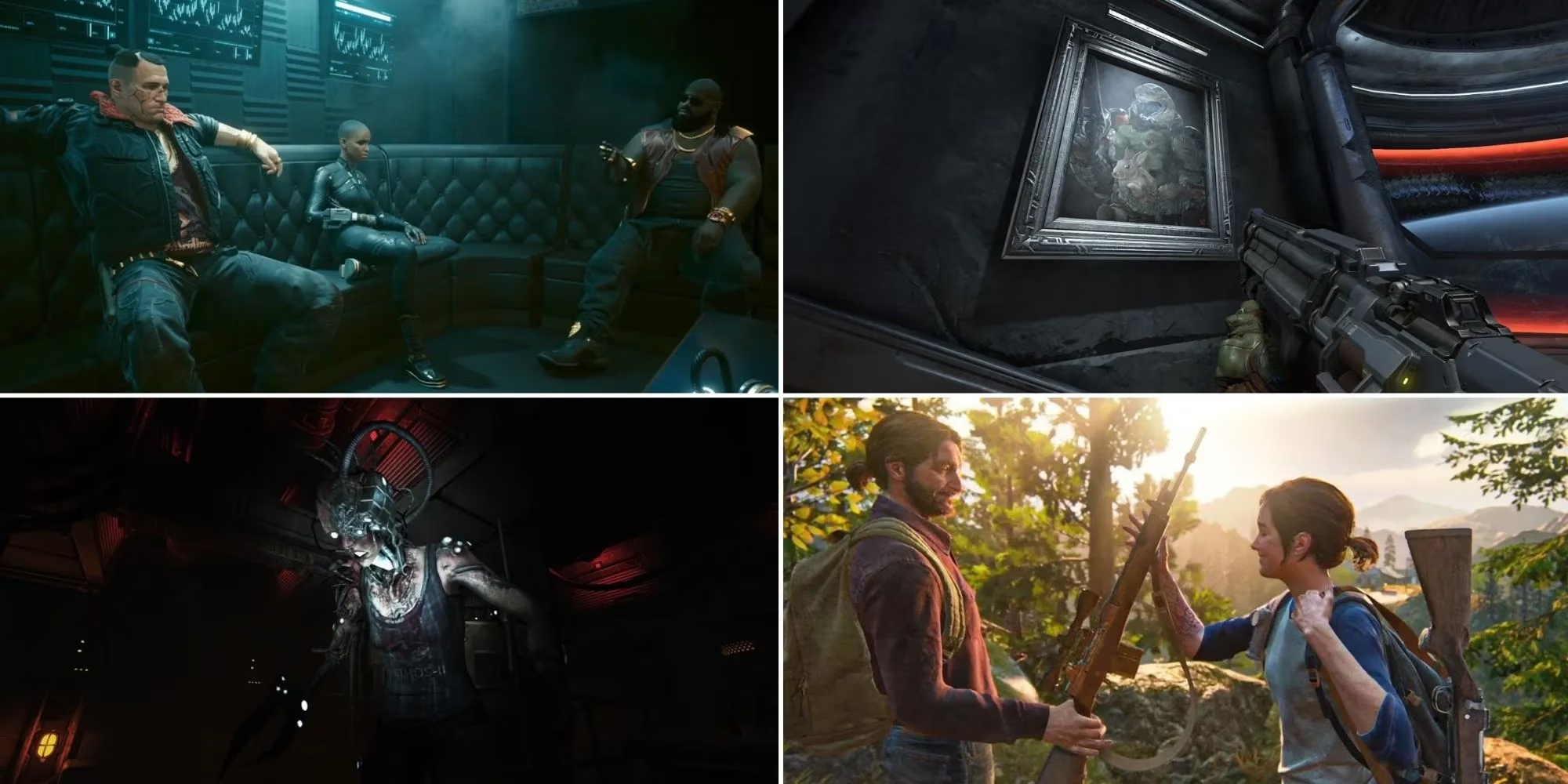
10. Elden Ring: The Curse of Repeated Content 🏰
From the moment players step into the Lands Between, they know they're experiencing something special. FromSoftware took its legendary formula and expanded it into a breathtaking open world, creating what many consider a generational title. The sense of scale, the lore, and the challenge are practically unmatched. However, in crafting such a massive world, the developers fell into a trap: content repetition. The journey is dotted with dozens of copy-pasted dungeons and similar points of interest that, instead of enriching the adventure, often obscure its most brilliant parts. Many argue that if Elden Ring were 20 hours shorter and trimmed its repetitive elements, it could stand as a perfect game. As it is, this flaw remains an immutable blemish on an otherwise timeless masterpiece.
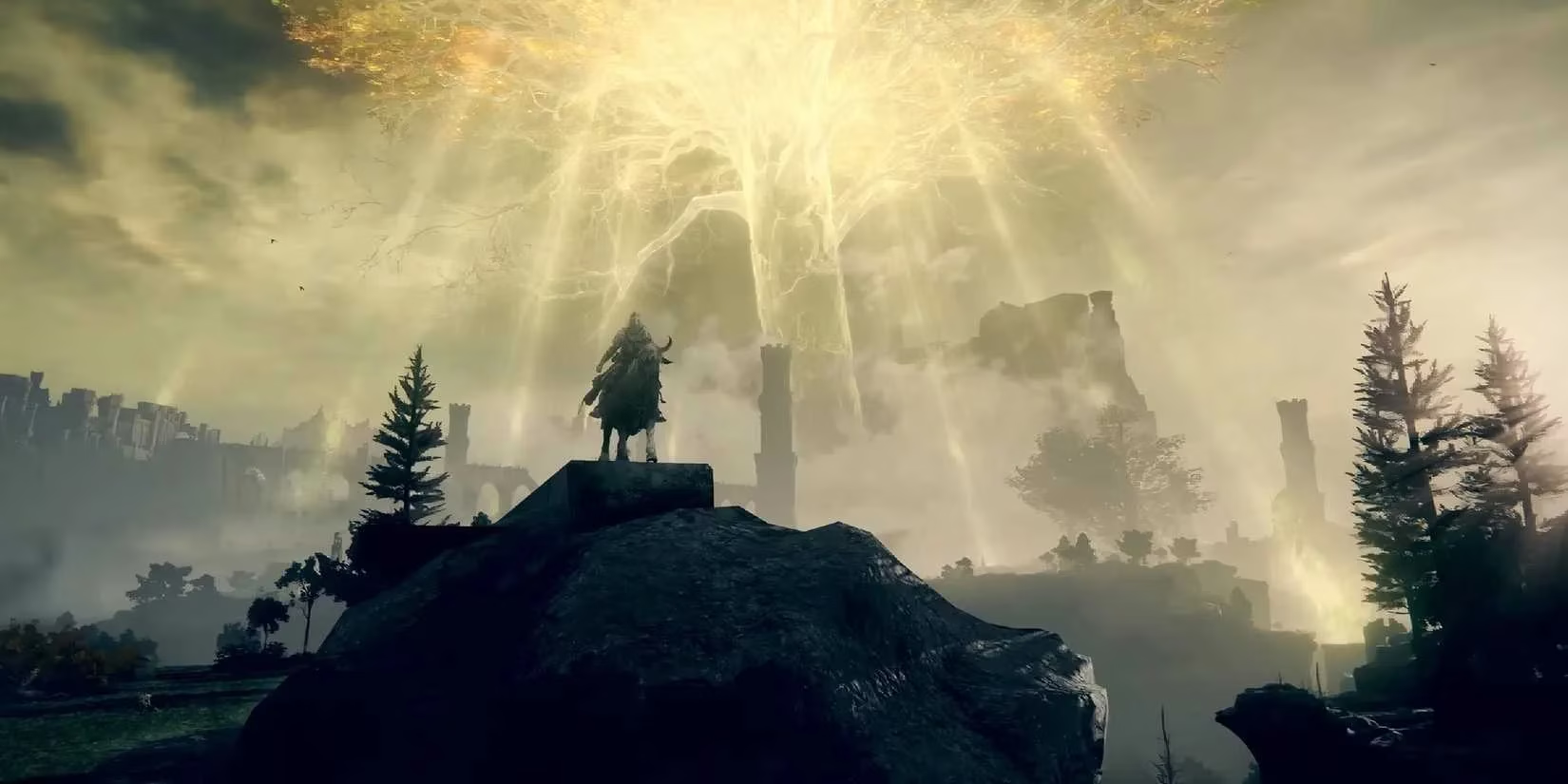
9. Blue Prince: When Randomness Overstays Its Welcome 🎲
Blue Prince delivered one of the most memorable puzzle experiences in recent memory, evoking the same awe as classics like Portal and Outer Wilds. Its genius lies in a roguelike structure where the map changes instead of the character, constantly reshaping the environment through imaginative rooms. The way everything connects is nothing short of masterful. Yet, at a certain point, the game leans too heavily on randomness. Progress hinges on lucky combinations to solve the final challenges, forcing players into repetitive new runs that test patience more than skill. This reliance on RNG transforms thoughtful puzzle-solving into frustrating trial-and-error, preventing Blue Prince from achieving the flawless status it so clearly deserves.
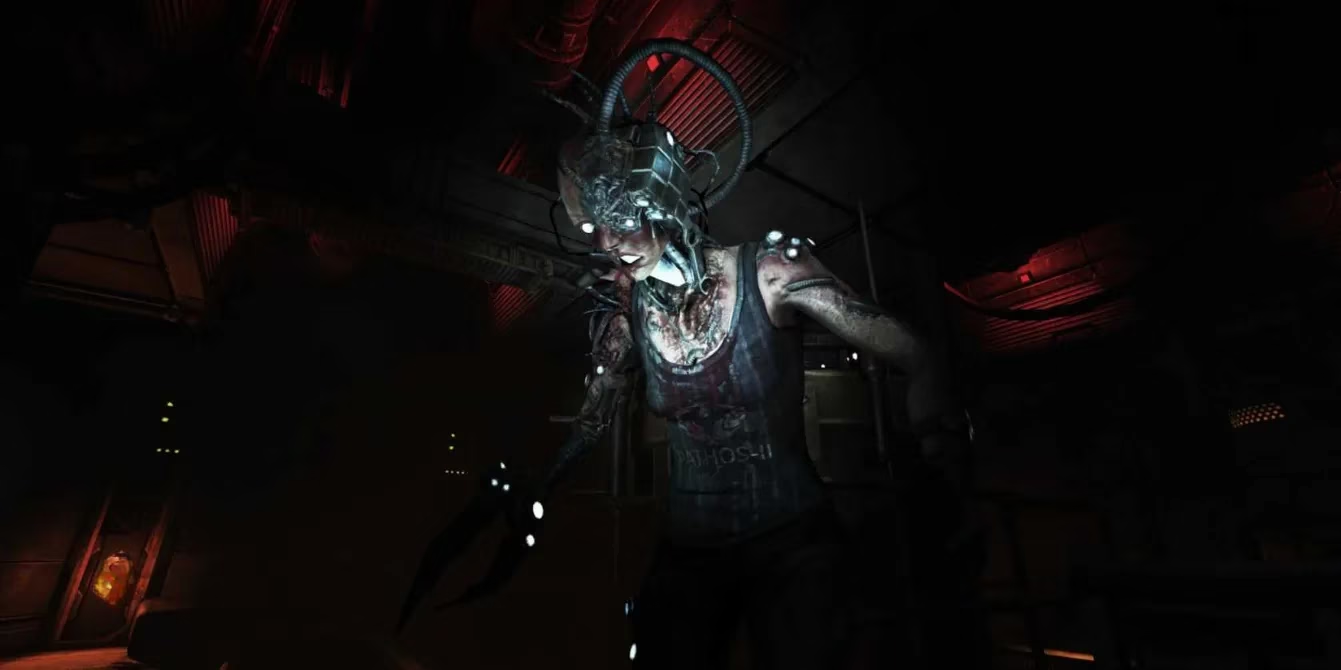
8. SOMA: A Brilliant Mind Trapped in Clunky Controls 🕹️
As a psychological thriller, SOMA is magnificent. Its atmosphere is thick with tension, its story is profoundly thoughtful, and its sound design pulls players into its deep, immersive world. Where it stumbles, tragically, is in interactivity. The gameplay elements feel unintuitive and clunky. Basic actions like knowing where to go or how to interact with the environment become confusing chores. When you're being chased by an indefinable horror, the immersion shatters because you're fumbling with rudimentary inputs instead of feeling the panic. SOMA's narrative and worldbuilding are top-tier, but its gameplay mechanics hold it back from being the perfect experience it strives to be.
7. Darksiders 2: The Messenger Boy Simulator 🗡️
Darksiders 2 masterfully blends genres, offering thrilling combat, fantastic bosses, and an epic soundtrack. It's easily one of the best hack-and-slash games ever made. So, what's the problem? Its mission structure. Too often, players feel like glorified errand runners. Objectives endlessly recycle the same concepts: collect three fragments, find two keys, defeat four mini-bosses. This repetitive loop undermines the game's otherwise excellent pacing and world-building. While the core gameplay—the perfect combat and magnificent bosses—shines brightly, the tedious fetch-quest design remains a glaring flaw that prevents the title from reaching its full potential.
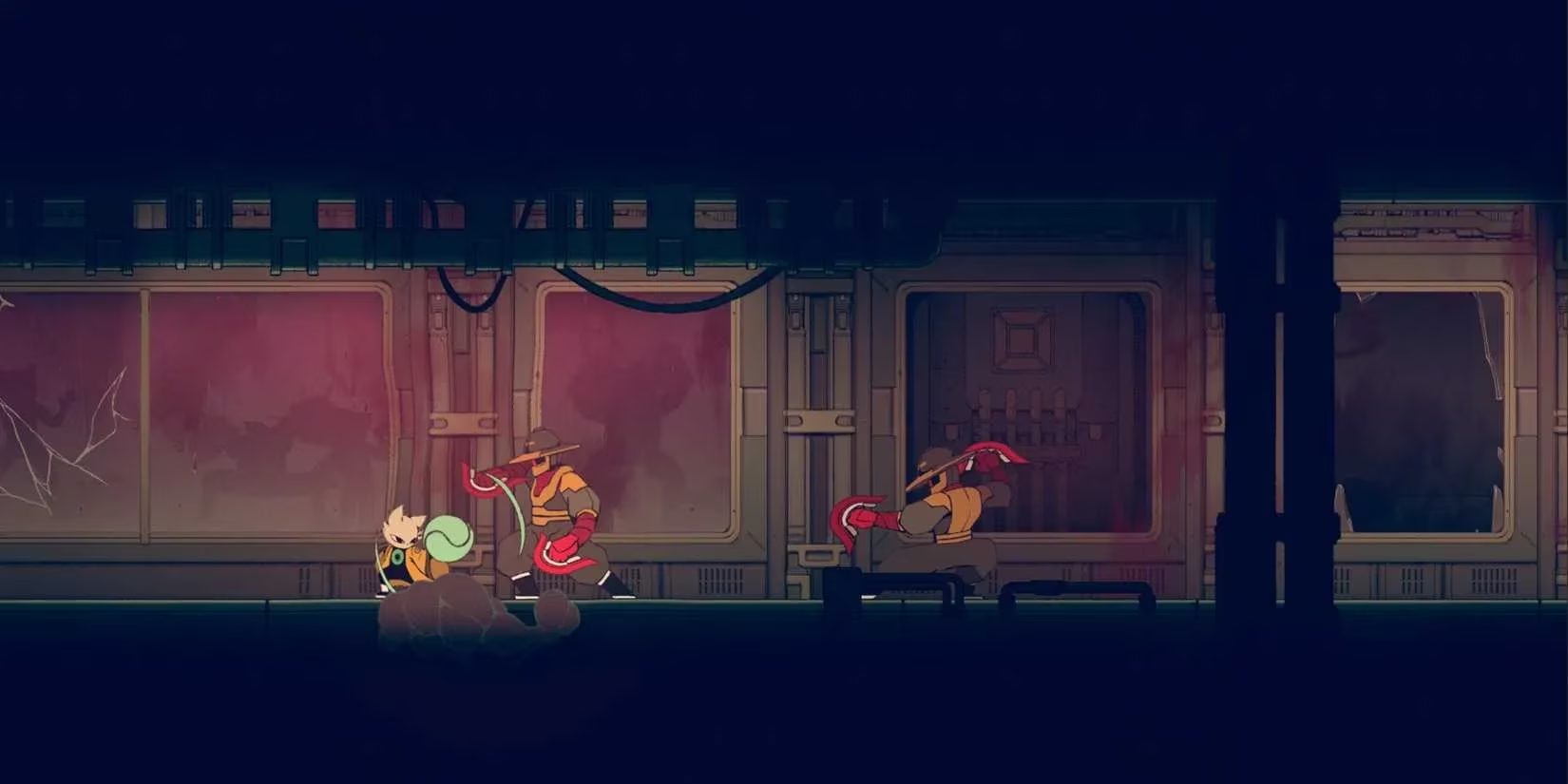
6. Nine Sols: The Pain of Abrupt Difficulty Spikes ⚔️
This indie darling brilliantly merges the precision of Sekiro with the exploration of Hollow Knight, resulting in a polished and admirable Metroidvania. Its combat, progression, and level design are crafted with remarkable care. However, its difficulty curve is wildly inconsistent. For most of the campaign, the challenge feels balanced and fair. Then, out of nowhere, players hit brutal difficulty spikes that feel less like tests of skill and more like walls of frustration. These moments disrupt the smooth learning curve and can make players want to quit. Overcoming them feels great, but the journey there is needlessly jarring, marking a clear flaw in an otherwise refined experience.
5. Cyberpunk 2077: A Rushed and Jarring Prologue 🌃
Despite its rocky launch, Cyberpunk 2077 has evolved into a captivating open-world with an enthralling universe. Yet, its prologue remains a significant hurdle. Key story events unfold with abrupt, breakneck speed, leaving no room for players to digest the narrative or connect with the characters. The game tries to establish life in Night City but fails to let the stakes sink in before hurrying to the next plot point. Once past this initial chapter, the story finds a much better rhythm, blending nicely with side quests. But for many, that tedious, poorly-paced prologue is enough reason to quit within the first few hours, forever coloring their perception of the game.
4. DOOM Eternal: How a HUB Breaks the Demon-Slaying Flow 🔥
DOOM Eternal's gameplay loop is pure, addictive perfection. Each level is a symphony of violence, with perfected gunplay and melee combat that encourages using every tool in the arsenal. The adrenaline rush is constant... until it isn't. Just as your heart is pounding and you're ready to tear through another horde, the screen cuts to black. You're dumped into The Fortress of Doom, the game's HUB. While contrasts in pacing are important, this method completely halts the intensity. It's a stark, immersion-breaking reminder that you're playing a video game. The HUB itself is well-designed, but its inclusion disrupts the very flow that makes DOOM Eternal so special.
3. The Last of Us Part II: A Story That Loses Its Rhythm 🎭
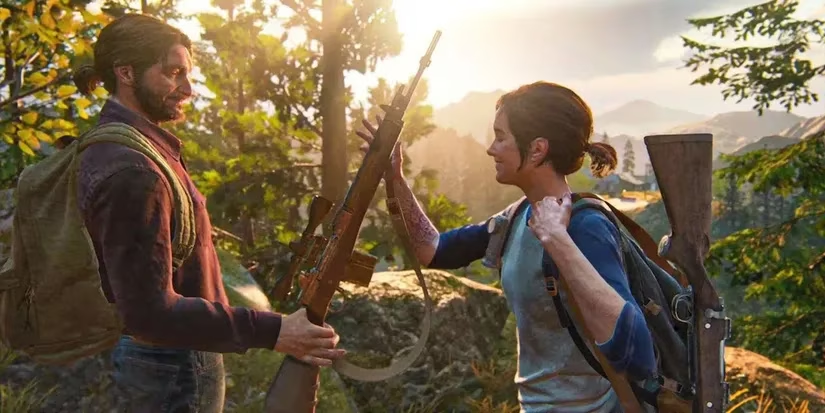
This sequel excels in almost every area: character performances, visceral gameplay, and attention to detail are all remarkable. However, its narrative pacing is its Achilles' heel. The constant shifts—between flashbacks, protagonist perspectives, and the sheer length of the campaign—cause the story to lose focus. The emotional impact of key moments is diluted because so much time is spent in buildup. While The Last of Us Part II remains an impressive and surprising creation, it lacks the tight narrative cohesion of its predecessor, preventing it from achieving a truly polished, flawless story experience.
2. God of War Ragnarök: An Underwhelming Final Act ⚡
God of War Ragnarök boldly improves upon its predecessor in virtually every way, solidifying its place as one of the franchise's best. Yet, it stumbles at the finish line. The entire game builds toward Ragnarök—a cataclysmic event described as colossal and inevitable. But when it finally arrives, the resolution feels rushed and underwhelming. The main spectacle unfolds mostly in the background, with players having little direct agency. After such meticulous buildup, having the climax resolved so quickly strips it of its true weight and impact. The Valhalla DLC later offered better closure for Kratos, but the base game's final act remains a notable flaw in an otherwise masterful plot.
1. Bloodborne: The Infamous Blood Vial System 🩸
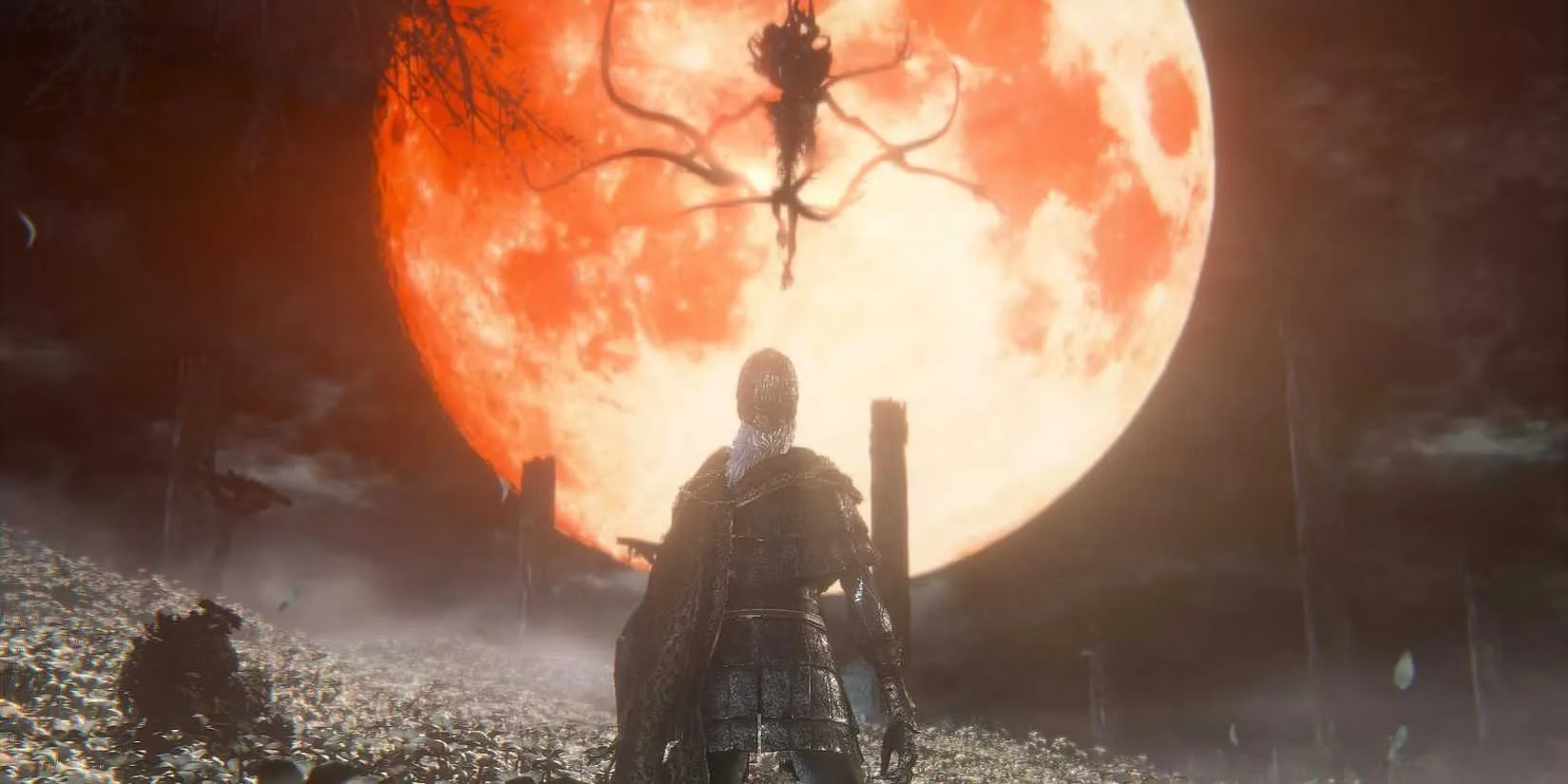
Ah, Bloodborne. A game so dripping with personality, atmosphere, and challenge that it's considered one of the most special titles in gaming history. Its combat is aggressive, its world is hauntingly beautiful, and its bosses are unforgettable. Then, you encounter the blood vials. Unlike the Estus Flask system in other Souls games, these healing items are limited consumables. Run out, and you must farm them—a tedious process that punishes experimentation and daring play. This system adds nothing meaningful to the gameplay; it only creates an annoying resource-management chore. In the long run, as players improve, it becomes less of an issue. But for many, Bloodborne's healing mechanics remain the worst design choice FromSoftware has ever made, a minor flaw that mars a near-perfect masterpiece.
The Takeaway: Perfection is a Journey, Not a Destination 🏆
These ten games demonstrate that even the most brilliant creations can be held back by small, seemingly minor flaws. Whether it's repetitive content, clunky controls, or poor pacing, these issues remind us that game development is an incredibly complex art. Perfection is elusive. Yet, it's a testament to these titles' overall quality that we discuss their flaws so passionately—we care because they came so close to being flawless. They remain must-play experiences, each offering something unique and memorable. Perhaps their minor imperfections even make them more human, more relatable. In the end, they're still fantastic games... just not perfect ones. And maybe that's okay. 😉
Comms Channel